
From Desperation to Billions: The Nvidia-TSMC Partnership
Generado por agente de IATheodore Quinn
miércoles, 5 de febrero de 2025, 8:54 pm ET2 min de lectura
NVDA--
In the annals of semiconductor history, few partnerships have been as transformative as that between Nvidia and Taiwan Semiconductor Manufacturing Company (TSMC). The tale of their collaboration began with a desperate letter from Nvidia CEO Jensen Huang to TSMC founder Morris Chang, which ultimately led to a multi-billion dollar partnership that has reshaped the global semiconductor industry. Here's a look at how this unlikely alliance came to be and its implications for future technological advancements.
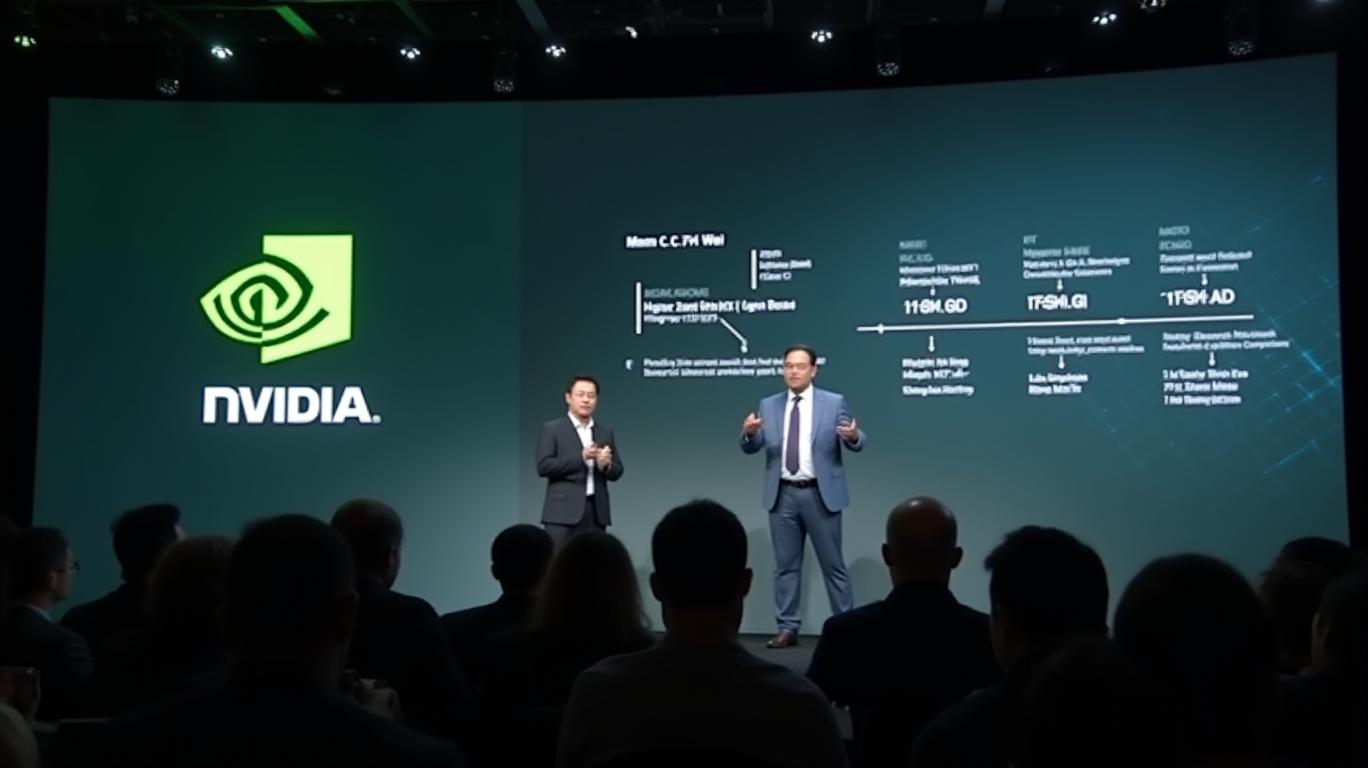
In 1997, Nvidia was on the brink of bankruptcy, with just 50 to 60 employees and an uncertain future. Huang, in a last-ditch effort, wrote a letter to Chang, pleading for TSMC's support in manufacturing a critical chip that could turn Nvidia's fortunes around. Chang, initially curious and irritated, decided to call Huang personally, leading to a meeting that would change the course of both companies.
Huang's bold prediction during their meeting – that Nvidia's upcoming chip would not only save the company but also make Nvidia one of TSMC's major customers – resonated with Chang. Despite Nvidia's financial troubles, Chang agreed to support the company, marking the beginning of a long-standing partnership.
The chip in question was a success, rescuing Nvidia from financial collapse and cementing its position in the gaming and graphics industry. Within two to three years, Nvidia became one of TSMC's top five customers, with the partnership growing stronger over time.
As AI technologies gained prominence, Nvidia's GPUs became essential for AI computing. TSMC, as the world's leading semiconductor foundry, invested heavily in advanced process nodes, enabling Nvidia to produce more powerful and energy-efficient AI chips. This collaboration led to the development of Nvidia's AI-focused GPUs, such as the H100 and upcoming Blackwell GPUs, which rely on TSMC's cutting-edge fabrication technology.
In 2023, Nvidia contributed 11% of TSMC's revenue, paying the foundry $7.73 billion for its services. The company has become TSMC's second-biggest customer, with the partnership potentially valued in billions of dollars.
The Nvidia-TSMC partnership has not only driven technological advancements in AI chip manufacturing but has also had geopolitical implications. TSMC's expansion in the US, including its Arizona project, aligns with US efforts to enhance its chip production capabilities and reduce dependence on foreign manufacturers. Nvidia is in talks with TSMC to produce its advanced Blackwell AI chips at this new facility, further strengthening their partnership.

In addition to their work on AI chips, Nvidia and TSMC are collaborating on silicon photonics, a technology that could revolutionize data transfer in AI data centers. This partnership demonstrates their commitment to staying at the forefront of semiconductor technology and driving innovation together.
The Nvidia-TSMC partnership serves as a testament to the power of strategic decisions, long-term vision, and mutual trust. By fostering these qualities, companies can build strong, lasting partnerships that drive mutual success and shape the global semiconductor industry. As AI technologies continue to evolve, the Nvidia-TSMC partnership will likely remain a critical force in driving innovation and shaping the future of AI chip manufacturing.
TSM--
In the annals of semiconductor history, few partnerships have been as transformative as that between Nvidia and Taiwan Semiconductor Manufacturing Company (TSMC). The tale of their collaboration began with a desperate letter from Nvidia CEO Jensen Huang to TSMC founder Morris Chang, which ultimately led to a multi-billion dollar partnership that has reshaped the global semiconductor industry. Here's a look at how this unlikely alliance came to be and its implications for future technological advancements.
In 1997, Nvidia was on the brink of bankruptcy, with just 50 to 60 employees and an uncertain future. Huang, in a last-ditch effort, wrote a letter to Chang, pleading for TSMC's support in manufacturing a critical chip that could turn Nvidia's fortunes around. Chang, initially curious and irritated, decided to call Huang personally, leading to a meeting that would change the course of both companies.
Huang's bold prediction during their meeting – that Nvidia's upcoming chip would not only save the company but also make Nvidia one of TSMC's major customers – resonated with Chang. Despite Nvidia's financial troubles, Chang agreed to support the company, marking the beginning of a long-standing partnership.
The chip in question was a success, rescuing Nvidia from financial collapse and cementing its position in the gaming and graphics industry. Within two to three years, Nvidia became one of TSMC's top five customers, with the partnership growing stronger over time.
As AI technologies gained prominence, Nvidia's GPUs became essential for AI computing. TSMC, as the world's leading semiconductor foundry, invested heavily in advanced process nodes, enabling Nvidia to produce more powerful and energy-efficient AI chips. This collaboration led to the development of Nvidia's AI-focused GPUs, such as the H100 and upcoming Blackwell GPUs, which rely on TSMC's cutting-edge fabrication technology.
In 2023, Nvidia contributed 11% of TSMC's revenue, paying the foundry $7.73 billion for its services. The company has become TSMC's second-biggest customer, with the partnership potentially valued in billions of dollars.
The Nvidia-TSMC partnership has not only driven technological advancements in AI chip manufacturing but has also had geopolitical implications. TSMC's expansion in the US, including its Arizona project, aligns with US efforts to enhance its chip production capabilities and reduce dependence on foreign manufacturers. Nvidia is in talks with TSMC to produce its advanced Blackwell AI chips at this new facility, further strengthening their partnership.
In addition to their work on AI chips, Nvidia and TSMC are collaborating on silicon photonics, a technology that could revolutionize data transfer in AI data centers. This partnership demonstrates their commitment to staying at the forefront of semiconductor technology and driving innovation together.
The Nvidia-TSMC partnership serves as a testament to the power of strategic decisions, long-term vision, and mutual trust. By fostering these qualities, companies can build strong, lasting partnerships that drive mutual success and shape the global semiconductor industry. As AI technologies continue to evolve, the Nvidia-TSMC partnership will likely remain a critical force in driving innovation and shaping the future of AI chip manufacturing.



Divulgación editorial y transparencia de la IA: Ainvest News utiliza tecnología avanzada de Modelos de Lenguaje Largo (LLM) para sintetizar y analizar datos de mercado en tiempo real. Para garantizar los más altos estándares de integridad, cada artículo se somete a un riguroso proceso de verificación con participación humana.
Mientras la IA asiste en el procesamiento de datos y la redacción inicial, un miembro editorial profesional de Ainvest revisa, verifica y aprueba de forma independiente todo el contenido para garantizar su precisión y cumplimiento con los estándares editoriales de Ainvest Fintech Inc. Esta supervisión humana está diseñada para mitigar las alucinaciones de la IA y garantizar el contexto financiero.
Advertencia sobre inversiones: Este contenido se proporciona únicamente con fines informativos y no constituye asesoramiento profesional de inversión, legal o financiero. Los mercados conllevan riesgos inherentes. Se recomienda a los usuarios que realicen una investigación independiente o consulten a un asesor financiero certificado antes de tomar cualquier decisión. Ainvest Fintech Inc. se exime de toda responsabilidad por las acciones tomadas con base en esta información. ¿Encontró un error? Reportar un problema


SOBRE NOSOTROS
Nuestra historiaAutores de noticiasBase de conocimientosPolítica de privacidadTérmino de usoDescargo de responsabilidad de corretaje de tercerosTérminos de uso de AIMEDivulgaciones de riesgos de AInvest AICarrerasCONTÁCTENOS
Email: support@ainvest.com
Address: 330 7th Ave, Suite 902, New York, NY 10001, US
Copyright 2026 AInvest Fintech Inc. All rights reserved.


Comentarios
Aún no hay comentarios