
FRO's Fleet Renewal and Strategic Positioning in a High-Margin VLCC Market
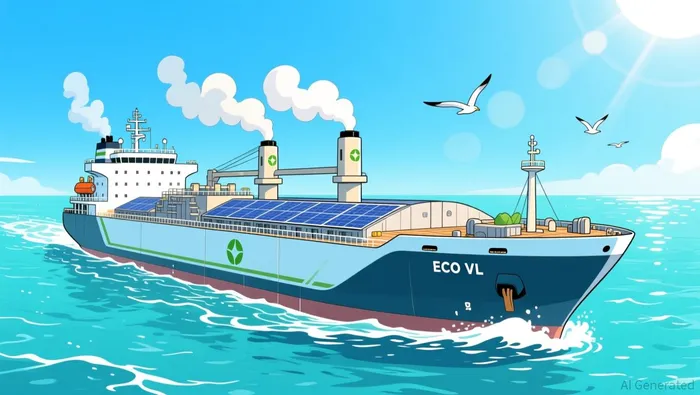
Frontline Ltd. (FRO) has emerged as a standout performer in the global tanker sector, driven by a 2025 fleet modernization strategy that prioritizes capital efficiency and alignment with high-margin VLCC (Very Large Crude Carrier) market dynamics. By systematically replacing aging vessels with next-generation scrubber-equipped ECO VLCCs, the company is not only reducing operating costs but also securing a competitive edge in a market characterized by tightening supply constraints and robust freight rate growth. This strategic pivot underscores FRO's commitment to long-term value creation, leveraging both financial discipline and environmental compliance to position itself at the forefront of the energy transition.
Capital Efficiency Through Fleet Renewal
FRO's 2025 strategy centers on the sale of eight first-generation ECO VLCCs built between 2015 and 2016, generating $831.5 million in proceeds. Of this, $486.0 million will be reinvested in nine scrubber-fitted ECO VLCC newbuilds, expected to enter service by Q3 2026. This transaction exemplifies capital efficiency, as the company simultaneously reduces its exposure to high-maintenance older assets while accelerating the deployment of modern, cost-optimized vessels. The proceeds have also enabled FROFRO-- to prepay $374.2 million in debt, lowering its fleet's average cash breakeven rate by approximately $1,300 per day for the next 12 months. Such actions directly enhance operating margins, as evidenced by FRO's Q3 2025 results, which reported a 55.8% EBITDA margin, reflecting disciplined cost management and strong freight rate leverage.
Environmental Compliance as a Strategic Advantage
Frontline's newbuilds are 100% eco-compliant, with 56% equipped with sulfur-scrubbing systems to meet International Maritime Organization (IMO) regulations. This compliance edge is critical in a market where non-compliant vessels face operational restrictions, creating a premium pricing environment for compliant tonnage. As noted in a Q3 2025 earnings call, FRO's scrubber-equipped fleet has secured contracts at rates exceeding $83,300 per day, significantly outpacing industry averages. The company's environmental leadership not only aligns with global decarbonization trends but also insulates it from regulatory risks that could erode margins for less prepared peers.
High-Margin VLCC Market Dynamics
The VLCC segment has become a cornerstone of FRO's value proposition, driven by structural supply-demand imbalances. In Q3 2025, FRO's VLCCs achieved average daily spot time charter equivalent (TCE) earnings of $34,300, with 75% of days booked at rates above $83,300. This performance is underpinned by record oil-in-transit volumes, shifting trade lanes (notably increased Middle East-to-Asia flows), and strong refinery margins. Analysts highlight that limited fleet growth-newbuild deliveries are projected to remain below 3% annually through 2026-will sustain elevated freight rates, particularly for compliant vessels according to industry analysis. FRO's spot-focused fleet structure further amplifies its ability to capitalize on these trends, as opposed to peers with long-term charter commitments that may dilute rate flexibility.
Long-Term Value Creation and Risk Mitigation
While FRO has not disclosed explicit EBITDA margin projections for 2026–2028, historical data suggests a resilient margin profile. The company's EBITDA margins averaged 52.0% in 2023 and 48.0% in 2024, indicating adaptability across cyclical market shifts. The 2025 fleet renewal is expected to further stabilize margins by reducing fuel and maintenance costs associated with older vessels. Additionally, FRO's robust liquidity position-bolstered by debt prepayments and asset sales-provides flexibility to navigate potential short-term headwinds, such as seasonal ballast days that may temper Q4 2025 TCEs as reported in earnings analysis.
Conclusion
Frontline Ltd.'s 2025 fleet modernization strategy represents a masterclass in capital efficiency and strategic foresight. By aligning its asset base with high-margin VLCC demand, enhancing environmental compliance, and optimizing debt structures, FRO is well-positioned to outperform industry peers in both near-term profitability and long-term shareholder value. As the energy transition reshapes maritime logistics, FRO's proactive approach ensures it remains a key beneficiary of a market where compliance, liquidity, and operational agility define success.





Comentarios
Aún no hay comentarios