
Fresenius Medical Care AG's 2025 Q3 Performance and Strategic Positioning in the Dialysis Sector: Assessing Operational Resilience and Long-Term Value Creation
Operational Resilience: Margin Expansion and Cost Discipline
Fresenius's Q3 results highlight its disciplined execution. The Care Delivery segment, which includes dialysis clinics, achieved a 14.5% operating margin, hitting the top of its 2025 target range, according to the Fresenius press release. This outperformance was driven by the FME Reignite strategy, which generated EUR 47 million in sustainable savings during the quarter-a contribution that brought total 2025 savings to EUR 174 million, according to a GuruFocus earnings call summary. Meanwhile, the Care Enablement segment, focused on products like dialysis machines and consumables, improved its margin to 7.6%, reflecting progress in optimizing supply chains and pricing, according to the Fresenius press release.
The company's margin stability is particularly noteworthy given external pressures. Unfavorable foreign exchange impacts and low same-market treatment growth in the U.S. dialysis segment posed challenges, yet Fresenius maintained its trajectory through cost discipline and operational efficiency, according to the GuruFocus earnings call summary. This resilience is critical in a sector where margins are often squeezed by regulatory shifts and reimbursement pressures.
Strategic Positioning: Innovation and Market Share Consolidation
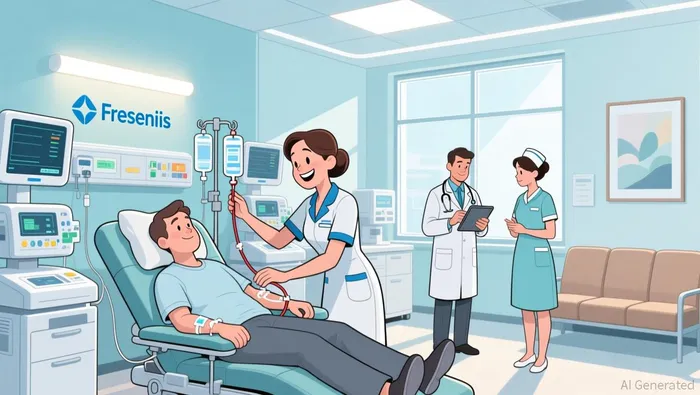
Fresenius's leadership in the global dialysis market is underpinned by its dual focus on innovation and scale. The company treats 293,620 patients across 3,628 clinics worldwide, a testament to its entrenched market share, according to the Fresenius press release. However, its strategic initiatives extend beyond incremental growth. The early rollout of high-volume hemodiafiltration (HDF), a treatment that enhances patient outcomes, is expected to drive referrals and treatment growth in 2026, according to the GuruFocus earnings call summary. This innovation not only strengthens patient retention but also differentiates Fresenius from competitors in a sector where therapeutic advancements are rare.
Despite its strengths, the company faces near-term hurdles. U.S. same-market treatment growth remains subdued, a trend linked to demographic and regulatory factors, according to the GuruFocus earnings call summary. Yet, Fresenius's global footprint-spanning 30 countries-acts as a buffer, allowing it to offset regional weaknesses with growth in emerging markets.
Long-Term Value Creation: Buybacks and Margin Momentum
Fresenius's Q3 announcement of a EUR 1.0 billion share buyback program underscores its confidence in long-term cash flow generation, according to the Fresenius press release. This move, combined with its FME25+ cost-saving initiative, signals a clear intent to return value to shareholders while maintaining reinvestment in core operations, according to the GuruFocus earnings call summary. The company's operating margin expansion-from 9.9% to 11.7% year-to-date-further reinforces its ability to balance cost control with reinvestment, according to the GuruFocus earnings call summary.
For investors, the appeal lies in Fresenius's unique positioning: it operates in a high-margin, essential healthcare niche with limited substitutes. Dialysis is a necessity for end-stage renal disease patients, ensuring stable demand regardless of economic cycles. Fresenius's ability to leverage this defensiveness while driving margin expansion and strategic innovation makes it a rare combination of resilience and growth.
Conclusion
Fresenius Medical Care AG's Q3 2025 performance reaffirms its status as a leader in the dialysis sector. By combining operational discipline, strategic innovation, and a robust capital allocation framework, the company is well-positioned to sustain its margins and market share. While near-term challenges persist, its long-term value proposition-rooted in the inelastic demand for dialysis services and a disciplined approach to cost and growth-makes it a compelling investment in a high-conviction, essential healthcare market.





Comentarios
Aún no hay comentarios