
French Industrial Recovery: Navigating Deflation to Find Value in Energy and Manufacturing
The French industrial sector is at a crossroads. Producer prices, after months of steep declines, are showing signs of stabilization, while manufacturing sectors like food and advanced machinery are defying the deflationary headwinds. For investors, this presents a unique opportunity to identify undervalued assets in energy and manufacturing—sectors poised to rebound as structural shifts and policy tailwinds reshape the economy.
Energy: The Bottoming-Out Opportunity
The energy sector has been the epicenter of France's deflationary pressures, but recent data suggests prices are nearing a floor. In May 2025, electricity prices fell by 5.8% month-over-month—a sharp deceleration from April's 24.3% plunge. This moderation was driven by seasonal factors, including reduced demand during the May bank holidays and record solar power generation. Meanwhile, refined petroleum prices dropped just 1.0% in May, a marked slowdown from April's 7.8% decline.
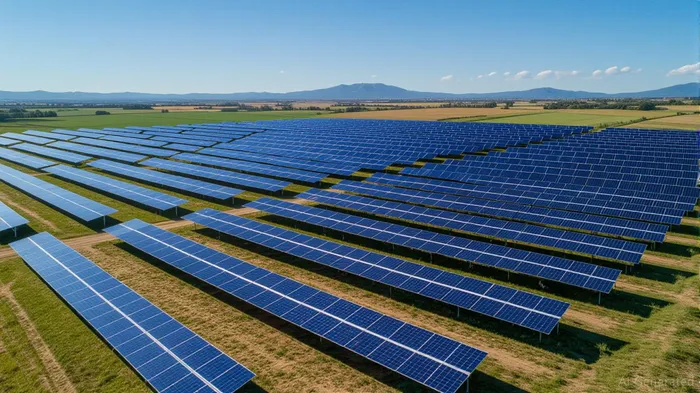
The stabilization in energy prices is a critical turning point. While global oil prices remain subdued, the European Union's aggressive push for renewables—part of the EU's 2030 Green Deal—has created a safety net. French firms with diversified energyDEC-- portfolios, such as Engie, which is transitioning to solar and wind projects, are well-positioned. Additionally, companies like TotalEnergies, which balance traditional oil production with investments in hydrogen and biofuels, could benefit from a gradual recovery in demand.
Manufacturing: Resilience in the Non-Energy Sectors
While energy struggles, non-energy manufacturing is thriving. Food and beverage producers, machinery manufacturers, and tech-driven industries are proving deflation-resistant.
Food & Beverages: Pricing Power in a Volatile Environment
Food prices rose 0.2% in May, driven by strong demand for beef and reduced supply. Companies like Danone and Lactalis are leveraging premium product launches (e.g., organic and plant-based lines) to maintain margins. Year-over-year, food prices are up 3.1%, a stark contrast to energy's 2.2% decline.
Machinery & Automation: Betting on the Green Transition
The machinery sector is benefiting from demand for energy-efficient equipment. Schneider Electric, a leader in smart grids and industrial automation, reported 15% year-over-year revenue growth in 2024. Its ZEV (Zero Emissions Vehicles) charging infrastructure and AI-driven energy management systems are critical to the EU's decarbonization goals. Similarly, Safran's hybrid propulsion systems for aircraft and ships are gaining traction as regulators push for lower emissions.
Deflation's Silver Lining: Bargain Opportunities in Undervalued Sectors
The prolonged deflation has created pricing inefficiencies. Investors can capitalize by:
1. Buying Energy Plays with Diversification: Target firms like TotalEnergiesTTE-- and Engie, which blend traditional energy with renewables.
2. Backing Tech-Driven Manufacturing: Focus on automation leaders like Schneider Electric and Safran, which are core to the EU's green transition.
3. Avoiding Overexposed Sectors: Steer clear of automotive giants like Renault and StellantisSTLA--, which face U.S. tariffs and EV market saturation.
Risks and Considerations
- Geopolitical Volatility: U.S.-EU trade disputes and China's slowing growth could reignite deflation.
- Labor Costs: French wage growth (3.5% YoY) may squeeze margins unless productivity improves.
- Energy Supply Shocks: Though unlikely, a sudden oil price spike could disrupt the stabilization narrative.
Investment Strategy: A Balanced Approach
- Short-Term: Use the stabilization in energy prices to build positions in diversified energy firms.
- Long-Term: Prioritize manufacturers aligned with the EU's Green Deal, such as Schneider Electric and Safran.
- Avoid: Overweight exposure to sectors reliant on volatile commodities (steel) or facing trade headwinds (automotive).
Conclusion
France's industrial landscape is bifurcated but increasingly promising. Energy prices are nearing a bottom, while non-energy manufacturing is thriving. Investors who navigate this environment with a focus on green transition leaders and diversified energy firms can position themselves to capture gains as the economy rebalances. The next 12–18 months will test whether this stabilization becomes a sustained recovery—but the groundwork for value is already laid.
This analysis is for informational purposes only and should not be construed as financial advice. Always conduct your own research or consult a licensed professional before making investment decisions.





Comentarios
Aún no hay comentarios