
French Firms' MYR4 Billion Investment in Malaysia: A Strategic Play for Manufacturing, Renewables, and Regional Influence
The French government and private sector have unveiled a MYR4 billion (approximately $947 million) investment push into Malaysia, targeting high-tech manufacturing, renewable energy, and defense. This move reflects a strategic pivot by France to deepen ties with Southeast Asia amid geopolitical shifts and climate imperatives. For investors, the deal presents opportunities in sectors poised to reshape Malaysia's economy—and France's Indo-Pacific ambitions.
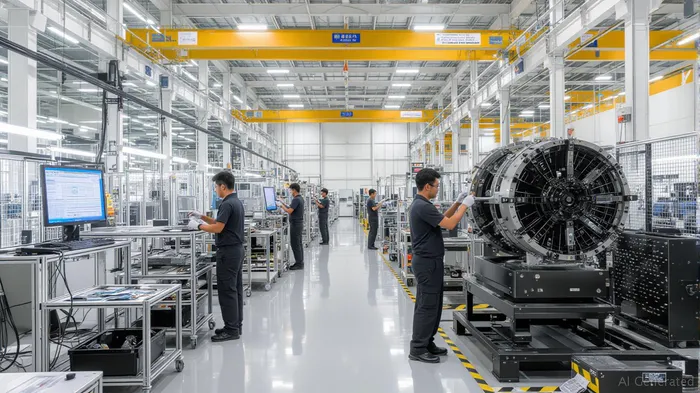
Manufacturing & Aerospace: Building a High-Tech Hub
French firms like Thales (ETR:HO) and Dassault Aviation (EPA:AM) are expanding their footprint in Malaysia's aerospace sector. Leveraging the country's skilled workforce and strategic location near booming Asian markets, these companies aim to boost Malaysia's aerospace exports to RM675 million by 2025. A key focus is semiconductor and robotics hubs, critical for aerospace supply chains. For instance, STM Microelectronics—a joint venture with French partners—is positioning Malaysia as a regional leader in advanced manufacturing.
Investors should note Thales' recent stock trajectory, which has surged on defense and aerospace contracts globally. Malaysia's role as a production base for French firms could further buoy its growth.
The collaboration aligns with Malaysia's New Industrial Master Plan 2030, which prioritizes high-tech industries. High-paying jobs and tech transfers to local SMEs promise to drive Malaysia's “Madani” economic transformation agenda.
Renewable Energy: A Green Pivot with Geopolitical Underpinnings
France's Air Liquide (Euronext:AI) is leading renewable energy investments, including hydrogen facilities and partnerships with Malaysia's state utility Tenaga Nasional on solar projects. These efforts tie into Malaysia's Green Investment Strategy, which aims for 31% renewable energy usage by 2025 and net-zero emissions by 2050.
Air Liquide's hydrogen projects, including a planned green hydrogen plant in Malaysia, could position the company as a regional leader in decarbonization. Meanwhile, Malaysia's Large-Scale Solar 5 (LSS5) initiative is expected to add 2,000 MW of solar capacity, creating opportunities for investors in clean energy infrastructure.
The French-Malaysian partnership also includes carbon capture and storage (CCUS) projects, targeting hard-to-abate sectors like steel and cement. Tax incentives like Malaysia's Green Technology Tax Encouragement further sweeten the deal for investors in renewables.
Defense: Submarines and Sovereignty in the South China Sea
A cornerstone of the deal is France's Naval Group delivering six Scorpene submarines to Malaysia's navy under a $4 billion contract. This isn't just a defense procurement—it's a geopolitical statement. The submarines, which include technology transfers to boost local shipbuilding capabilities, will strengthen Malaysia's maritime sovereignty in the disputed South China Sea.
The deal underscores France's broader Indo-Pacific strategy, aiming to counterbalance China's influence. For investors, defense contractors like Thales (which supplies electronics and systems for submarines) or local partners like Boustead Corporation (a Malaysian defense contractor) could see sustained demand as Southeast Asia diversifies its military suppliers.
Policy & Economic Catalysts
Malaysia's New Investment Policy (NIP) prioritizes ESG standards, high-value jobs, and domestic linkages. Key initiatives include:
- Agile Incentives: Streamlined approvals and tax breaks for green and high-tech projects.
- Budget 2025: Aims to reduce the deficit while boosting revenue to RM340 billion, with a focus on digitalization and green tech.
Malaysia's GDP is projected to grow 4.6-4.7% in 2025, driven by private consumption and exports from automotive, pharmaceutical, and halal industries.
Risks and Considerations
- Geopolitical Volatility: Tensions in the South China Sea or U.S.-China trade disputes could disrupt supply chains.
- Regulatory Hurdles: Bureaucratic delays and Malaysia's reliance on fossil fuels (e.g., coal) may slow green transitions.
- Cost Pressures: Renewable projects require high upfront capital, though tax incentives can offset these.
Investment Implications
- Sectors to Watch:
- Aerospace & Defense: French firms like Thales and local partners like Boustead Corporation.
Green Energy: Air Liquide's hydrogen projects and Tenaga Nasional's solar initiatives.
ETF Plays: Consider ETFs tracking Southeast Asian equities (e.g., EWISEASE, MSCI Malaysia).
Direct Investments: Look for joint ventures in semiconductor manufacturing (e.g., STM Microelectronics) or carbon capture projects.
Conclusion
The French-Malaysian investment deal is more than a financial transaction—it's a strategic bet on Malaysia's potential as a manufacturing and green energy hub. For investors, the opportunities lie in sectors with clear policy tailwinds and geopolitical backing. While risks persist, the alignment of French capital, Malaysian ambition, and regional geopolitics makes this partnership a blueprint for future Indo-Pacific investments.
Stay vigilant on Thales' stock performance and Malaysia's regulatory reforms—their success could signal broader trends in Southeast Asia's economic reshaping.







Comentarios
Aún no hay comentarios