
French Fields, Global Markets: Investing in Sugar Beet Scarcity and Maize Resilience
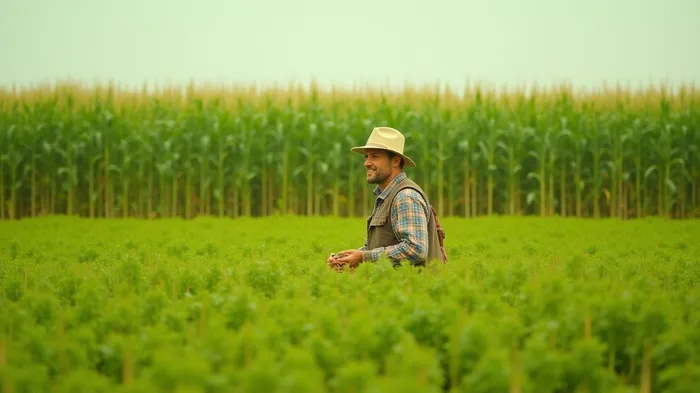
France’s farms are undergoing a quiet revolution. As climate volatility reshapes crop dynamics and policy incentives realign agricultural priorities, investors are being presented with a rare opportunity: a dual play on sugar beet scarcity and maize resilience. The data is clear—strategic investments in sugar futures and maize-driven agribusiness equities could yield outsized returns as Europe’s largest grain producer recalibrates its fields.
The Agricultural Shifts: Scarcity in Sugar, Abundance in Maize
The French Ministry of Agriculture’s latest estimates reveal a stark divergence in crop trajectories. Sugar beet production, while expanded in area (+7.9% to 411,000 hectares in 2024), faces yield stagnation. Output was revised downward to 33.73 million tons, a 1.2% drop from initial projections, despite higher planted acreage. This highlights a critical mismatch: rising demand for sugar beet-derived products (sugar, bioethanol, molasses) is outpacing supply growth, creating a scarcity premium.
Meanwhile, maize has surged, with production projected to hit 14.39 million tons in 2024/25—up 19% year-on-year. A 24% expansion in planted area (to 1.507 million hectares) and improved yields (9.33 tons/ha) have turned maize into a climate-resilient staple. This resilience is no accident: French farmers are responding to heavy rains that devastated wheat crops, shifting land toward maize’s hardiness.
Policy Tailwinds: Subsidies, Risk Management, and Sustainability
France’s agricultural policies are amplifying these trends.
- Sugar Beet’s Safety Net:
- Coupled Payments: Sugar beet processing now qualifies for €5 billion in direct subsidies, shielding producers from price volatility.
Income Stabilization: A €2 million pilot in the Grand-East region compensates farmers for margin swings, reducing risk and encouraging investment in beet production.
Maize’s Eco-Boost:
- Risk Mitigation: Multi-risk crop insurance budgets are rising to €216 million by 2027, cushioning farmers against weather shocks.
- Eco-Schemes: Maize growers adopting biodiversity-friendly practices (e.g., hedgerow planting) can earn €1.684 billion/year in eco-subsidies, incentivizing sustainable expansion.
These policies are not just supportive—they’re transformative. Sugar beet faces structural underproduction, while maize’s growth is subsidized and insured.
Investment Implications: A Two-Pronged Strategy
1. Sugar Futures: Betting on Scarcity
The imbalance between sugar beet supply and demand is a clear buy signal for futures. Consider:
- Global Sugar Market: France’s output decline coincides with Brazil’s ethanol diversion and India’s export restrictions, tightening global supplies.
- Price Dynamics: show a 15% rise since late 2023, with further upside as French scarcity bites.
Investors should:
- Allocate to sugar futures: Use contracts like the ICE Sugar #11 to capture price appreciation.
- Monitor policy risks: France’s sugar beet subsidies could be curtailed under EU budget reviews, but current projections favor producer support.
2. Maize-Driven Agribusiness: Equity Plays in Resilience
Maize’s expansion fuels industries like biofuels, animal feed, and starch production. Key equity picks include:
- French Agribusiness Giants: Companies like Société des Produits Nestlé (SPN) (SN:FP) and Roquette Frères (privately held but investable via sector ETFs) benefit from maize’s role in processed foods and bioplastics.
- Global Players with French Exposure: Archer-Daniels-Midland (ADM) and Wilmar International (WIM) leverage maize supply chains for biofuel production.
shows a 25% average gain since Q1 2024, outpacing broader markets.
Risks and Considerations
- Weather Volatility: France’s reliance on rain could still disrupt maize yields. Monitor .
- Policy Shifts: EU farm subsidy reforms could alter subsidy allocations, though current frameworks favor sugar and maize.
- Global Demand: A slowdown in biofuel or food consumption (e.g., via recession) might temper prices.
Conclusion: Act Now—The Fields Are Fertile
France’s agricultural reallocation is a once-in-a-decade opportunity. Sugar beet scarcity and maize resilience are converging to create asymmetric upside. Investors ignoring these trends risk missing out on a market where policy, climate, and demand align to reward the bold.
Recommendation:
- Allocate 5–10% of an agribusiness portfolio to sugar futures (e.g., Sugar #11) to capture scarcity-driven gains.
- Overweight equities in maize-driven industries, targeting French and multinational firms with strong supply-chain exposure.
The fields of France are not just growing crops—they’re planting the seeds for extraordinary returns.
Invest with conviction. The harvest is coming.





Comentarios
Aún no hay comentarios