
French Agricultural Protectionism and the Rise of Resilient Agribusiness: Investment Opportunities in a Shifting Landscape
France's agricultural sector is undergoing a transformative phase, driven by a blend of protectionist policies and strategic reforms under the Common Agricultural Policy (CAP) Strategic Plan. These measures, aimed at safeguarding domestic producers and enhancing food security, are reshaping global supply chains while creating fertile ground for investment in resilient agribusiness and local infrastructure. For investors, the interplay between policy, sustainability, and market dynamics offers a compelling case for capital allocation in France's evolving agricultural landscape.
The Shift Toward Protectionism and Its Global Implications
France has increasingly embraced protectionist measures to shield its agricultural sector from international competition. Tariffs on wine exports, for instance, have contributed to a historic trade deficit in food and agriculture-a first in nearly 50 years. This shift reflects a broader strategy to prioritize domestic production in sectors like dairy, beef, and ethanol, which are deemed strategically sensitive. According to analysis, such policies not only recalibrate France's trade relationships but also signal a global trend toward localized food systems, where self-sufficiency and resilience take precedence over globalization.
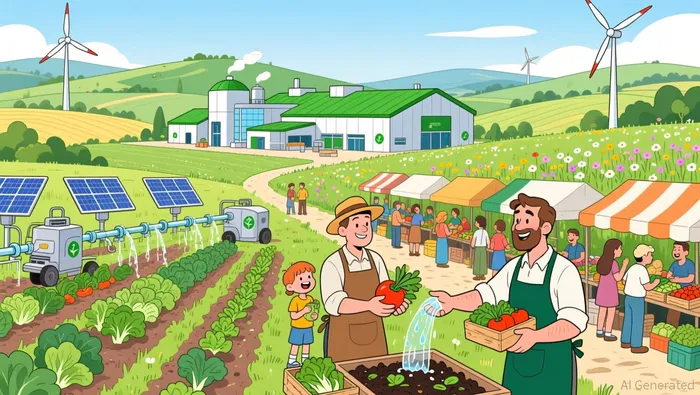 The European Union's recent trade defense mechanisms, including modernized anti-dumping duties and safeguards against import surges, further underscore this trend. According to the CAP Strategic Plan, these measures align with France's CAP Strategic Plan, which emphasizes sustainable competitiveness, farm resilience, and environmental compliance. However, the EU Court of Justice's 2025 ruling against the initial version of France's CAP plan-citing non-compliance with environmental laws-has prompted a reevaluation. This legal scrutiny highlights the delicate balance between protecting domestic agriculture and adhering to climate objectives, a challenge that will shape future policy iterations.
Investment Opportunities in Resilient Agribusiness
The CAP Strategic Plan and complementary initiatives like the Résilience et Capacités Agroalimentaires 2030 program are unlocking significant investment opportunities. The 2030 program, part of France's broader €54 billion France 2030 industrial strategy, provides co-financing for agri-food projects, covering 20–40% of eligible investments with 60% in grants and 40% as repayable loans. This funding prioritizes industrial modernization, automation, and sustainability upgrades, targeting sectors critical to food sovereignty.
Organic farming, a cornerstone of the CAP plan, is receiving targeted support through eco-schemes and direct payments, with France aiming to allocate 18% of its utilised agricultural area to organic production by 2027. The National Initiative for French Agriculture (INAF), a €2 billion guarantee fund, further bolsters this sector by supporting generational renewal, equipment modernization, and sustainable practices. According to the INAF program, these initiatives are particularly attractive to investors seeking alignment with the European Green Deal's carbon neutrality goals.
Local Food Security Infrastructure: A Strategic Focus
France's emphasis on localized food systems is evident in projects like the Projets Alimentaires Territoriaux (PATs), which integrate economic, social, and environmental dimensions of food systems at the regional level. These projects, often led by local authorities, focus on improving agricultural supply chains and school catering, fostering collaboration between farmers, institutions, and communities. According to the CAP Strategic Plan, the CAP Strategic Plan's rural development programs, which include agroecology and permanent grassland preservation, further reinforce this localized approach.
Infrastructure investments under the CAP plan also extend to carbon farming and nature restoration, aligning with EU climate mandates. For instance, the INAF program's second phase, launched in 2025, emphasizes sustainability and resilience, with over 70% of its first-phase projects focused on transforming agricultural models to meet consumer expectations. These developments position France as a leader in sustainable agribusiness, offering investors opportunities in both traditional and innovative sectors.
Navigating Risks and Regulatory Hurdles
While the opportunities are substantial, investors must navigate regulatory complexities. The EU Court's 2025 ruling on France's CAP plan underscores the need for strict compliance with environmental laws, particularly regarding crop rotation and greenhouse gas emissions. This legal oversight may delay or alter funding allocations, requiring investors to stay attuned to policy adjustments. Additionally, resistance from French farmers to trade agreements like the EU-Mercosur deal highlights the political risks of over-reliance on domestic protectionism.
Conclusion: A Strategic Investment Horizon
France's agricultural protectionism and CAP reforms are redefining the contours of global food supply chains, prioritizing sustainability, resilience, and self-sufficiency. For investors, the convergence of policy support, environmental mandates, and localized infrastructure projects presents a unique window of opportunity. From organic farming and agri-food modernization to carbon-neutral initiatives and territorial food projects, France's agribusiness sector is poised to deliver both strategic and financial returns. As the EU continues to refine its agricultural policies, early movers in this space will be well-positioned to capitalize on a sector in transformation.







Comentarios
Aún no hay comentarios