
Freeport-McMoRan's Indonesian Operations: Navigating Operational and Geopolitical Risks in a Resource-Driven World
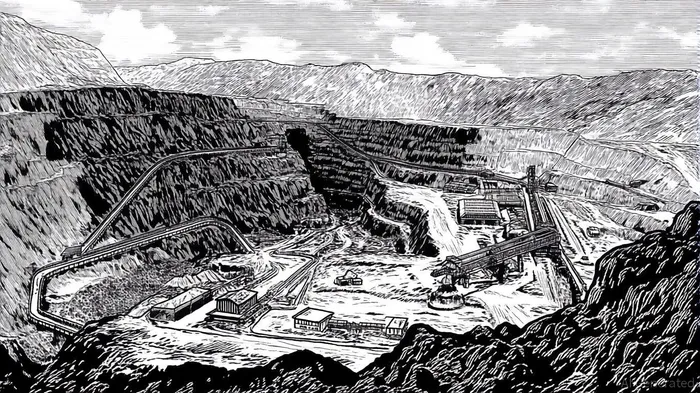
The recent mud rush at Freeport-McMoRan's Grasberg Block Cave (GBC) mine in Indonesia has underscored the fragility of resource-driven equities in politically and environmentally complex regions. The incident, which claimed two lives and left five workers missing, has disrupted 50% of PT FreeportFCX-- Indonesia's proven reserves and 70% of its forecasted production through 2029 [1]. With copper sales projected to decline by 4% in 2025 and 35% in 2026, the company faces a critical test of its long-term investment resilience. This analysis examines the operational, geopolitical, and regulatory challenges Freeport-McMoRanFCX-- must navigate in Indonesia, while evaluating how its mitigation strategies align with evolving ESG frameworks.
Operational Risks: A Mine in Crisis
The GBC mine, a cornerstone of Freeport-McMoRan's global copper portfolio, has been paralyzed by a catastrophic collapse of 800,000 metric tons of wet material. The incident forced a temporary suspension of operations, with the affected mine unlikely to resume production until mid-2026 [1]. This disruption has already triggered a 13% drop in Freeport's stock price, reflecting investor concerns over supply chain vulnerabilities and the mine's role in meeting clean energy transition demands [3].
Freeport's mitigation strategy includes declaring force majeure with commercial counterparties and pursuing $1 billion in insurance claims to offset losses [1]. While the company plans a phased restart of unaffected mines like Big Gossan and Deep MLZ by late 2025, the broader implications for operational continuity remain uncertain. The incident highlights the inherent risks of large-scale underground mining in geologically unstable regions, where technical failures can have cascading financial and reputational consequences.
Geopolitical Tensions: A Volatile Operating Environment
Indonesia's political landscape under President Prabowo Subianto has added another layer of complexity. Protests erupted in August 2025 over housing allowances for lawmakers, escalating into violent clashes after a rideshare driver was killed by police [5]. While the government has made concessions, underlying frustrations over economic inequality and governance persist. For Freeport-McMoRan, this environment raises concerns about community relations and regulatory shifts in Papua, where the Grasberg mine has long been a flashpoint for local grievances over environmental degradation and resource allocation [5].
The company's ability to maintain social license to operate hinges on its engagement with local communities. However, the recent tragedy at GBC has intensified scrutiny of its safety protocols and environmental practices. Indonesia's history of resource nationalism—exemplified by past disputes over profit-sharing and mining licenses—suggests that geopolitical risks could escalate further if public trust erodes.
Regulatory and ESG Challenges: Compliance as a Strategic Imperative
Indonesia's regulatory framework is evolving to balance economic growth with sustainability. Recent reforms, such as Government Regulation 28 of 2025, streamline business licensing but impose stricter environmental compliance requirements, including wastewater management and air emissions controls [1]. Freeport-McMoRan's operations must align with these standards while navigating the country's fragmented enforcement landscape.
The company's ESG strategy, which emphasizes “responsible production” and climate action, appears to align with Indonesia's net-zero goals by 2060 [3]. However, the absence of specific details on how Freeport addresses biodiversity loss or community displacement in its Indonesian operations raises questions about the depth of its commitment. As ESG compliance becomes a non-negotiable for global investors, Freeport's ability to transparently report on these metrics will be critical to maintaining capital inflows.
Mitigation and Resilience: A Path Forward?
Freeport-McMoRan's response to the GBC incident demonstrates a reliance on insurance and contingency planning, but these measures may not suffice for long-term resilience. The company must also address systemic risks, such as diversifying its supply chain to reduce over-reliance on a single asset and investing in community development programs to mitigate social tensions.
Indonesia's regulatory environment, while increasingly investor-friendly in some respects, remains unpredictable. The government's push for ESG alignment offers opportunities for Freeport to position itself as a leader in sustainable mining, but this requires proactive engagement with policymakers and local stakeholders.
Conclusion: A Test of Resilience in Resource-Driven Equities
Freeport-McMoRan's Indonesian operations epitomize the dual-edged nature of resource-driven equities: high returns potential amid significant operational and geopolitical risks. The GBC incident has exposed vulnerabilities in the company's risk management framework, while Indonesia's shifting political and regulatory landscape demands continuous adaptation. For investors, the key question is whether Freeport can transform these challenges into a blueprint for resilience—leveraging ESG compliance, community engagement, and strategic diversification to secure its position in a volatile market.
As the global transition to clean energy intensifies demand for copper, the stakes for Freeport-McMoRan have never been higher. The company's ability to navigate these headwinds will not only determine its own fate but also set a precedent for how resource firms balance profitability with sustainability in an increasingly complex world.







Comentarios
Aún no hay comentarios