
Why FRDM ETF is the Geopolitical Shield for Emerging Markets Investors in 2025
Investing in emerging markets has always been a high-stakes game of balancing growth potential against geopolitical volatility. But what happens when traditional ETFs like the iShares MSCI Emerging Markets ETF (EEM) and Vanguard FTSE Emerging Markets ETF (VWO) are shackled by exposure to authoritarian regimes? The Freedom 100 Emerging Markets ETF (FRDM) offers a radical alternative: a rules-based, freedom-weighted strategy that systematically avoids countries with oppressive governance, regulatory overreach, and geopolitical hotspots. In 2025, as tensions over Taiwan, China's tech crackdowns, and U.S.-China trade disputes escalate, FRDM's contrarian approach is proving its worth.
The Flaw in Traditional EM ETFs: Overexposure to Authoritarian Economies
Traditional emerging markets ETFs are designed to track broad indices like the MSCI EM or FTSE EM. But these indices are inherently biased toward countries with the largest stock markets—regardless of governance quality. China, for example, represents over 30% of EEM and VWO's portfolios, while Taiwan contributes an additional 15-18%. This heavy exposure to China's politically volatile equity market has backfired spectacularly. During the 2022–2024 regulatory crackdowns on tech firms, antitrust enforcement, and data security laws, Chinese equities suffered double-digit annual losses. Meanwhile, geopolitical risks like U.S. tariffs and threats of delisting Chinese companies added to the headwinds.
The result? Over the three years ending in 2024, EEM and VWOVWO-- lost 4%–5% annually, while FRDMFRDM-- delivered a 2% annualized return—a stark divergence.
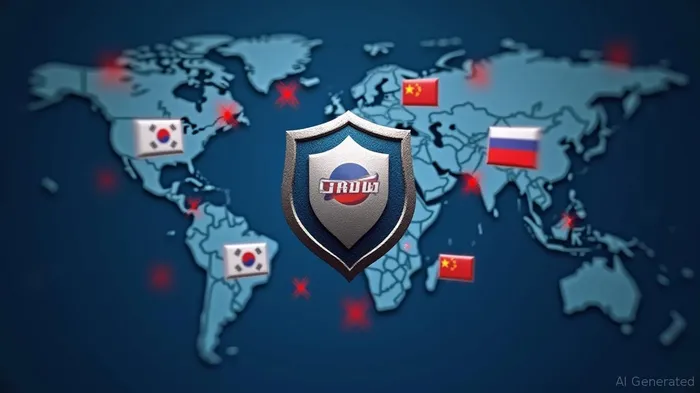
FRDM's Freedom-Weighted Edge: Rules-Based Risk Mitigation
FRDM's secret weapon is its systematic exclusion of authoritarian regimes and emphasis on economic and personal freedom metrics. By screening out countries like China and India (ranked 138th and 142nd in economic freedom, respectively), FRDM avoids markets prone to sudden regulatory whiplash. Instead, it focuses on nations such as Taiwan, South Korea, Poland, and Chile—economies with transparent governance, property rights, and lower geopolitical entanglements. This isn't just a “China-exit” strategy; it's a holistic approach to avoiding regimes where political power trumps market stability.
The Freedom-Weighted Index methodology ensures no single country dominates the portfolio. Taiwan, for instance, represents just 9% of FRDM's holdings, compared to 30% in EEM. This diversification reduces exposure to “one-trick” economies and fosters resilience in volatile environments.
Proven Resilience: Outperformance During Crises
The numbers speak for themselves. During the China regulatory crackdowns of 2022–2024, FRDM's exclusion of China shielded it from the worst declines. While EEM and VWO sank into negative territory, FRDM's focus on freedom-focused economies allowed it to capitalize on opportunities in tech-savvy democracies like South Korea and innovation hubs like Taiwan.
In 2025 alone, FRDM is up 9.2% year-to-date, outpacing EEM's 6.7% gain and leaving VWO in the dust. This outperformance isn't a fluke—it's the result of a strategy designed to thrive in environments where geopolitical risk is a constant.
The Rules-Based Edge in an Overcrowded ETF Space
The ETF industry is a crowded battlefield, with over 2,000 products vying for investors' dollars. Yet few offer the systematic risk mitigation FRDM provides. Traditional EM ETFs are passive vehicles for tracking flawed indices, while FRDM's freedom-weighted indexing is an active, rules-based filter that sidesteps authoritarian pitfalls.
This approach is particularly timely as geopolitical tensions escalate. Consider Taiwan's critical role in global semiconductor production—a sector central to the U.S.-China tech war. FRDM's exposure to Taiwanese firms (without overconcentration) positions it to benefit from geopolitical tailwinds without the direct risks of investing in China.
Investment Considerations for 2025 and Beyond
For investors seeking emerging markets exposure without the China-linked volatility, FRDM is a compelling option. Here's why it belongs on your radar:
1. Geopolitical Shield: Avoids regimes prone to regulatory swings and trade wars.
2. Outperformance in Stress: Proven resilience during the 2022–2024 crisis.
3. Diversification Without Overexposure: No single country exceeds 9% of holdings.
4. Economic Freedom Premium: Historically, free-market economies outperform over the long term.
However, FRDM isn't for everyone. Its exclusion of China and India means it misses out on potential rebounds in those markets (if they occur). Investors should also note its higher expense ratio (0.65%) compared to EEM (0.14%) and VWO (0.12%).
Final Analysis: A New Playbook for Emerging Markets
In an era where geopolitical risk is a permanent feature—not a temporary headwind—FRDM's freedom-weighted indexing offers a smarter way to navigate emerging markets. It's not just about avoiding China; it's about building a portfolio that aligns with the twin pillars of economic stability: freedom and rule of law.
For investors willing to look beyond traditional indices, FRDM represents a shield against the chaos of authoritarian regimes—and a chance to profit from the resilience of democracies. In 2025, that could be the difference between surviving and thriving.





Comentarios
Aún no hay comentarios