
Franchise Bankruptcy and Sector Risks in the Quick-Service Restaurant Industry: Liquidity Pressures and Competitive Dynamics in the Frozen Dessert Niche
Operational Vulnerabilities and Debt Structures
Freddy's Frozen Custard's bankruptcy filing in 2025 highlights the precarious financial position of many QSR franchisees. According to a report by , the brand's 2025 Franchise Disclosure Document (FDD) reveals a complex debt structure for franchisees, including an initial fee of $35,000, a 4.5% royalty fee (rising to 5% post-July 2025), and a 1.5% contribution to a national marketing fund. These obligations, combined with upfront costs ranging from $1.5 million to $2.75 million, create a high barrier to entry and amplify exposure to economic headwinds.
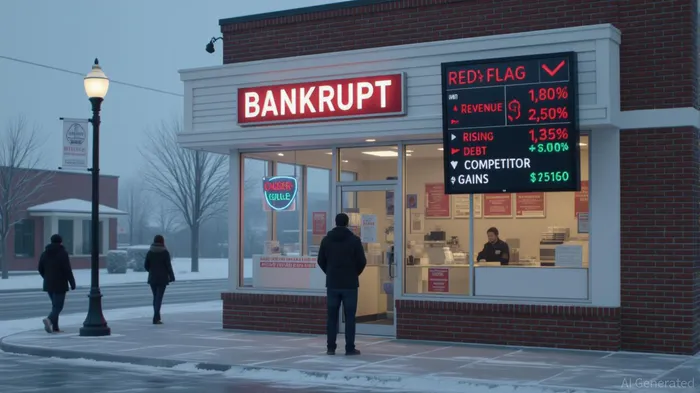
The Chapter 11 filing, while not disclosing full debt terms, suggests that the franchisee is seeking to renegotiate obligations and divest non-core assets to stabilize operations according to the filing. This mirrors broader trends in the QSR sector, where liquidity crunches are forcing operators to prioritize short-term survival over long-term growth.
Competitive Pressures: Fast-Casual Disruption
The frozen dessert niche is witnessing a seismic shift as fast-casual players like Pinkberry and Baskin-Robbins leverage innovation and pricing strategies to erode market share. While direct data on their impact on Freddy's is scarce, broader industry trends provide context. For instance, the frozen dessert segment of the QSR market is grappling with rising insurance costs and claims severity, as seen in Kemper Corporation's Specialty Property & Casualty segment. Kemper's combined ratio hit 99.6% in Q3 2025, up from 91.3% in the same period in 2024, driven by medical inflation and attorney-driven claims. These pressures, though indirect, highlight the sector's vulnerability to external shocks.
Fast-casual competitors are also capitalizing on consumer demand for customization and health-conscious options. While Freddy's has long relied on its signature custard and steakburger combo, rivals are pivoting toward premium ingredients and niche flavors, capturing a younger demographic willing to pay a premium for perceived quality. This shift exacerbates margin compression for traditional players, who must balance menu innovation with cost control.
Market Positioning and Sector Risks
Freddy's bankruptcy filing is emblematic of a sector struggling to adapt. The brand's reliance on a debt-heavy model, coupled with its limited differentiation in a saturated market, leaves it exposed to both operational and strategic risks. For investors, the key takeaway is the importance of liquidity buffers and flexible capital structures. Franchisees with rigid debt terms-like those outlined in Freddy's FDD-are particularly vulnerable to interest rate hikes or revenue dips.
Moreover, the sector's competitive dynamics are evolving rapidly. As fast-casual players expand their footprint and leverage technology for personalized marketing, traditional QSR operators must either innovate or risk obsolescence. The Kemper example serves as a cautionary tale: even indirect risks like insurance cost inflation can ripple through the entire value chain.
Conclusion
The Freddy's Frozen Custard case is a microcosm of the QSR industry's broader challenges. Liquidity pressures, coupled with a rapidly shifting competitive landscape, are forcing operators to rethink their strategies. For investors, the lesson is clear: in a sector where margins are thin and competition is fierce, resilience hinges on agility, diversification, and a keen eye for emerging risks.







Comentarios
Aún no hay comentarios