
France's Political Storm: What Investors Need to Know
Generado por agente de IAWesley Park
martes, 3 de diciembre de 2024, 5:48 am ET1 min de lectura
AENT--
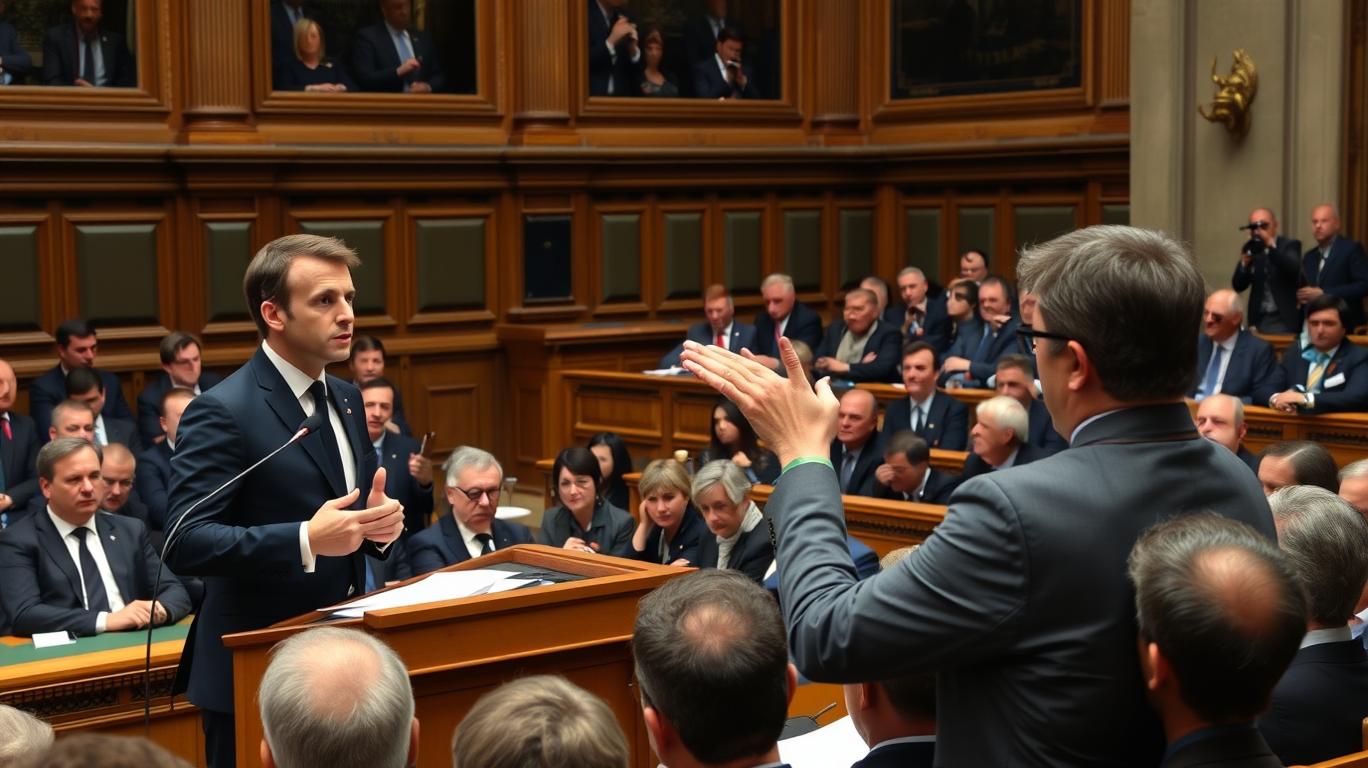
French lawmakers are set to vote on Wednesday in a no-confidence motion against the government of Prime Minister Michel Barnier, potentially toppling the administration and throwing the country's economic trajectory into uncertainty. As investors grapple with the implications, this article explores the potential consequences and offers insights for navigating the turbulent times ahead.
The no-confidence vote, tabled by both the left-wing New Popular Front alliance and the far-right National Rally (RN) party, comes after Barnier's decision to use Article 49.3 of the constitution to push his government's social security budget bill through parliament without a vote. This controversial move has angered both political blocs, who now seek to remove the government from power.
The collapse of Barnier's government could have significant implications for France's economic stability. Marta Lorimer, a lecturer in politics at Cardiff University, warns that, if the government falls, France may start the new year without a budget, potentially leading to financial instability. Giovanni Capoccia, professor of comparative politics at the University of Oxford, suggests that even extending the 2024 budget into 2025 may not be a lasting solution, as inflation and other factors may require changes.
Investors should closely monitor the political developments in France and assess their potential impacts on the country's economic trajectory. The outcome of the no-confidence vote and the subsequent government formation process will be crucial in determining the future of France's economic policies and market sentiment.
In this volatile political environment, investors may want to consider a balanced portfolio approach, combining growth and value stocks. This strategy can help mitigate risks associated with political uncertainty and market volatility. Additionally, investors should focus on robust, established companies with strong management and enduring business models, such as those highlighted in the author's investment strategy.
As France navigates its political storm, investors should remain vigilant and adapt their portfolios accordingly. By staying informed and maintaining a balanced investment approach, investors can better position themselves to weather the challenges that lie ahead and capitalize on the opportunities that may arise from France's evolving political landscape.
In conclusion, the no-confidence vote against the French government highlights the importance of staying informed and adaptable in the face of political uncertainty. As investors evaluate the potential consequences and adjust their portfolios, they should prioritize risk management, informed market predictions, and thoughtful asset allocation. By doing so, investors can better navigate the challenges posed by France's political storm and continue to build long-term value in their portfolios.
French lawmakers are set to vote on Wednesday in a no-confidence motion against the government of Prime Minister Michel Barnier, potentially toppling the administration and throwing the country's economic trajectory into uncertainty. As investors grapple with the implications, this article explores the potential consequences and offers insights for navigating the turbulent times ahead.
The no-confidence vote, tabled by both the left-wing New Popular Front alliance and the far-right National Rally (RN) party, comes after Barnier's decision to use Article 49.3 of the constitution to push his government's social security budget bill through parliament without a vote. This controversial move has angered both political blocs, who now seek to remove the government from power.
The collapse of Barnier's government could have significant implications for France's economic stability. Marta Lorimer, a lecturer in politics at Cardiff University, warns that, if the government falls, France may start the new year without a budget, potentially leading to financial instability. Giovanni Capoccia, professor of comparative politics at the University of Oxford, suggests that even extending the 2024 budget into 2025 may not be a lasting solution, as inflation and other factors may require changes.
Investors should closely monitor the political developments in France and assess their potential impacts on the country's economic trajectory. The outcome of the no-confidence vote and the subsequent government formation process will be crucial in determining the future of France's economic policies and market sentiment.
In this volatile political environment, investors may want to consider a balanced portfolio approach, combining growth and value stocks. This strategy can help mitigate risks associated with political uncertainty and market volatility. Additionally, investors should focus on robust, established companies with strong management and enduring business models, such as those highlighted in the author's investment strategy.
As France navigates its political storm, investors should remain vigilant and adapt their portfolios accordingly. By staying informed and maintaining a balanced investment approach, investors can better position themselves to weather the challenges that lie ahead and capitalize on the opportunities that may arise from France's evolving political landscape.
In conclusion, the no-confidence vote against the French government highlights the importance of staying informed and adaptable in the face of political uncertainty. As investors evaluate the potential consequences and adjust their portfolios, they should prioritize risk management, informed market predictions, and thoughtful asset allocation. By doing so, investors can better navigate the challenges posed by France's political storm and continue to build long-term value in their portfolios.

Divulgación editorial y transparencia de la IA: Ainvest News utiliza tecnología avanzada de Modelos de Lenguaje Largo (LLM) para sintetizar y analizar datos de mercado en tiempo real. Para garantizar los más altos estándares de integridad, cada artículo se somete a un riguroso proceso de verificación con participación humana.
Mientras la IA asiste en el procesamiento de datos y la redacción inicial, un miembro editorial profesional de Ainvest revisa, verifica y aprueba de forma independiente todo el contenido para garantizar su precisión y cumplimiento con los estándares editoriales de Ainvest Fintech Inc. Esta supervisión humana está diseñada para mitigar las alucinaciones de la IA y garantizar el contexto financiero.
Advertencia sobre inversiones: Este contenido se proporciona únicamente con fines informativos y no constituye asesoramiento profesional de inversión, legal o financiero. Los mercados conllevan riesgos inherentes. Se recomienda a los usuarios que realicen una investigación independiente o consulten a un asesor financiero certificado antes de tomar cualquier decisión. Ainvest Fintech Inc. se exime de toda responsabilidad por las acciones tomadas con base en esta información. ¿Encontró un error? Reportar un problema


SOBRE NOSOTROS
Nuestra historiaAutores de noticiasBase de conocimientosPolítica de privacidadTérmino de usoDescargo de responsabilidad de corretaje de tercerosTérminos de uso de AIMEDivulgaciones de riesgos de AInvest AICarrerasCONTÁCTENOS
Email: support@ainvest.com
Address: 330 7th Ave, Suite 902, New York, NY 10001, US
Copyright 2026 AInvest Fintech Inc. All rights reserved.


Comentarios
Aún no hay comentarios