
The Fragile Edge: Systemic Risks in DeFi Leverage and the Path to Resilience
The Rise and Fall of DeFi Leverage: A Systemic Risk Analysis
The decentralized finance (DeFi) sector has long been a double-edged sword: a beacon of innovation and a hotbed of volatility. By 2025, DeFi's leverage mechanisms had evolved into a $115.97 billion futures market, according to a 2025 MDPI study, yet systemic fragility remained a persistent shadow. The October 2025 crash-a $19 billion liquidation event in a single day-exposed the precarious balance between growth and instability in leveraged DeFi ecosystems, according to a retrospective analysis. This analysis unpacks the interplay of leverage, systemic risk, and regulatory dynamics, drawing on recent data to assess the sector's trajectory.
Leverage Trends: From Contraction to Institutional Surge
DeFi's leverage landscape in 2025 was marked by sharp divergences. Q1 2025 saw a 21.14% decline in open borrows to $17.7 billion, reflecting reduced on-chain activity amid asset price volatility, as the MDPI study documents. However, Q3 2025 brought a reversal: the crypto market cap surged to $4 trillion, driven by Ethereum's 66% price rally and the passage of the GENIUS Act, which stabilized stablecoin markets, according to the Crypto Market Recap. Stablecoin supply rose 18% to $300 billion, injecting liquidity into DeFi protocols and improving leverage ratios, the Crypto Market Recap also reports.
By Q4 2025, institutional adoption and Layer-2 scaling solutions further amplified leverage activity. BNBBNB-- Chain's DEXs recorded $7.088 billion in daily trading volume, outpacing EthereumETH-- and SolanaSOL--, a point noted in that retrospective analysis. Yet, this growth came with a caveat: regulatory scrutiny intensified as U.S. and EU policymakers sought to clarify legal frameworks for DeFi protocols, as detailed in a CoinDesk analysis.
Systemic Risks: Tail Dependencies and Protocol Vulnerabilities
Despite technical advancements-such as a 90% reduction in exploit losses since 2020-DeFi's systemic risks remain acute. Academic work highlights "systemic tail dependence," where tokens like ETHETH--, LINK, and UNI act as conduits for cascading losses during downturns, according to the MDPI study. For instance, a 1% adverse price move on a 100x leveraged position wipes out the entire position, triggering automatic deleveraging and liquidity spirals, the retrospective analysis explains.
Key vulnerabilities persist:
- Oracle Manipulation: Price feeds remain a single point of failure, as seen in past flash loan attacks (noted in the Crypto Market Recap).
- Liquidity Concentration: Thin markets for high-beta assets exacerbate slippage during crises (highlighted by the retrospective analysis).
- Smart Contract Flaws: While audits and formal verification have improved, complex protocols still harbor undiscovered bugs (as the CoinDesk analysis outlines).
Stablecoins like DAIDAI-- have emerged as a counterweight, absorbing stress during downturns, the MDPI study observes. However, their role is limited without broader adoption of risk-mitigation tools such as insurance protocols and decentralized liquidation mechanisms.
The October 2025 Crash: A Case Study in Systemic Fragility
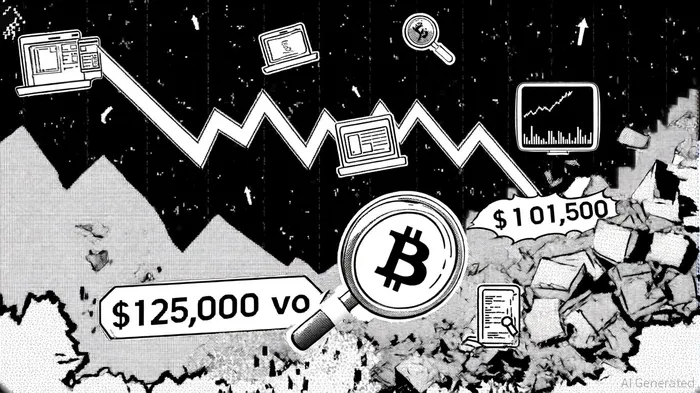
The October 2025 crash was a perfect storm of macroeconomic shocks and leveraged exposure. Triggered by U.S. President Donald Trump's 100% tariff announcement on Chinese goods, the event saw BitcoinBTC-- plummet from $125,000 to $101,500 in two hours, per the retrospective analysis. The collapse was amplified by:
1. Leveraged Positions: A 100x long position on a 1% price drop resulted in total liquidation, creating a self-reinforcing cycle of selling (as the retrospective analysis details).
2. Algorithmic Deleveraging: Automated trading systems exacerbated liquidity droughts, compounding losses (also noted in the retrospective analysis).
3. Interconnectedness: DeFi's integration with traditional markets meant crypto's collapse spilled over into broader financial systems (the retrospective analysis further documents this).
While DeFi's TVL dropped sharply, some protocols rebounded quickly, showcasing resilience that the retrospective analysis highlights. However, the crash underscored the need for real-time tail-risk monitoring and protocol-level safeguards.
Lessons and the Path Forward
The October 2025 crash serves as a wake-up call for investors and regulators. Key takeaways include:
- Risk Management Frameworks: Protocols must adopt dynamic liquidity provisioning and stress-testing to withstand extreme volatility, as argued in the Crypto Market Recap.
- Regulatory Clarity: Clear guidelines on stablecoins and leveraged products can reduce asymmetries in tail-risk contagion, a recommendation echoed in the Crypto Market Recap.
- Interoperability Standards: Cross-chain liquidity solutions could mitigate single-chain failures, a point underscored by the retrospective analysis.
For investors, the lesson is clear: leverage in DeFi is a high-stakes game. While the sector's innovation potential is undeniable, its systemic risks demand cautious allocation and diversified strategies.
Conclusion
DeFi's leverage ecosystem in 2025 is a testament to both its promise and peril. From Q1 contractions to Q3 recoveries, the sector's trajectory reflects the dual forces of institutional adoption and regulatory uncertainty. Yet, the October crash revealed that even with improved security, operational and macroeconomic risks remain unaddressed. As DeFi matures, the path to resilience lies in balancing innovation with robust risk governance-a challenge that will define the next era of decentralized finance.






Comentarios
Aún no hay comentarios