
The Fragile Balance: Trump's Legal Challenges to the Fed and Market Implications
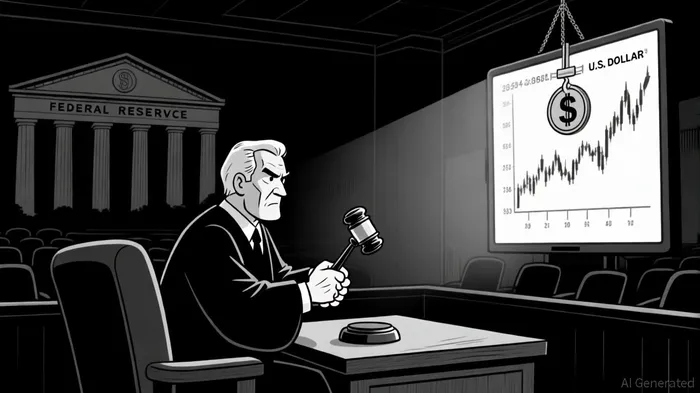
The U.S. Federal Reserve, long regarded as a cornerstone of economic stability, now faces unprecedented legal and political challenges under President Donald Trump's administration. Recent actions—ranging from threats to sue Fed Chair Jerome Powell to the contentious removal of Governor Lisa Cook—have ignited fears of politicized monetary policy and eroded investor confidence. These developments, coupled with historical precedents of political interference, underscore a critical juncture for market stability and investor strategy.
Historical Precedents and Modern Parallels
Political pressure on the Fed is not new. President Richard Nixon's 1971 directive to Arthur Burns, then-Fed Chair, to lower interest rates ahead of re-election is a textbook example of how such interference can fuel inflation. As documented by Nixon-era tapes and Burns' diary, this episode contributed to the 1970s inflationary surge, with research quantifying that sustained political pressure akin to Nixon's could raise the U.S. price level by over 8% within six months [1]. Similarly, President Lyndon B. Johnson's demands for accommodative policy to fund the Vietnam War and Great Society programs were met with resistance from Fed Chair William McChesney Martin, who prioritized economic stability [2].
Today, Trump's actions mirror these historical patterns. His August 2025 legal threat against Powell triggered a hypothetical $1.5 trillion loss in the S&P 500, per a Babson College study, while his allegations against Lisa Cook—citing unproven mortgage fraud—have raised concerns about weaponizing regulatory functions to reshape the Fed's board [3]. Legal experts warn that such moves risk normalizing political influence over monetary institutions, a precedent with global ramifications [4].
Economic Risks and Market Volatility
The immediate economic consequences of Trump's actions are stark. The August legal threat caused Treasury yields to spike, the dollar to weaken, and inflation expectations to rise, according to CNBC analysis [5]. Meanwhile, the removal of Lisa Cook—though legally contested—has heightened fears of a Fed board tilted toward Trump's agenda of rapid interest rate cuts. This could undermine the central bank's dual mandate of controlling inflation and maximizing employment, potentially reigniting the inflationary dynamics of the 1970s [6].
Long-term risks include reputational damage to the Fed and a loss of confidence in the U.S. dollar as a global reserve currency. As noted by Forbes, political interference could lead to capital flight and investor uncertainty, compounding challenges from deglobalization and aging populations [7].
Investor Strategies in a Politically Charged Era
For investors, navigating this landscape requires a recalibration of risk management. Key strategies include:
Diversification Across Assets and Geographies: Allocating to safe-haven assets like gold and international markets can mitigate exposure to U.S. dollar volatility. MorningstarMORN-- analysts highlight that political interference has already driven inflows into gold and non-U.S. equities [8].
Political Risk Insurance: Tools to hedge against expropriation, regulatory shifts, or trade restrictions are critical. FiscalNoteNOTE-- recommends such insurance for investors in sectors like energy and infrastructure, which are often targeted by policy changes [9].
Focus on Long-Term Fundamentals: Prioritizing high-quality businesses with strong balance sheets can buffer against short-term political noise. Kiplinger advises investors to favor sectors aligned with bipartisan priorities, such as renewable energy and defense [10].
Proactive Monitoring: Staying informed through real-time economic indicators and expert analyses allows for agile adjustments. For instance, rising inflation expectations or Fed communication shifts could signal the need to rebalance portfolios [11].
Conclusion
The interplay between political interference and monetary policy remains a defining challenge for investors. While the Fed's structural independence offers some resilience, the erosion of its autonomy—whether through legal threats or regulatory overreach—poses systemic risks. By adopting diversified, forward-looking strategies, investors can mitigate these uncertainties while advocating for the preservation of institutional integrity.







Comentarios
Aún no hay comentarios