
Foxconn's Q3 Surge and the Resilience of the Contract Manufacturing Sector in 2025
AI-Driven Growth and Strategic Diversification
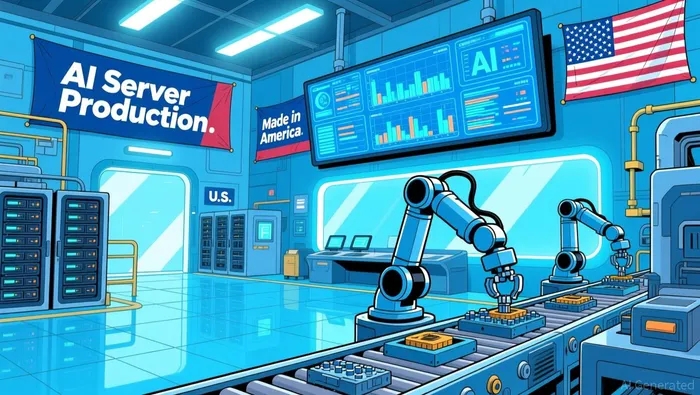
Foxconn's Q3 results were fueled by a 15% sales growth forecast for Q4 2025, as major tech platforms like MetaMETA-- and OpenAI ramp up AI infrastructure spending, a Coinotag report notes. The company's expansion of AI server production in the U.S., particularly in Wisconsin and Texas, reflects a deliberate shift away from China-centric manufacturing. Today, 65% of Foxconn's production is based in China, down from nearly 100% three years ago, with operations now spread across Vietnam, India, and Mexico, according to the Coinotag report. This diversification mitigates risks from U.S.-China trade tensions and aligns with a broader industry trend toward regionalization.
The strategic partnerships with AppleAAPL-- and NvidiaNVDA-- further amplify Foxconn's competitive edge. By securing a dominant role in AI server manufacturing, the company is capitalizing on the sector's projected $1.8 trillion market value by 2030, as noted in the Cryptopolitan report. However, challenges persist: geopolitical uncertainties and currency fluctuations have weighed on its consumer electronics division, a reminder that even the most agile firms face headwinds, according to a Globe and Mail press release.
Sector-Wide Supply Chain Resilience
Foxconn's success is part of a larger narrative of supply chain recovery in the contract manufacturing sector. Marks & Spencer (M&S), for instance, is investing £120 million to automate its supply chain after a cyberattack in April 2025 disrupted online sales, as reported by a Marketscreener article. Similarly, ketteQ's Fall 2025 Oslo Release introduces agentic AI tools that synchronize front-office and back-office operations, enabling real-time adjustments to supply chain disruptions, according to a Morningstar article. These innovations are critical for firms navigating a landscape where delays-such as those faced by data center provider CoreWeave-can trigger revenue shifts and investor skepticism, as noted in an Investing.com article.
Investor positioning in the sector remains cautiously optimistic. While CoreWeave's stock was downgraded by JPMorgan due to supply chain delays, as noted in the Investing.com article, the broader market is betting on long-term growth in AI infrastructure. Foxconn's upcoming Q3 financial results, scheduled for November 12, 2025, as noted in the Globe and Mail press release, will be a key event for investors assessing the company's ability to sustain its momentum.
The Road Ahead
For Foxconn and its peers, the path to sustained profit growth hinges on three pillars: technological agility, geopolitical foresight, and operational efficiency. The company's U.S. expansion and AI-focused strategy position it to benefit from the $50 billion annual AI server market, as noted in the Cryptopolitan report, but execution risks remain. Meanwhile, sector-wide investments in automation and AI-driven planning tools-such as ketteQ's Oslo Release, as noted in the Morningstar article-are setting new benchmarks for resilience.
Investors should monitor Foxconn's Q3 results for clues about its margin stability and capital allocation priorities. A strong performance could validate the sector's shift toward high-margin AI infrastructure, while a misstep might signal lingering vulnerabilities in consumer electronics. Either way, the broader contract manufacturing sector is poised to remain a key battleground for innovation and investor capital in 2025.







Comentarios
Aún no hay comentarios