
Foxconn's AI Infrastructure Push in Wisconsin: A Strategic Bet on U.S. Supply Chains
A Revised Path to AI-Centric Manufacturing
Foxconn's journey in Wisconsin has been anything but linear. The company's initial 2017 pledge to build a $10 billion LCD plant-a project that promised 13,000 jobs-was scaled back repeatedly, culminating in a 2021 agreement that reduced the investment to $672.8 million and job commitments to 1,454. By 2025, however, Foxconn had invested nearly $717 million in its Mount Pleasant operations and created 1,242 jobs, earning $62.9 million in tax credits. The new Racine County project, which aims to create 1,374 jobs over four years, reflects a recalibration toward AI infrastructure.
According to a report by Yahoo Finance, the Racine County expansion will focus on AI servers and data center components, positioning Foxconn to capitalize on the global surge in AI demand. This shift aligns with the company's broader strategy to pivot from traditional electronics manufacturing to high-growth sectors. "Foxconn is doubling down on AI infrastructure at a time when U.S. demand for data center components is outpacing supply," said a Wisconsin Economic Development Corporation (WEDC) spokesperson.
Strategic Supply Chain Resilience in the AI Era
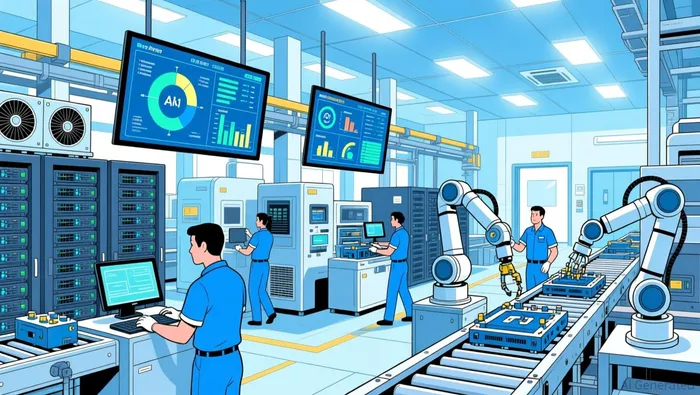 The investment also reflects a broader industry trend: the decentralization of AI supply chains. As global tech firms seek to mitigate risks from geopolitical tensions and logistics bottlenecks, domestic manufacturing hubs like Wisconsin are gaining traction. Foxconn's Racine County facility will produce servers tailored for AI workloads, a market projected to grow at a 35% compound annual rate through 2030.
This move is further bolstered by U.S. policy incentives. The revised agreement with WEDC offers up to $96 million in performance-based tax credits through 2029, contingent on job creation and capital investment. These incentives mirror the CHIPS and Science Act's focus on reshoring critical technologies, though they target a different but equally vital segment of the tech supply chain.
Lessons from Past Challenges and Future Implications
Foxconn's Wisconsin saga has been fraught with setbacks. The original LCD plant never produced a single screen, and the site's transition to Microsoft's AI data center in 2023 underscored the volatility of tech manufacturing. Yet the company's persistence-and its ability to adapt to shifting market demands-demonstrates a resilience that investors should note.
For the U.S. tech sector, Foxconn's AI-focused expansion signals a growing appetite for domestic production of high-value components. The company already produces 40% of the world's servers, and its Wisconsin operations could become a linchpin for North American AI infrastructure. This aligns with Microsoft's own investments in the region, creating a synergistic ecosystem that could attract further private and public capital.
A Compelling Case for Investors
Foxconn's $569 million bet in Wisconsin is more than a regional story-it's a microcosm of the AI revolution's impact on global supply chains. For investors, the project highlights three key themes:
1. AI Demand as a Growth Catalyst: The need for specialized servers and data center components is accelerating, driven by generative AI and cloud computing.
2. U.S. Policy Tailwinds: Incentives for domestic manufacturing are creating fertile ground for companies like Foxconn to scale.
3. Strategic Repositioning: Foxconn's pivot from consumer electronics to AI infrastructure mirrors broader industry shifts, positioning it to capture long-term value.
As the U.S. tech sector grapples with the challenges of reshoring and innovation, Foxconn's Wisconsin operations offer a blueprint for how global manufacturers can adapt. For investors, the company's AI infrastructure push-backed by state incentives and aligned with macroeconomic trends-presents a compelling opportunity in the evolving landscape of U.S. technology supply chains.







Comentarios
Aún no hay comentarios