
Foxconn's $1.37 Billion AI Compute Push: A Strategic Inflection Point for Industrial AI Adoption
Strategic Partnerships and Expansion: A Blueprint for AI Industrialization
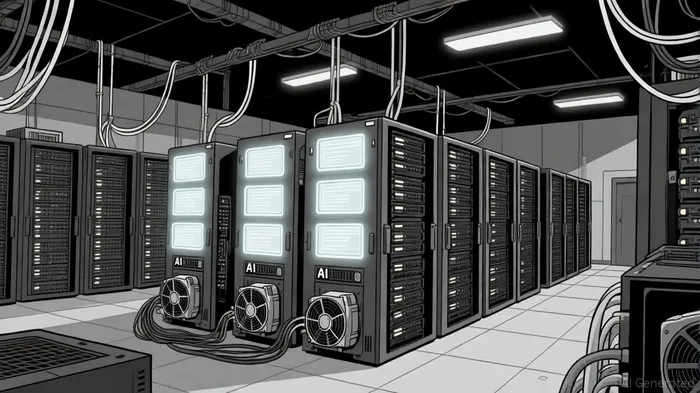
Foxconn's collaboration with TECO Electric & Machinery Co. exemplifies its strategy to dominate the AI data center sector. By acquiring a 10% stake in TECO through a share swap, the two firms are creating a one-stop solution for AI data center development, integrating power systems, cooling technologies, and server rack design, according to WebProNews (Foxconn Partners with TECO for AI Data Center Expansion). This partnership addresses a critical bottleneck in AI adoption: the need for energy-efficient, scalable infrastructure capable of handling the computational demands of machine learning and real-time analytics.
The company's capital spending is also surging. Foxconn plans to increase 2025 investments by over 20% to expand server production at its U.S. facilities in Texas and Wisconsin, according to BNNBloomberg (Artificial intelligence: Foxconn sees robust AI demand). This aligns with the growing demand for localized AI infrastructure, driven by geopolitical shifts and the need for data sovereignty. For hardware firms, this means a sustained uptick in demand for servers, GPUs, and specialized cooling systems-components that form the backbone of AI industrialization.
Technological Focus: Edge Computing and Industrial AI Adoption
While Foxconn's direct forays into industrial AI are still emerging, broader industry trends highlight the growing importance of edge computing and ruggedized hardware. For instance, BigBear.ai's integration of its ConductorOS software with BRYCK's edge-computing hardware for U.S. tactical forces demonstrates how AI solutions must operate in high-stress, real-time environments, as CNBC reports (iPhone maker Foxconn joins $1 trillion AI data). This mirrors the needs of industrial sectors like manufacturing, logistics, and energy, where latency-sensitive AI applications are becoming table stakes.
Foxconn's focus on AI server revenue-projected to double in Q2 2025-suggests the company is positioning itself to capitalize on this demand, the BNNBloomberg report said. By prioritizing modular, scalable infrastructure, Foxconn could enable industries to deploy AI solutions without overhauling existing systems, a critical factor in accelerating adoption.
Broader Market Trends: A $1 Trillion Opportunity
The AI data center market is no longer a niche segment. Cloud giants like MicrosoftMSFT-- and Google are investing billions to meet surging demand, and Foxconn's entry underscores the sector's maturation, CNBC reported. According to industry forecasts, global spending on AI infrastructure will reach $1 trillion in the coming years, driven by both enterprise and government demand. For hardware firms, this represents a long-term growth tailwind, particularly for those supplying components like GPUs, liquid cooling systems, and high-capacity storage.
Foxconn's success will hinge on its ability to balance cost efficiency with cutting-edge innovation. However, its scale and existing relationships with tech giants (e.g., Apple) provide a unique advantage in scaling AI infrastructure at a pace that smaller competitors cannot match.
Conclusion: Long-Term Catalysts for Hardware Firms
Foxconn's AI push is more than a corporate pivot-it's a harbinger of how industrial AI adoption will reshape global supply chains. For investors, the key takeaway is clear: hardware and infrastructure firms that enable scalable, energy-efficient AI solutions will be the primary beneficiaries of this transition. As Foxconn and its partners build out the physical and technological scaffolding for AI, the companies supplying the critical components-whether semiconductors, cooling systems, or modular server designs-stand to gain the most.
The next decade will likely see AI infrastructure evolve from a luxury to a necessity across industries. Foxconn's $1.37 billion bet is a signal that the era of industrial AI is no longer hypothetical-it's already here.





Comentarios
Aún no hay comentarios