
Foundering Trump Trades Put Wall Street Risk Fixation to Test
Generado por agente de IATheodore Quinn
viernes, 7 de febrero de 2025, 5:20 pm ET2 min de lectura
AOUT--
As President Donald Trump's second term unfolds, investors are grappling with the fallout from his protectionist trade policies, particularly the recent tariffs on imports from Canada, Mexico, and China. The market's reaction has been swift and volatile, with stocks tumbling on Monday, February 8, 2025, only to recover later in the day following a pause on Mexican tariffs. This roller coaster ride has put Wall Street's risk fixation to the test, as investors weigh the potential impacts on their portfolios.
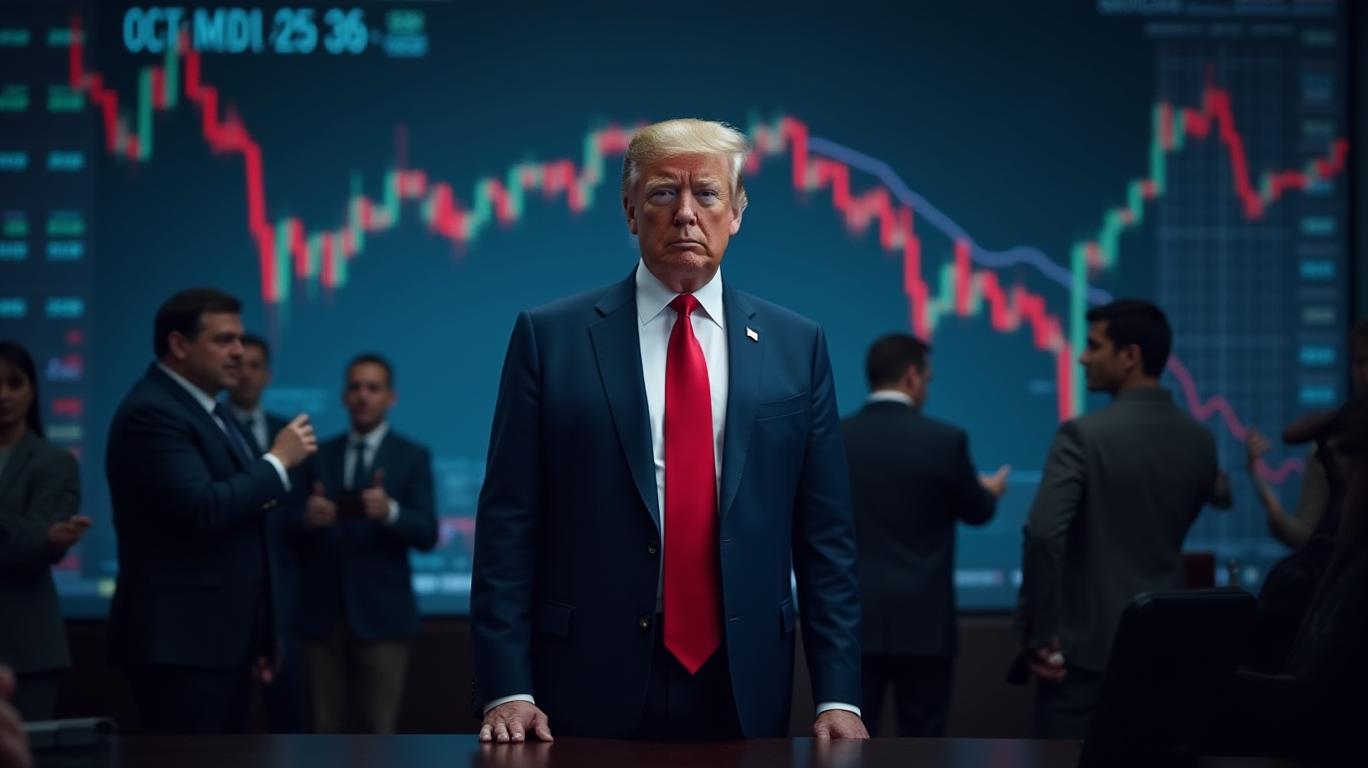
The initial announcement of Trump's tariffs sent Wall Street on a roller coaster ride, with the S&P 500 down nearly 2% at the start of trading and the Dow Jones Industrial Average dropping as many as 665 points. This reflected investors' concerns about the potential impact of a trade war on corporate profits and consumer spending. However, the market recovered later in the day after Mexican President Claudia Sheinbaum announced a one-month pause on tariffs following a conversation with Trump.
The threat of a punishing trade war sent investors seeking safer investments, such as longer-term U.S. government bonds, which are seen as some of the safest possible investments. The resulting rally in their prices drove Treasury yields down, with the yield on the 10-year Treasury falling to 4.52% from 4.55% late Friday. This reprieve, however, did not alleviate investors' concerns about the potential long-term impact of Trump's trade policies on the market and their portfolios.

Certain sectors were particularly affected by the announcement. Automaker stocks were hard hit, with General Motors falling 5.5%, Ford losing 3.9%, and Tesla tumbling 5.4% in early trading. Constellation Brands, the maker of Corona beer and Robert Mondavi wine, skidded 4.7% after some Canadian officials said they planned to remove American alcohol brands from government store shelves.
Economists projected that the stiff new tariffs could dampen U.S. economic growth and cause an increase in job losses. Oxford Economics warned that the latest set of tariffs would lead to weaker GDP growth, higher unemployment, higher interest rates, and higher inflation this year in Canada, Mexico, and the U.S.
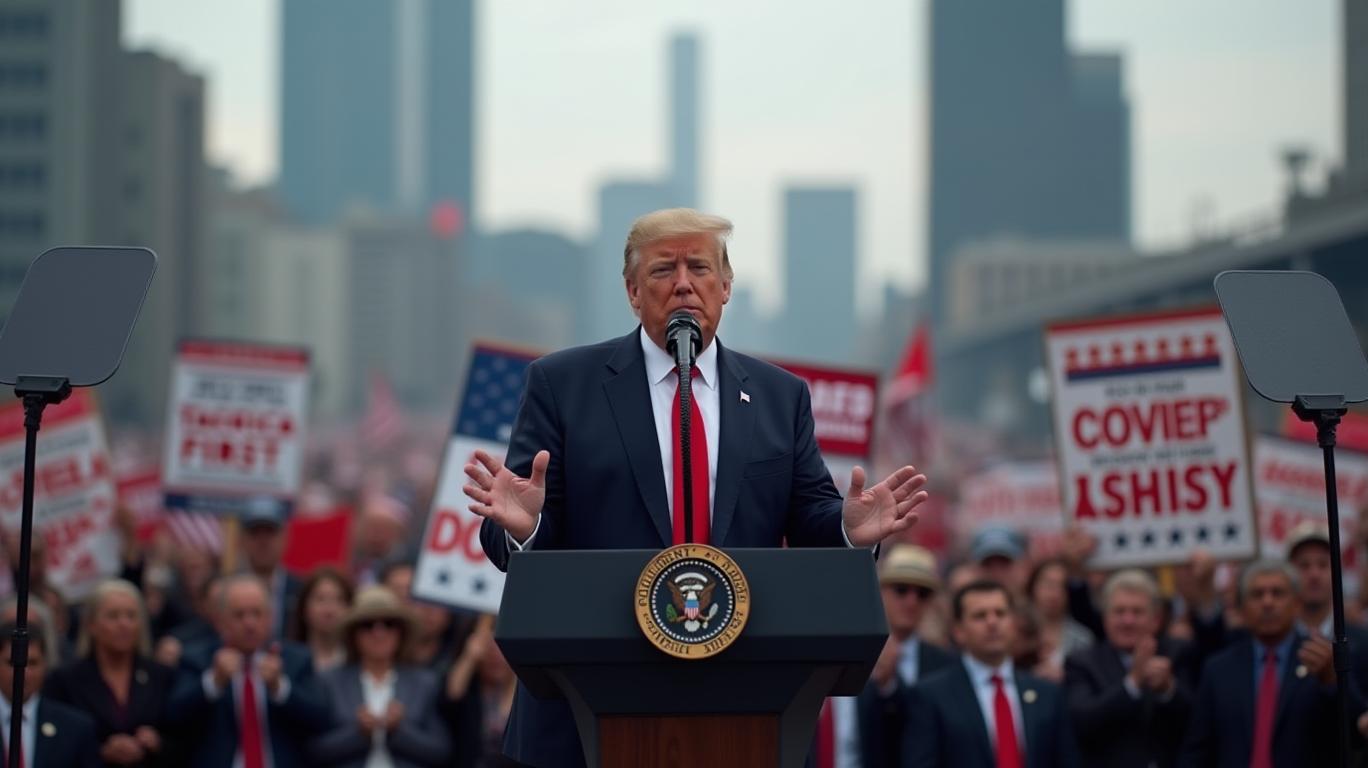
As investors navigate the volatile market landscape, they must consider the potential impacts of Trump's trade policies on their portfolios. While the one-month pause on Mexican tariffs provided a temporary reprieve, the long-term effects of Trump's trade policies remain uncertain. Investors should stay informed about developments in the trade war and be prepared to adjust their strategies accordingly.
In conclusion, Trump's trade policies, particularly his use of tariffs, have significantly impacted market volatility and investors' risk perception. The initial announcement of tariffs on imports from Canada, Mexico, and China sent Wall Street on a roller coaster ride, with investors seeking safer investments and specific sectors, such as automakers, feeling the brunt of the impact. Economists warned of potential economic consequences, including weaker GDP growth and higher unemployment. However, a one-month pause on tariffs for Mexico provided a temporary reprieve, leaving investors to wait and see how Trump's trade policies will ultimately affect the market and their portfolios.
GM--
STZ--
TSLA--
As President Donald Trump's second term unfolds, investors are grappling with the fallout from his protectionist trade policies, particularly the recent tariffs on imports from Canada, Mexico, and China. The market's reaction has been swift and volatile, with stocks tumbling on Monday, February 8, 2025, only to recover later in the day following a pause on Mexican tariffs. This roller coaster ride has put Wall Street's risk fixation to the test, as investors weigh the potential impacts on their portfolios.
The initial announcement of Trump's tariffs sent Wall Street on a roller coaster ride, with the S&P 500 down nearly 2% at the start of trading and the Dow Jones Industrial Average dropping as many as 665 points. This reflected investors' concerns about the potential impact of a trade war on corporate profits and consumer spending. However, the market recovered later in the day after Mexican President Claudia Sheinbaum announced a one-month pause on tariffs following a conversation with Trump.
The threat of a punishing trade war sent investors seeking safer investments, such as longer-term U.S. government bonds, which are seen as some of the safest possible investments. The resulting rally in their prices drove Treasury yields down, with the yield on the 10-year Treasury falling to 4.52% from 4.55% late Friday. This reprieve, however, did not alleviate investors' concerns about the potential long-term impact of Trump's trade policies on the market and their portfolios.
Certain sectors were particularly affected by the announcement. Automaker stocks were hard hit, with General Motors falling 5.5%, Ford losing 3.9%, and Tesla tumbling 5.4% in early trading. Constellation Brands, the maker of Corona beer and Robert Mondavi wine, skidded 4.7% after some Canadian officials said they planned to remove American alcohol brands from government store shelves.
Economists projected that the stiff new tariffs could dampen U.S. economic growth and cause an increase in job losses. Oxford Economics warned that the latest set of tariffs would lead to weaker GDP growth, higher unemployment, higher interest rates, and higher inflation this year in Canada, Mexico, and the U.S.
As investors navigate the volatile market landscape, they must consider the potential impacts of Trump's trade policies on their portfolios. While the one-month pause on Mexican tariffs provided a temporary reprieve, the long-term effects of Trump's trade policies remain uncertain. Investors should stay informed about developments in the trade war and be prepared to adjust their strategies accordingly.
In conclusion, Trump's trade policies, particularly his use of tariffs, have significantly impacted market volatility and investors' risk perception. The initial announcement of tariffs on imports from Canada, Mexico, and China sent Wall Street on a roller coaster ride, with investors seeking safer investments and specific sectors, such as automakers, feeling the brunt of the impact. Economists warned of potential economic consequences, including weaker GDP growth and higher unemployment. However, a one-month pause on tariffs for Mexico provided a temporary reprieve, leaving investors to wait and see how Trump's trade policies will ultimately affect the market and their portfolios.

Divulgación editorial y transparencia de la IA: Ainvest News utiliza tecnología avanzada de Modelos de Lenguaje Largo (LLM) para sintetizar y analizar datos de mercado en tiempo real. Para garantizar los más altos estándares de integridad, cada artículo se somete a un riguroso proceso de verificación con participación humana.
Mientras la IA asiste en el procesamiento de datos y la redacción inicial, un miembro editorial profesional de Ainvest revisa, verifica y aprueba de forma independiente todo el contenido para garantizar su precisión y cumplimiento con los estándares editoriales de Ainvest Fintech Inc. Esta supervisión humana está diseñada para mitigar las alucinaciones de la IA y garantizar el contexto financiero.
Advertencia sobre inversiones: Este contenido se proporciona únicamente con fines informativos y no constituye asesoramiento profesional de inversión, legal o financiero. Los mercados conllevan riesgos inherentes. Se recomienda a los usuarios que realicen una investigación independiente o consulten a un asesor financiero certificado antes de tomar cualquier decisión. Ainvest Fintech Inc. se exime de toda responsabilidad por las acciones tomadas con base en esta información. ¿Encontró un error? Reportar un problema


SOBRE NOSOTROS
Nuestra historiaAutores de noticiasBase de conocimientosPolítica de privacidadTérmino de usoDescargo de responsabilidad de corretaje de tercerosTérminos de uso de AIMEDivulgaciones de riesgos de AInvest AICarrerasCONTÁCTENOS
Email: support@ainvest.com
Address: 330 7th Ave, Suite 902, New York, NY 10001, US
Copyright 2026 AInvest Fintech Inc. All rights reserved.


Comentarios
Aún no hay comentarios