
Fosun International: Strategic Transformation and Sustainability Drive Credit Resilience in a Volatile Global Economy
In an era marked by geopolitical uncertainty and economic volatility, Fosun International (0656.HK) has emerged as a case study in strategic reinvention. The Chinese multinational conglomerate, long scrutinized for its high debt load, has undertaken a multi-year transformation that is now yielding measurable improvements in its credit profile and sustainability performance. These developments, supported by recent credit ratings affirmations and ESG accolades, position Fosun as a compelling case for investors seeking resilience in a challenging global landscape.
Credit Profile Strengthened by Strategic Deleveraging
Fosun's journey toward financial stability began with aggressive asset disposals and debt restructuring. Between 2022 and 2024, the company divested non-core assets worth approximately RMB75.0 billion, a move that significantly improved liquidity and allowed for a more focused allocation of capital to high-growth sectors like biopharmaceuticals and cultural tourism, as S&P acknowledges Fosun's return. This strategy was further reinforced by the successful issuance of USD300 million in senior unsecured notes in November 2024, which S&P's stable rating described as a "broadening of funding channels" that supports a "stable" credit outlook.
The company's debt structure has also seen meaningful optimization. Bank loans now constitute 73% of its total debt, up from 46% in mid-2022, reducing reliance on more volatile financing sources, as noted in S&P's stable rating. While Fosun's interest-bearing debt remains at around RMB60 billion, its debt-to-capital ratio of 53% reflects a healthier balance sheet compared to previous years Fosun International's S&P Global CSA Score Rises to 72, Retains Industry Lead. S&P's reaffirmation of a "BB-" rating with a stable outlook underscores the effectiveness of these measures, noting that the company's improved liquidity and financial resilience have restored investor confidence (as highlighted in the same S&P commentary).
Sustainability as a Strategic Pillar
Fosun's commitment to sustainability is no longer aspirational but operational. Its S&P Global CSA score rose to 72 in 2025, outperforming the industry average and securing its place in the S&P Global Sustainability Yearbook 2025. This score reflects robust performance across environmental, social, and governance (ESG) metrics. For instance, the company's energy conservation initiatives align with China's dual carbon goals, while its "Rural Doctors Program" has been recognized as a model for sustainable healthcare development in rural China (reported in earlier S&P coverage).
The company's global health initiatives further amplify its ESG credentials. Fosun has contributed to malaria treatment programs in Africa, demonstrating its role as a corporate actor in addressing global public health challenges (as noted in the CSA report). These efforts are not merely reputational; they are integrated into Fosun's core business strategy. For example, Fosun Pharma's development of innovative drugs like Han Si Zhuang and Foritinib-targeting cancers such as lung and breast-highlights how sustainability and profitability can coexist, as shown in Fosun Pharma's results.
Economic Resilience Through Innovation and Globalization
Fosun's strategic transformation is underpinned by a dual focus on innovation and globalization. The company's biopharma division, Fosun Pharma, has launched several globally competitive drugs, leveraging AI-driven platforms like PharmAID to accelerate R&D, according to Fosun Pharma's results. Meanwhile, its cultural tourism segment has adopted AI-enhanced guest experiences, ensuring operational efficiency even amid fluctuating travel demand (as discussed in the S&P coverage).
Globalization has also been a key driver of resilience. In the first half of 2025, overseas revenue accounted for 53% of Fosun's total revenue, a testament to its diversified geographic footprint (per the S&P analysis). This international exposure not only mitigates domestic economic risks but also positions Fosun to capitalize on growth opportunities in emerging markets.
Conclusion: A Model for Resilient Growth
Fosun International's strategic transformation-from deleveraging and asset optimization to sustainability integration and global innovation-offers a blueprint for corporate resilience. While its debt load remains substantial, the company's proactive measures have not only stabilized its credit profile but also enhanced its long-term value proposition. For investors, Fosun's journey illustrates how strategic clarity, ESG alignment, and operational agility can turn challenges into opportunities in an unpredictable global economy.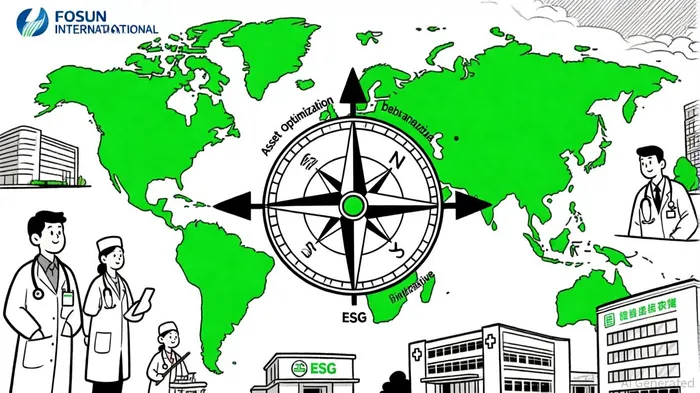







Comentarios
Aún no hay comentarios