
New Fortress Energy's Strategic Partnership with Puerto Rico: A Pivotal Move for Caribbean Energy Security
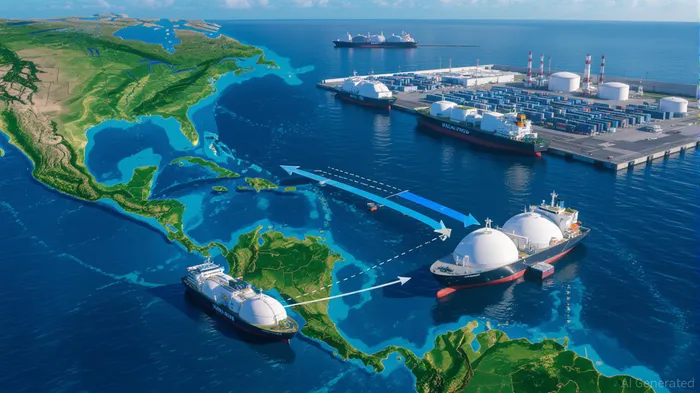
In September 2025, New Fortress EnergyNFE-- secured a landmark $4 billion liquefied natural gas (LNG) supply contract with Puerto Rico, marking a significant step in the Caribbean's evolving energy landscape. This seven-year agreement, with an option to extend for three additional years, underscores the growing importance of LNG as a transitional fuel in balancing energy security, affordability, and environmental goals. For investors, the deal represents a confluence of strategic infrastructure investment and regional energy resilience, while raising critical questions about the long-term alignment of LNG infrastructure with renewable energy ambitions.
A Strategic Partnership for Energy Stability
The partnership, finalized under non-exclusive terms, allows Puerto Rico to source LNG from New Fortress Energy's Fast LNG facility in Altamira, Mexico, at a price structure tied to 115% of Henry Hub prices plus a fixed fee of $6.50–$7.95 per million Btu [1]. This pricing model, while higher than global benchmarks, offers Puerto Rico a predictable cost structure amid volatile energy markets. The contract also includes a critical safeguard: if New Fortress Energy fails to deliver, Puerto Rico can utilize the San Juan LNG terminal to secure alternative supplies [4]. This flexibility addresses historical vulnerabilities in Puerto Rico's energy system, which has long relied on imported diesel and heavy fuel oil—fuels that are both costly and environmentally damaging [2].
For New Fortress Energy, the deal solidifies its position as a key LNG supplier in the Caribbean, a region increasingly prioritizing energy diversification. The company's 1.4 million-ton-per-year Fast LNG facility in Mexico, which supplies the Puerto Rico contract, is part of a broader trend of LNG infrastructure expansion in Latin America and the Caribbean (LAC). In 2024 alone, the region saw $1.1 trillion in new LNG terminal projects, a 6% increase from the previous year, driven by growing demand for cleaner-burning fuels and export ambitions [5].
Puerto Rico's Energy Transition: Progress and Paradoxes
Puerto Rico's energy policy is anchored in an ambitious 100% renewable energy target by 2050, with interim goals of 40% renewables by 2025 and 60% by 2040 [6]. The PR100 Study, a U.S. Department of Energy initiative, has demonstrated the technical feasibility of this transition, emphasizing the need for grid modernization, energy storage, and distributed generation [6]. However, the island's recent reliance on LNG highlights the tension between short-term reliability and long-term decarbonization.
The San Juan LNG terminal, which supports the current partnership, was controversially constructed without federal approval from the Federal Energy Regulatory Commission (FERC) [3]. Despite regulatory concerns, FERC permitted its operation due to the environmental benefits of replacing diesel with natural gas—a decision reflecting the pragmatic calculus of energy security. This duality—prioritizing immediate affordability and reliability while advancing decarbonization—mirrors broader Caribbean trends. While the region has seen a surge in LNG infrastructure, it also hosts initiatives like the World Bank's $110 million Caribbean Resilient Renewable Energy Infrastructure Investment Facility, which aims to accelerate clean energy adoption in Grenada, Saint Lucia, and Saint Vincent and the Grenadines [5].
Regional Implications and Investment Considerations
The New Fortress-Puerto Rico deal illustrates a key dynamic in Caribbean energy security: the use of LNG as a bridge to renewables. For investors, this partnership offers several strategic advantages. First, it aligns with New Fortress Energy's business model of securing long-term offtake agreements to stabilize cash flows. The company's existing infrastructure in Mexico reduces capital expenditures, enhancing the deal's financial viability [4]. Second, the contract's non-exclusive terms mitigate supply risks, a critical factor in regions prone to hurricanes and geopolitical disruptions.
However, the deal also raises questions about the Caribbean's energy transition trajectory. While LNG emits less CO₂ than coal or oil, it remains a fossil fuel. Critics argue that infrastructure investments in LNG could lock in carbon-intensive systems for decades, diverting resources from renewables. For example, Puerto Rico's renewable energy roadmap emphasizes a five-step plan to phase out fossil fuels, yet the island's growing dependence on natural gas suggests a slower transition [7].
Conclusion: Balancing Immediate Needs and Long-Term Goals
New Fortress Energy's partnership with Puerto Rico is a testament to the complex interplay of energy security, economic pragmatism, and environmental stewardship in the Caribbean. For investors, the deal highlights the region's potential as a hub for LNG infrastructure while underscoring the need for strategic alignment with decarbonization goals. As Puerto Rico and its neighbors navigate the dual imperatives of reliability and sustainability, the success of this partnership will hinge on its ability to serve as a stepping stone—rather than a detour—toward a cleaner energy future.





Comentarios
Aún no hay comentarios