
Fortifying the New World Order: NATO Defense Spending and Energy Resilience in a Post-Ukraine Landscape
The full-scale invasion of Ukraine in 2022 shattered the illusion of post-Cold War stability, catalyzing a seismic reallocation of capital toward security and infrastructure. NATO's defense spending surge—from 23 members hitting the 2% GDP target in 2024 to proposed 5% goals by 2032—signals a permanent shift in geopolitical risk management. Investors ignoring this trend risk obsolescence. Here's how to capitalize on the new reality.
The Geopolitical Pivot: From Passive Defense to Active Investment
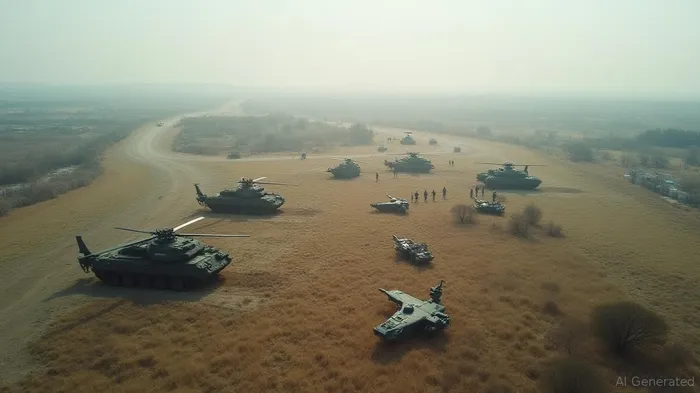
The war in Ukraine has turned NATO from a reactive alliance into an offensive planner. By 2024, 23 members met the 2% GDP defense spending threshold, with Poland (4.12% GDP) and Germany (2% GDP) leading the charge. This spending isn't just about tanks and missiles—it's about strategic resilience, with 20% of budgets now mandated for modernization (equipment, R&D). For investors, this means two things:
1. Defense contractors with ties to NATO's procurement priorities will dominate.
2. Energy infrastructure in Eastern Europe must replace Russian reliance with renewables.
Investment Opportunity 1: Cybersecurity Firms – The New Frontline
The 2024 NATO summit emphasized that 5% spending targets include cybersecurity, logistics, and intelligence—a $100 billion+ market expansion by 2030. Look for firms addressing:
- AI-driven threat detection: Companies like Palo Alto Networks (PANW), which partners with NATO on hybrid warfare tools.
- Critical infrastructure protection: Cyberark (CYBR), whose zero-trust frameworks are vital for securing power grids and defense systems.
Investment Opportunity 2: NATO-Aligned Defense Contractors – The Hardware Play
The 20% R&D allocation rule ensures steady demand for cutting-edge tech. Prioritize firms with:
- Transatlantic contracts: Raytheon Technologies (RTX), a leader in missile defense systems for NATO's “30-day deployment plan.”
- European consolidation: Airbus (AIR.PA), which leverages Germany's €100B “Zeitenwende” fund for fighter jets and drones.
Investment Opportunity 3: Renewable Energy in Eastern Europe – Energy Autonomy at Scale
Russia's gas dominance is crumbling. Poland, Ukraine, and the Baltics are pivoting to renewables, with $50B earmarked for solar/wind projects by 2030. Key plays:
- Solar farms: Orsted (ORSTED.CO), expanding offshore wind in the Baltic Sea.
- Grid modernization: NextEra Energy (NEE), partnering with NATO members to build decentralized energy networks.
The Red Flag: Overexposure to Russian Energy Assets
While sanctions ease intermittently, Russian energy remains a geopolitical minefield. Gazprom (GAZP.ME) and Rosneft (ROSN.ME) face long-term demand erosion as Europe diversifies. Their stock volatility (see below) underscores the risk.
Portfolio Strategy: Go Transatlantic, Go Defensive
- Allocate 15-20% to NATO-linked equities: Use ETFs like SPDR S&P Defense (XAR) or iShares Global Cybersecurity (HACK).
- Prioritize R&D-heavy firms: Firms with >5% R&D spending (e.g., Boeing (BA), Lockheed Martin (LMT)) will outperform as modernization funds flow.
- Avoid Russian energy: Diversify into Uranium Energy (UEC) for nuclear power or Vitol for LNG alternatives.
Risks to Monitor
- Fiscal constraints: Seven NATO members (Italy, Spain, etc.) spend more on debt interest than defense. A recession could stall budgets.
- Technological overreach: Cyber firms without proven NATO contracts may underdeliver.
Conclusion: The Geopolitical Alpha Play
The post-Ukraine world demands portfolios that mirror NATO's priorities: defensive, tech-driven, and transatlantic-focused. Investors who reallocate capital to cybersecurity, NATO-aligned defense firms, and Eastern European renewables will capture the era's defining trend. Those clinging to Russian energy or passive tech stocks risk becoming collateral damage in a new era of strategic competition.
Stay vigilant, stay transatlantic.






Comentarios
Aún no hay comentarios