
Fortifying European Defenses: Why NATO Contractors Are the New Safe Havens in a Volatile World
The Ukraine-Russia conflict has reshaped the geopolitical landscape, turning European defense spending into a strategic imperative. As NATO members fortify their arsenals to counter hybrid threats and deter Russian aggression, defense contractors like MBDA, Rheinmetall, and Thales are poised to dominate a multi-decade spending boom. With range restrictions lifted and demand surging, now is the time to allocate capital to these geopolitical risk hedges.
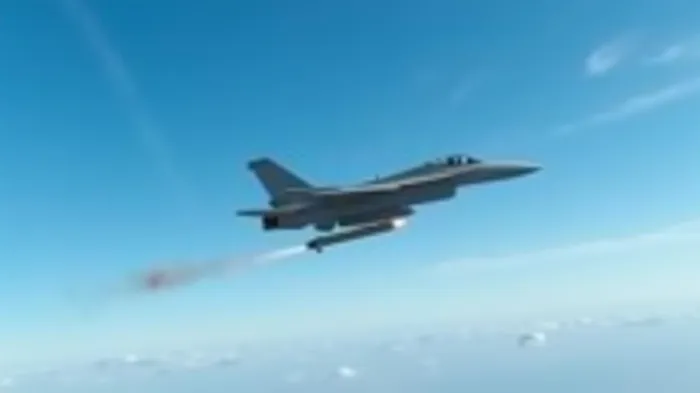
The Taurus Missile: A Precision Weapon for a Precision Crisis
The Taurus KEPD 350—a long-range cruise missile with a 500+ km range—has become a linchpin of European deterrence. Germany's €2.1 billion upgrade program (2024–2025) modernizes its fleet with GPS-independent sensors, while Sweden's recent procurement (100–300 missiles by 2028) expands the Taurus operator base. The Trinity House Agreement, a UK-German collaboration, aims to develop a 2,000 km "deep strike" missile by the 2030s, leveraging Taurus's legacy.
Why Invest?
- MBDA (via Airbus) and Saab are the sole developers of this critical system.
- Ukraine's access to extended-range weapons post-2025 signals regional demand spikes.
-
Drone Defense: The Frontline of Modern Warfare
Unmanned aerial systems (UAS) dominate battlefields, and NATO's response is Rheinmetall's Luna NG and Thales's GM200 radar.
Rheinmetall's Luna NG: Eyes in the Sky
- €200 million German Army contract (2025 delivery) equips 13 systems with drones capable of 12-hour endurance and 300 km range via satellite.
- Ukraine's low double-digit million order (2025) underscores its role in hybrid warfare.
Thales's GM200: Shielding NATO's Skies
- Lithuania's 2023 acquisition of 4D AESA radars detects drones, artillery, and missiles in real time.
- Singapore's AI-powered mine detection system (2025) highlights Thales's tech edge.
The Geopolitical Tailwind: Sustained Spending and Risk Premiums
Europe's defense budgets are structurally higher, with NATO members committing to $50 billion in annual spending growth through 2030. The EU's Readiness 2030 package allows fiscal flexibility for defense, while Russia's aggression ensures no spending cuts.
Key Metrics for Investors:
- Thales's AI team: 600 engineers and 100 PhDs driving autonomous systems (critical for drone defense).
- Rheinmetall's MGCS project: A €10+ billion Franco-German tank program (50-50 workshare) ensures long-term cash flows.
- MBDA's MdCN-NCM missile: A 1,000 km+ system aligning with ELSA's long-range strike goals.
Why Act Now?
- Geopolitical risk premiums: Defense stocks outperform during instability.
- Supply chain resilience: European contractors reduce reliance on U.S. tech.
- Valuations: Thales trades at 12x EV/EBITDA vs. aerospace peers at 15x, offering upside.
Final Call to Action
The Ukraine conflict is not a temporary crisis—it's a new normal. European defense contractors are bulletproof bets in this environment. Allocate capital to TLA.F (Thales), RHMS.F (Rheinmetall), and AIR.PA (Airbus) today. These companies are writing the rules of 21st-century warfare—and investors who miss this wave will regret it forever.
Act now. The next battlefield is already here.







Comentarios
Aún no hay comentarios