
Fortifying Europe: How Geopolitical Tensions Are Fueling a Boom in Defense Tech and Infrastructure
The Russia-Ukraine war has reshaped Europe’s security calculus, transforming defense spending from a cyclical budget line into a permanent strategic imperative. NATO member states’ collective defense outlays are projected to exceed $430 billion in 2024, with Eastern Europe at the epicenter of a historic military buildup. Nowhere is this clearer than in Lithuania, where Germany’s 45th Panzer Brigade—the Bundeswehr’s first permanent overseas deployment—has become a symbol of Europe’s resolve. For investors, this is more than a geopolitical shift: it’s a multi-decade opportunity in defense technology and infrastructure, two sectors poised to benefit from unprecedented spending and ESG-aligned growth.
The Geopolitical Catalyst: Germany’s “Zeitenwende” and the Eastern Flank
Germany’s decision to permanently station 4,800 troops in Lithuania—a region sandwiched between Russia’s exclave of Kaliningrad and Belarus—marks a seismic shift in European security strategy. This deployment is not just about deterrence; it’s a blueprint for sustained military investment. The brigade’s establishment has already triggered:
- Infrastructure Spending Surge: The Rūdninkai base, costing €1.2 billion, will house schools, medical facilities, and training grounds—all funded through European Investment Bank (EIB) public-private partnerships. Construction firms like Strabag (STRV.VI) and Bouygues (ENGI.PA) are already vying for contracts in this region.
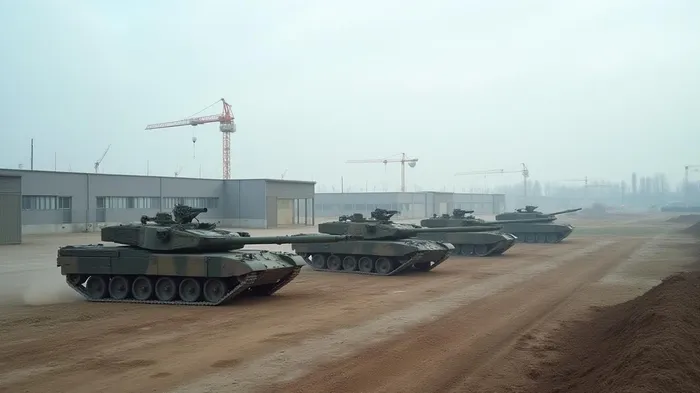
- Equipment Modernization: Germany’s procurement of 44 Leopard 2 A8 tanks for Lithuania (and its own forces) highlights the dominance of European defense contractors like Krauss-Maffei Wegmann (part of thyssenkrupp, TKA.GR). These firms are also central to NATO’s European Sky Shield Initiative, a €5.6 billion air defense program.
- ESG-Compliant Growth: The EU’s ReArm Europe strategy mandates that defense infrastructure projects align with sustainability goals. For example, the Rūdninkai base will prioritize renewable energy and green logistics, ensuring long-term ESG compliance for investors.
Why This Spending Is Here to Stay
Critics may point to Germany’s budgetary hurdles—its special defense fund expires in 2027—but the geopolitical reality ensures continuity. The NATO Force Model 2025 requires member states to maintain permanent combat brigades on the Eastern Flank, and 23 of 32 NATO nations now meet the 2% GDP spending target. Key trends locking in this trend:
- Hybrid Threats Demand Diversification: Cyber defenses, drone swarms, and resilient energy grids are now part of every military project. Companies like Thales (HO.PA) and Rheinmetall (RHE.VI) are expanding into these areas.
- Industrial Strategy Payoffs: The EU’s €150 billion SAFE loans and EIB financing are prioritizing defense innovation, reducing reliance on U.S. suppliers. A 65% European procurement target ensures local firms capture the lion’s share of contracts.
- ESG as a Competitive Edge: Defense projects now require sustainability credentials. Lithuanian infrastructure firms compliant with the EU’s Climate Bank Roadmap (e.g., using carbon-neutral materials) will dominate bids.
The Investment Case: Defensive Plays with ESG Upside
Investors should target two categories:
1. Defense Contractors:
- Krauss-Maffei Wegmann: As the sole producer of Leopard tanks—a cornerstone of NATO’s interoperability—its parent company (thyssenkrupp) is a leveraged play on Eastern European modernization.
- Rheinmetall: Specializing in artillery and electric vehicle platforms, it’s a leader in hybrid defense tech.
2. Infrastructure Firms:
- Strabag: A European construction giant with expertise in military-grade logistics infrastructure, critical for NATO’s “military mobility” initiatives.
- EIB-backed PPPs: Firms involved in the Rūdninkai base (exact names unreported but likely include local Lithuanian contractors) benefit from EIB’s green financing.
Risks? They’re Manageable
Yes, challenges exist—personnel shortages, bureaucratic delays, and budget disputes. But consider this: even if Germany’s regular defense budget grows to €80 billion annually by 2028 (as projected), it’s still half the U.S. allocation, leaving room for expansion. NATO’s 2024 Washington Summit will likely reinforce spending commitments, and the EU’s Ammunition Plan 2.0 ensures supply chain resilience.
Final Call: Buy the Dip, Hold the Geopolitical Trend
The NATO defense boom isn’t a fad—it’s a decade-long structural shift. With Eastern Europe’s infrastructure needs doubling as ESG compliance showcases, this sector offers rare defensive upside. Investors should:
- Add European defense contractors to their portfolios.
- Monitor EIB PPP tenders for infrastructure plays.
- Demand ESG disclosures—firms that align with EU sustainability criteria will outperform.
The time to act is now. Geopolitical risk isn’t going away; it’s here to stay. And so are the profits.







Comentarios
Aún no hay comentarios