
Formosa Petrochemical: A Risky Bet in a Saturated Market
Formosa Petrochemical Corporation (1402.TW) is facing a perfect storm of financial and operational headwinds that threaten its viability. Despite a technical rebound in Q1 2025 results, the company's declining earnings, overleveraged balance sheet, and the precarious Louisiana petrochemical project collectively paint a dire picture. For investors, the risks—exacerbated by overcapacity, credit downgrades, and unreliable dividends—far outweigh any short-term optimism.
Earnings Misses Signal Structural Weakness
Formosa's Q1 2025 net income dropped 26.2% year-over-year to NT$3.68 billion, with margins collapsing to just 0.7%—a stark contrast to its 3.2% net margin in Q1 2024. While the company “beat estimates” due to a sharp rebound from Q4 2024's loss, this recovery masks a deeper issue: earnings have been shrinking at a -15% annual rate, while the oil and gas sector grows at +14.9%.
The culprit? Overcapacity in refining and petrochemicals. Asia's ethylene capacity is set to surge by 9,500 kta in 2025, squeezing margins. Formosa's ethylene and propylene spreads slumped to $1,000/kt and $800/kt, respectively—levels that barely justify production. Meanwhile, global refining margins remain depressed, with Singapore complex margins averaging just $7.7/barrel in Q1.
The Louisiana Project: A Costly Gamble
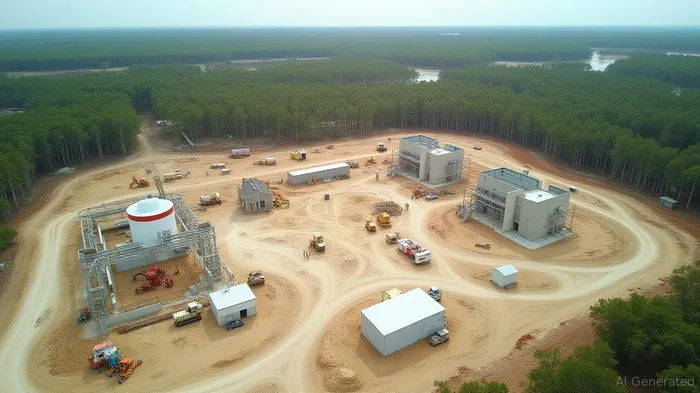
Formosa's $12 billion “Sunshine Project” in Louisiana—a petrochemical complex aimed at capitalizing on U.S. shale gas—has become a financial albatross. Initially budgeted at $9.4 billion, costs have ballooned due to delays, regulatory hurdles, and rising construction expenses. Worse, the project is a “bad bet” in an oversupplied market:
- Overcapacity Threat: Global ethylene capacity additions in 2025–2026 will hit 18,285 kta, overwhelming demand growth.
- Credit Downgrades: Moody's and S&P have slashed Formosa's ratings, citing “weak profitability” and warning that proceeding with the project could push its debt-to-EBITDA ratio below 1.0x, a redline for financial stability.
- Legal Risks: Environmental lawsuits and permit delays (e.g., wetlands approvals) add uncertainty. Formosa's history of pollution fines—including a $50 million judgment in 2017—fuels regulatory scrutiny.
Financial Health: Debt, Dividends, and Diversion
Formosa's balance sheet is strained:
- Debt Burden: With a net margin near zero, the company's ability to service debt is deteriorating. S&P estimates its debt-to-EBITDA ratio could hit 1.2x–1.4x if the Louisiana project proceeds—far weaker than the 2.0x–3.0x it could achieve by canceling it.
- Dividend Sustainability: The proposed NT$2.00 per-share dividend (payable July 2025) relies on 165% payout ratio, meaning earnings fall short of covering payouts. A dividend cut is inevitable unless margins recover—a dubious prospect.
Analyst Downgrades and Investor Sentiment
- Stock Performance: Formosa's shares fell 18% in April 2025 as investors grew skeptical.
- Estimate Revisions: Analysts slashed 2025 EPS estimates by 25% in March 2025, while revenue forecasts rose (a disconnect reflecting weak profit resilience).
- Long-Term Outlook: The company's Smart Score of 3.6/6 reflects minimal growth optimism, with S&P labeling the Louisiana project a “costly misstep” that could derail recovery.
Investment Thesis: Sell Now, Avoid the Fallout
Formosa Petrochemical is a sell. Key risks include:
1. Overcapacity Crisis: Ethylene and refining margins are structurally weak, with no reprieve in sight.
2. Project Overhang: The Louisiana complex's escalating costs and regulatory risks threaten to sink Formosa's balance sheet further.
3. Dividend Dependence: Investors betting on dividends will likely face cuts as earnings remain depressed.
Conclusion
Formosa's declining margins, debt-laden balance sheet, and the Louisiana project's existential risks all point to a stock at risk of further declines. With the petrochemical sector facing a secular downturn and the company's growth prospects dimming, investors should avoid this name until Formosa restructures its debt, cancels the project, or demonstrates margin resilience. Until then, the risks are too great—and the rewards too meager—to justify holding shares.






Comentarios
Aún no hay comentarios