
U.S. Foreign Aid Policy Shifts and Their Impact on Global Markets: Investment Opportunities in Resilient Sectors Amid Geopolitical Uncertainty
The U.S. foreign aid landscape has undergone a seismic shift between 2023 and 2025, driven by the Trump administration's strategic realignment of resources toward infrastructure, critical minerals, and geopolitical influence. This pivot, marked by a 90-day freeze on USAID funding and the dismantling of 90% of its foreign aid contracts, has redirected priorities from humanitarian aid to investment-led development[1]. While critics argue this approach risks destabilizing global health systems and ceding influence to rivals like China and Russia[2], the policy shift has also created new opportunities for investors in resilient sectors such as infrastructure, private-sector health partnerships, and energy.
The Geopolitical Reordering of U.S. Foreign Aid
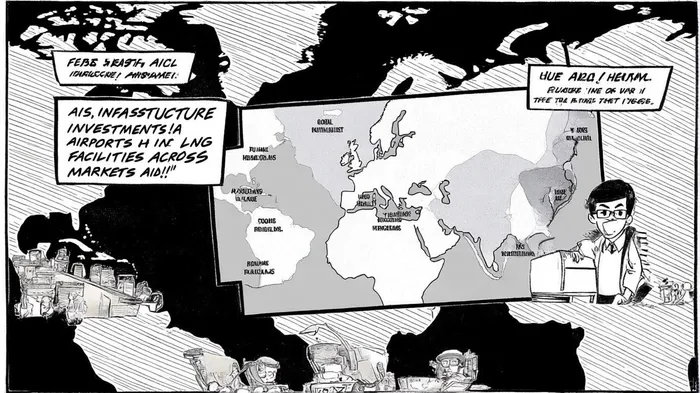
The Trump administration's “America First” strategy has redefined U.S. foreign aid as a tool for economic leverage rather than humanitarian relief. By consolidating aid under the State Department and redirecting funds to infrastructure projects—such as ports, airports, and liquefied natural gas (LNG) facilities—the U.S. aims to secure trade routes, enhance energy partnerships, and counter Chinese influence in the Global South[3]. For example, emerging markets in Southeast Asia, Latin America, and Africa face a $15 trillion infrastructure financing gap by 2040[4], a void the U.S. seeks to fill through public-private partnerships. This shift aligns with broader geopolitical goals, as infrastructure investments not only generate long-term economic returns but also solidify U.S. strategic interests in resource-rich regions.
However, the abrupt cuts to global health programs—such as the dismantling of PEPFAR, which historically provided HIV/AIDS treatment to millions—have sparked a crisis in recipient countries. According to a report by the Brookings Institution, 11 of the top 20 U.S. trade partners were previously supported by U.S. health aid, underscoring the interconnectedness of trade and development[5]. The resulting vacuum has forced nations like Uganda and Ghana to increase domestic health budgets by 66% and 12%, respectively, to mitigate the fallout[6].
Investment Opportunities in Resilient Sectors
Infrastructure and Energy
The U.S. focus on infrastructure has created fertile ground for private-sector involvement. Emerging markets require $1.5 trillion annually in infrastructure financing, with LNG and renewable energy projects emerging as key areas of interest[7]. For instance, U.S. firms specializing in port development and smart grid technologies are well-positioned to capitalize on partnerships with governments seeking to modernize their infrastructure. Additionally, the push for critical mineral extraction—such as lithium and rare earths—aligns with global decarbonization trends, offering investors exposure to supply chains critical for clean energy technologies[8].Private-Sector Health Partnerships
While U.S. aid cuts have disrupted traditional health programs, they have also accelerated the role of private-sector innovation in global health. Countries are now prioritizing integrated health systems and digital solutions to fill gaps left by reduced aid. For example, drone-based vaccine delivery (as seen with Zipline in Africa) and interoperable digital health platforms are gaining traction[9]. Investors in pharmaceuticals, diagnostics, and telemedicine stand to benefit from this shift, particularly as recipient nations seek to localize healthcare solutions.Geopolitical Realignment and Soft Power
The U.S. withdrawal from multilateral organizations like the WHO has opened opportunities for private philanthropy and regional alliances to step in. However, the administration's emphasis on direct engagement with national governments and faith-based organizations also signals a shift in soft power dynamics. Investors in sectors tied to U.S. geopolitical priorities—such as cybersecurity, agricultural technology, and education—could leverage these partnerships to expand market access in strategic regions[10].
Navigating Risks and Long-Term Considerations
While these opportunities are compelling, investors must navigate significant risks. The federal court's recent ruling against the administration's unilateral aid cuts highlights the legal and political volatility surrounding these policies[11]. Additionally, the abrupt termination of 5,600 USAID staff and programs has created operational disruptions, with some countries struggling to absorb the sudden funding reductions[12]. Investors should prioritize long-term resilience by supporting projects with clear exit strategies and aligning with local stakeholders to mitigate geopolitical uncertainties.
Conclusion
The U.S. foreign aid realignment represents both a challenge and an opportunity for global markets. While the cuts to humanitarian programs have exposed vulnerabilities in international development systems, the pivot toward infrastructure and private-sector partnerships has unlocked new avenues for investment. By focusing on resilient sectors—particularly infrastructure, health innovation, and energy—investors can navigate geopolitical uncertainty while contributing to sustainable development. As the U.S. seeks to reassert its influence in a multipolar world, the ability to align capital with strategic priorities will define the next era of global investment.







Comentarios
Aún no hay comentarios