
Ford's Tariff Crossroads: A Long Road Ahead for Investors
The automotive industry is no stranger to global trade tensions, but Ford Motor CompanyF-- (F) now faces a stark reality: tariffs imposed by the Trump administration are here to stay. CEO Jim Farley’s recent warning that these levies will persist through at least 2028 has sent shockwaves through markets, raising critical questions about Ford’s financial resilience and the broader implications for investors.
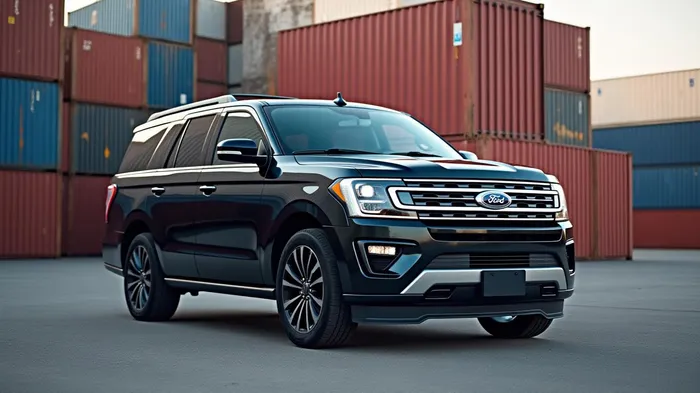
The Financial Toll of Tariffs
Ford’s 2025 financial outlook has taken a severe hit, with tariffs projected to cost the company $1.5 billion net after mitigation efforts—a stark reduction from an initial $2.5 billion estimate. This figure underscores the strain of tariffs on imported vehicles, steel, aluminum, and parts.
The first quarter of 2025 revealed the depth of the problem:
- Net profit fell 65% year-over-year to $471 million.
- Revenues dropped 5% to $40.7 billion.
- Wholesale vehicle sales declined 7%, partly due to production delays for new models like the Ford Expedition and Lincoln Navigator.
Supply Chain Acrobatics and Mitigation Limits
Farley’s team has launched aggressive strategies to offset costs: rerouting shipments from Mexico to Canada to avoid U.S. tariffs, adjusting supply chains to bypass levied parts, and leveraging an offset policy for U.S.-made components in foreign-assembled vehicles. However, these measures are proving insufficient.
The CEO warned that price hikes could follow in late 2025, potentially stifling sales growth. Ford now projects flat-to-1% annual sales growth, with risks of “compression” in the second half of the year. Meanwhile, China’s restrictions on rare earth elements—critical for manufacturing—add another layer of volatility, threatening production cuts or pricing instability.
Market Reactions and the Crypto Side Note
Ford’s stock fell 2.3% in after-hours trading following the Q1 report, though it had outperformed the S&P 500 (^GSPC) year-to-date. Investors are grappling with a paradox: Ford’s shares rose 3.8% in 2025 despite the gloomy outlook, suggesting optimism about its electric vehicle (EV) strategy or mispricing of tariff risks.
Analysts noted a curious ripple effect: prolonged trade uncertainty could accelerate blockchain adoption for supply chain transparency and push institutional investors toward digital assets as a hedge. While speculative, this highlights the far-reaching impact of trade policies on global markets.
Broader Implications: A Sector-Wide Crisis
Ford’s struggles mirror industry-wide pressures. Automakers globally face rising production costs, with trade wars exacerbating inflation. The Trump-era 25% tariffs on imported vehicles—once framed as a temporary measure—are now entrenched. Even partial relief mechanisms, like the offset policy, have failed to offset the full economic drag.
The suspension of Ford’s 2025 financial guidance underscores the “material near-term risks” it faces: retaliatory trade measures, supply chain disruptions, and shifting U.S. emissions policies. These factors create a precarious environment for long-term planning.
Conclusion: Navigating Uncertainty
Investors in Ford must weigh two competing narratives:
1. The Short-Term Pain: Tariffs, supply chain bottlenecks, and potential price hikes could further depress profits and sales in 2025. Ford’s Q1 results and suspended guidance suggest caution is warranted.
2. The Long-Term Gamble: If tariffs persist beyond 2028, Ford’s ability to adapt its supply chain and EV investments (like the F-150 Lightning) could redefine its competitiveness.
Crucial data points to monitor include:
- Ford’s H2 2025 sales and pricing strategies (will price hikes stifle demand?).
- China-U.S. trade relations, especially regarding rare earth exports.
- Global EV adoption rates, which could offset traditional vehicle market headwinds.
For now, Ford’s story is one of resilience amid a storm. Investors betting on its survival must acknowledge the storm’s duration—and whether the company can steer clear of the eye.
In sum, tariffs are not just a financial drag but a strategic litmus test for Ford’s leadership. The road ahead is long, and the stakes are high.





Comentarios
Aún no hay comentarios