
Ford's Strategic Reinvigoration: From Tech Upgrades to EV Innovation Hubs
Ford Motor Company is undergoing a transformative phase that could redefine its position in the global automotive landscape. As the electric vehicle (EV) market intensifies and regulatory pressures mount, Ford's strategic investments in cost-efficient EV platforms, innovation hubs, and regulatory adaptability are critical to assessing its long-term value proposition. This analysis delves into Ford's operational and product innovations, contextualizing them against competitive dynamics and market trends.
A New Era of Affordability: The Universal EV Platform
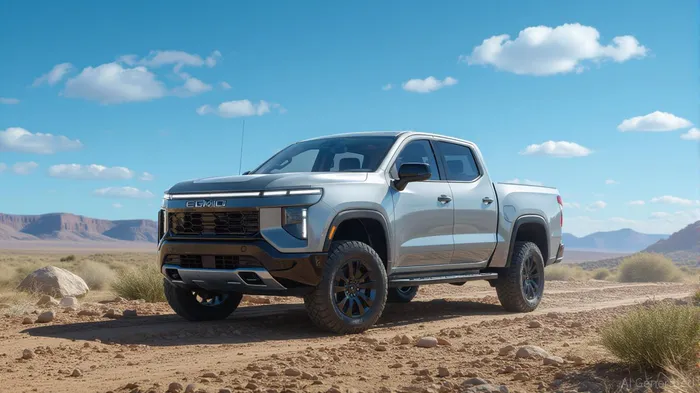
Ford's most ambitious initiative is its Universal EV Platform, a low-cost architecture designed to underpin a range of vehicles, including a mid-size EV pickup slated for a 2027 launch [1]. This platform reduces production complexity by using 20% fewer parts and 25% fewer fasteners compared to Ford's current EVs, slashing assembly time by 15% [1]. The cost savings are further amplified by the use of lithium iron-phosphate (LFP) batteries, which are cheaper to produce and safer than traditional lithium-ion units [1].
The platform's versatility is a strategic masterstroke. By supporting multiple body styles—ranging from crossovers to vans—Ford aims to scale production efficiently while catering to diverse consumer segments [1]. This approach mirrors the “Model T moment” ethos championed by CEO Jim Farley, emphasizing affordability and mass-market accessibility [1]. With a target starting price of $30,000 for the EV pickup, FordF-- is directly targeting price-sensitive buyers, a segment where Chinese automakers like BYD have gained traction [1].
Innovation Hubs: Accelerating R&D and Collaboration
To fuel this transformation, Ford has established Electric Vehicle Development Centers in strategic locations, including Long Beach, California, and Dearborn, Michigan [2]. These hubs house specialized teams, including a “skunkworks” unit focused on rapid prototyping and cost optimization [2]. The Long Beach facility alone will employ over 350 workers, with plans to expand capacity by hiring an additional 100 engineers and designers [2].
This decentralized R&D strategy mirrors Tesla's Silicon Valley-centric innovation model but with a focus on affordability. By fostering collaboration between engineers and designers, Ford aims to compress development timelines—a critical advantage in a market where speed to market often determines success [2].
Financial Prudence and Regulatory Agility
Ford's financial strategy balances bold investments with prudence. The $2 billion retooling of its Louisville Assembly Plant to produce the new EV pickup underscores its commitment to vertical integration and cost control [1]. Meanwhile, the company's willingness to pivot in response to regulatory shifts—such as delaying the next-generation F-150 to 2028—demonstrates adaptability [4]. This delay aligns with broader industry trends, as automakers reassess EV timelines amid potential policy reversals and market uncertainties [4].
Ford's hybrid approach—retaining internal combustion engines (ICEs) while exploring extended-range electric vehicles (EREVs)—further illustrates its regulatory agility. By hedging its bets on ICEs and EREVs, Ford positions itself to navigate evolving emissions standards without sacrificing market share [4].
Competitive Positioning: Navigating a Crowded EV Market
Ford's strategy must be evaluated against formidable competitors. TeslaTSLA--, despite its dominance, faces declining deliveries and a pivot toward AI-driven autonomy, while BYD has captured 20% of the global EV market with affordable models like the Blade Battery-powered Han EV [3]. Traditional automakers, including ToyotaTM-- and Chevrolet, are also refining their EV lineups and charging networks [5].
Ford's edge lies in its ability to blend affordability with American brand equity. The Bronco's 2025 updates—such as a 12.0-inch digital gauge cluster—showcase incremental innovation, but the real disruption will come from the 2027 EV pickup [3]. By targeting a $30,000 price point, Ford aims to undercut Chinese rivals while leveraging its U.S. manufacturing footprint to avoid import tariffs.
Conclusion: A Long-Term Value Proposition
Ford's strategic reinvigoration hinges on three pillars: cost-efficient EV platforms, agile R&D hubs, and regulatory adaptability. While the company faces stiff competition, its focus on affordability and modular design positions it to capture a significant share of the mass-market EV segment. The success of the 2027 EV pickup will be pivotal, but Ford's broader strategy—balancing innovation with operational efficiency—suggests a resilient long-term value proposition.
As the automotive industry navigates a period of upheaval, Ford's ability to execute its “Model T moment” vision could determine whether it emerges as a leader or a laggard in the EV era.





Comentarios
Aún no hay comentarios