
Ford’s Strategic Reboot: Navigating the EV Crossroads
Ford Motor Company’s recent cancellation of its $1.9 billion all-electric three-row SUV project marks a pivotal moment in the auto industry’s transition to electrification. The move, announced in August 2024, underscores the stark realities automakers face in balancing innovation with profitability amid a price war fueled by Chinese competitors. But is this a defensive retreat or a shrewd pivot? Let’s dissect the data.
The Cancellation: A Necessary Retreat or a Costly Mistake?
Ford’s decision to scrap the SUV project—already $400 million into write-offs, with up to $1.5 billion more at risk—stems from two key pressures. First, Chinese automakers like BYD and Xiaomi are flooding global markets with EVs priced 20-30% lower than Western rivals, thanks to subsidies, scale, and advanced battery tech. Second, U.S. consumers are increasingly opting for affordable, practical vehicles, a shift Ford aims to capitalize on with hybrid alternatives.
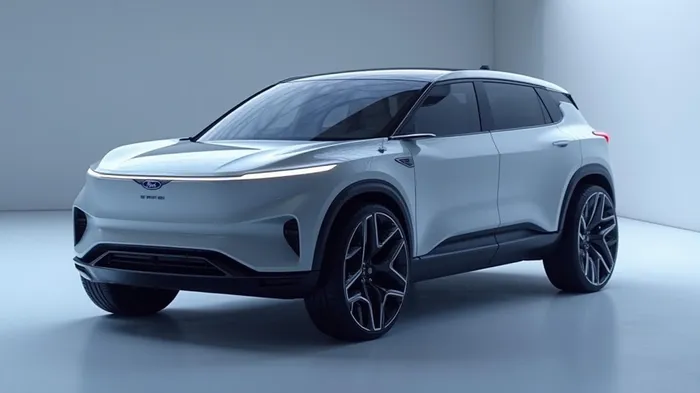
This cancellation isn’t just about cost-cutting. It’s a strategic reallocation of resources to prioritize segments where Ford can maintain margins. “The writing’s on the wall for high-cost, high-risk EV projects,” says one analyst. “Ford’s move reflects a smarter focus on what consumers actually want—and can afford.”
The Hybrid Play: Middle Ground or Missed Opportunity?
By shifting to hybrid versions of SUVs and trucks, Ford aims to offer “breakthrough efficiency” without the sticker shock of full EVs. Hybrids could bridge the gap between gas-guzzlers and EVs, appealing to buyers who want lower emissions but still need long-range flexibility.
But how does this compare to rivals? Tesla’s Cybertruck and BYD’s Tang SUV have dominated headlines, but hybrid sales are surging too. Ford’s Super Duty hybrid trucks, launching in 2026, could leverage its existing dominance in the $100 billion U.S. commercial truck market.
Battery Battles and Cost Cutting: The Key to Survival?
The real fight is in battery costs. Ford’s plan to slash battery expenses by 40% by 2027 hinges on three moves:
1. Supply Chain Overhaul: Relocating Mustang Mach-E battery production from Poland to Michigan to qualify for U.S. tax credits.
2. LFP Battery Push: Switching to lithium iron phosphate (LFP) cells, which are cheaper and abundant, by 2026.
3. Vertical Integration: Scaling up its BlueOval SK joint venture to control cell production.
These steps could reduce battery costs from $120/kWh in 2024 to $72/kWh by 2027—a critical threshold for EV affordability. Yet, BYD already produces LFP batteries at $60/kWh, underscoring the uphill battle Ford faces.
The Financials: Pain Today, Gain Tomorrow?
The write-offs are painful, but Ford’s capital expenditure (CapEx) reallocation—cutting EV spending from 40% to 30% of total budgets—could free up $2 billion annually by 2026. Redirecting funds to high-margin trucks and vans, along with software revenue streams (think subscription services), might offset losses.
The Bigger Picture: A Market in Flux
Ford’s pivot highlights two industry truths:
1. Chinese Dominance: China now holds 80% of the global EV battery supply chain, with BYD alone producing 3 million EVs annually.
2. Consumer Shifts: U.S. EV sales grew 45% in 2023, but 60% of buyers cited “affordability” as a top barrier.
Ford’s focus on hybrids and trucks aligns with these trends, but execution is everything. A delayed F-150 Lightning (pushed to 2027) and a 2026 Ohio-based electric van launch must hit cost and quality targets.
Conclusion: Ford’s Gamble on Practicality
Ford’s cancellation isn’t a surrender—it’s a recalibration. By slashing battery costs, doubling down on hybrids, and leveraging tax incentives, Ford could stabilize margins in an EV market where profitability is elusive.
The numbers back this:
- A 40% battery cost reduction would make its mid-sized electric pickup (2027 launch) competitive at $35,000—$5k cheaper than Tesla’s Cybertruck.
- Hybrid trucks could capture 30% of the $50 billion U.S. commercial truck market by 2030.
Yet risks loom large. If BYD and others undercut prices further, or if U.S. tax credits get delayed, Ford’s pivot could falter. Still, the $1.5 billion write-off is a one-time hit, while the strategic moves address long-term viability.
Investors should watch two metrics: battery cost per kWh (target: $72 by 2027) and hybrid truck sales growth. If Ford meets these, its stock—currently trading at 12x forward EV/EBITDA—could outperform. But in a market where Tesla’s valuation hinges on software and scale, Ford’s bet on pragmatism may just pay off.
The road ahead is uncertain, but Ford’s willingness to kill a $1.9 billion project proves it’s ready to adapt—and that’s a rare commodity in today’s auto industry.





Comentarios
Aún no hay comentarios