
Ford's 2025 Fixes: China Exit and Warranty Reduction
Generado por agente de IAWesley Park
jueves, 16 de enero de 2025, 3:21 am ET2 min de lectura
F--
Ford Motor Company (F) has had a rough decade, with its stock declining 35% compared to the S&P 500's 186% gain. As we look ahead to 2025, there are two significant challenges Ford needs to address to reward investors: exiting or reducing its presence in China and improving its warranty expense-to-revenue ratio.
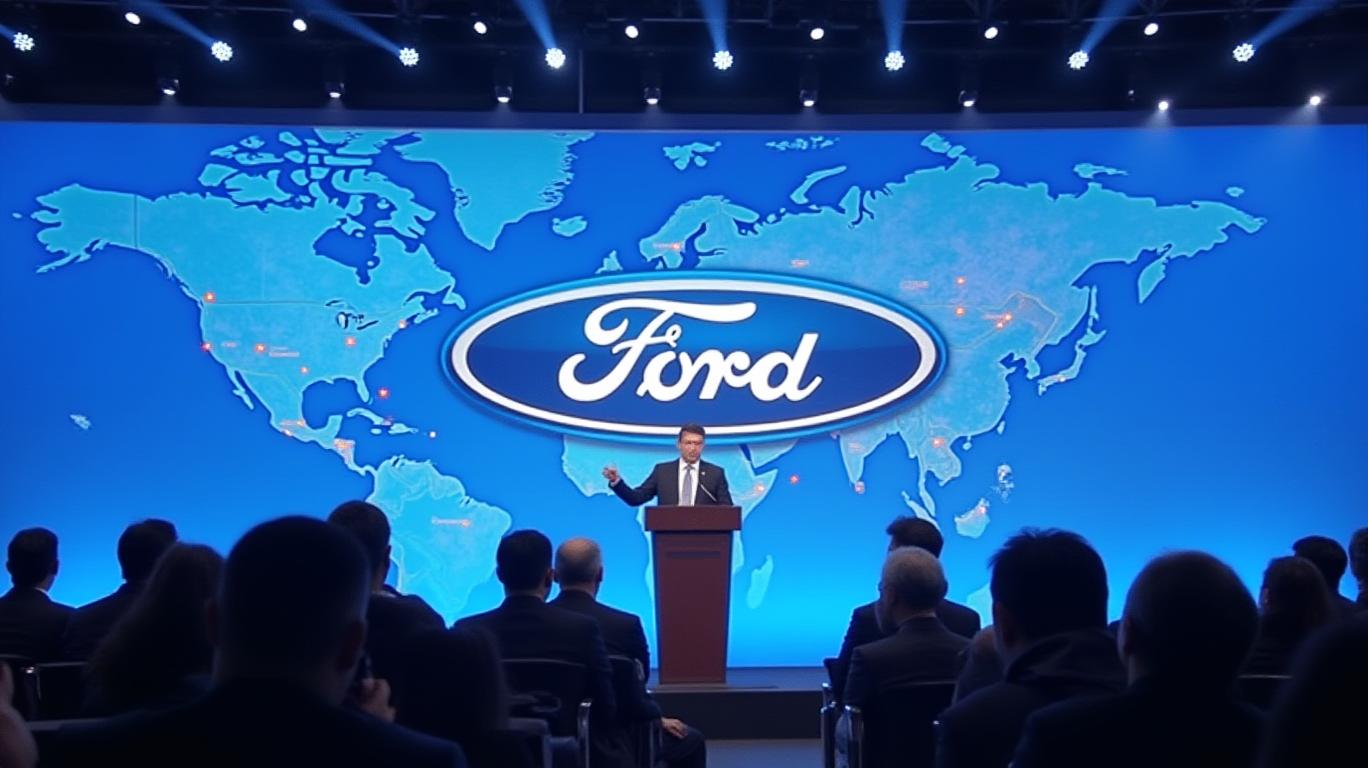
Exiting or Reducing Presence in China
Ford's struggles in China are well-documented, with the government's heavy subsidies for its electric vehicle (EV) industry creating intense competition and making it difficult for foreign automakers to compete. To address this issue, Ford can consider the following options:
1. Relocate production to other countries: Ford can move its manufacturing facilities from China to other countries, such as the United States, Mexico, or Europe. This would help the company reduce its exposure to the competitive and heavily subsidized Chinese EV market.
2. Exit the Chinese market: Ford could decide to completely withdraw from the Chinese market, similar to other automakers like Tesla, which has faced regulatory challenges and intense competition in China. This would allow Ford to focus on more profitable markets, such as North America.
3. Find alternative destinations for manufacturing: Ford can explore other countries or regions to establish or expand its manufacturing footprint. For example, Ford could invest in countries with lower labor costs, favorable trade agreements, or supportive government policies, such as Vietnam, India, or Mexico. This would help the company diversify its production and reduce its dependence on the Chinese market.
4. Develop a competitive strategy in China: If Ford decides to maintain a presence in China, it could focus on developing a more competitive strategy to better compete with local EV manufacturers. This could involve investing in research and development to create more affordable and innovative EV models tailored to the Chinese market. However, this approach may not be feasible given the intense competition and government subsidies favoring local automakers.
5. Negotiate with the Chinese government: Ford could engage in discussions with the Chinese government to address the challenges it faces in the market. This could involve seeking more favorable trade policies, reduced tariffs, or increased access to charging infrastructure. However, the success of such negotiations would depend on the Chinese government's willingness to accommodate foreign automakers.
Improving Warranty Expense-to-Revenue Ratio
Ford has been grappling with high warranty expenses, which have negatively impacted its financial performance. To improve its warranty expense-to-revenue ratio by 2025, Ford can take several steps:
1. Focus on Quality and Reduce Recalls: Ford should invest in research and development to improve vehicle quality and reliability, implement stricter quality control measures during the production process, and minimize defects and potential recalls.
2. Accelerate the Mix of Higher-Quality Vehicles: Ford should prioritize the production and sales of newer, higher-quality models to speed up the process of reducing warranty claims.
3. Improve Supplier Relationships: Strengthening relationships with suppliers can help ensure the use of high-quality components, reducing the likelihood of warranty claims.
4. Enhance Customer Support and Communication: Better communication with customers can help address warranty issues more efficiently, minimizing costs.
In conclusion, Ford has its work cut out for it in 2025. By addressing the challenges of exiting or reducing its presence in China and improving its warranty expense-to-revenue ratio, Ford can reward investors and secure a more prosperous future. As an investor, I believe that Ford has the potential to turn things around and create value for shareholders.
FORD--
Ford Motor Company (F) has had a rough decade, with its stock declining 35% compared to the S&P 500's 186% gain. As we look ahead to 2025, there are two significant challenges Ford needs to address to reward investors: exiting or reducing its presence in China and improving its warranty expense-to-revenue ratio.
Exiting or Reducing Presence in China
Ford's struggles in China are well-documented, with the government's heavy subsidies for its electric vehicle (EV) industry creating intense competition and making it difficult for foreign automakers to compete. To address this issue, Ford can consider the following options:
1. Relocate production to other countries: Ford can move its manufacturing facilities from China to other countries, such as the United States, Mexico, or Europe. This would help the company reduce its exposure to the competitive and heavily subsidized Chinese EV market.
2. Exit the Chinese market: Ford could decide to completely withdraw from the Chinese market, similar to other automakers like Tesla, which has faced regulatory challenges and intense competition in China. This would allow Ford to focus on more profitable markets, such as North America.
3. Find alternative destinations for manufacturing: Ford can explore other countries or regions to establish or expand its manufacturing footprint. For example, Ford could invest in countries with lower labor costs, favorable trade agreements, or supportive government policies, such as Vietnam, India, or Mexico. This would help the company diversify its production and reduce its dependence on the Chinese market.
4. Develop a competitive strategy in China: If Ford decides to maintain a presence in China, it could focus on developing a more competitive strategy to better compete with local EV manufacturers. This could involve investing in research and development to create more affordable and innovative EV models tailored to the Chinese market. However, this approach may not be feasible given the intense competition and government subsidies favoring local automakers.
5. Negotiate with the Chinese government: Ford could engage in discussions with the Chinese government to address the challenges it faces in the market. This could involve seeking more favorable trade policies, reduced tariffs, or increased access to charging infrastructure. However, the success of such negotiations would depend on the Chinese government's willingness to accommodate foreign automakers.
Improving Warranty Expense-to-Revenue Ratio
Ford has been grappling with high warranty expenses, which have negatively impacted its financial performance. To improve its warranty expense-to-revenue ratio by 2025, Ford can take several steps:
1. Focus on Quality and Reduce Recalls: Ford should invest in research and development to improve vehicle quality and reliability, implement stricter quality control measures during the production process, and minimize defects and potential recalls.
2. Accelerate the Mix of Higher-Quality Vehicles: Ford should prioritize the production and sales of newer, higher-quality models to speed up the process of reducing warranty claims.
3. Improve Supplier Relationships: Strengthening relationships with suppliers can help ensure the use of high-quality components, reducing the likelihood of warranty claims.
4. Enhance Customer Support and Communication: Better communication with customers can help address warranty issues more efficiently, minimizing costs.
In conclusion, Ford has its work cut out for it in 2025. By addressing the challenges of exiting or reducing its presence in China and improving its warranty expense-to-revenue ratio, Ford can reward investors and secure a more prosperous future. As an investor, I believe that Ford has the potential to turn things around and create value for shareholders.

Divulgación editorial y transparencia de la IA: Ainvest News utiliza tecnología avanzada de Modelos de Lenguaje Largo (LLM) para sintetizar y analizar datos de mercado en tiempo real. Para garantizar los más altos estándares de integridad, cada artículo se somete a un riguroso proceso de verificación con participación humana.
Mientras la IA asiste en el procesamiento de datos y la redacción inicial, un miembro editorial profesional de Ainvest revisa, verifica y aprueba de forma independiente todo el contenido para garantizar su precisión y cumplimiento con los estándares editoriales de Ainvest Fintech Inc. Esta supervisión humana está diseñada para mitigar las alucinaciones de la IA y garantizar el contexto financiero.
Advertencia sobre inversiones: Este contenido se proporciona únicamente con fines informativos y no constituye asesoramiento profesional de inversión, legal o financiero. Los mercados conllevan riesgos inherentes. Se recomienda a los usuarios que realicen una investigación independiente o consulten a un asesor financiero certificado antes de tomar cualquier decisión. Ainvest Fintech Inc. se exime de toda responsabilidad por las acciones tomadas con base en esta información. ¿Encontró un error? Reportar un problema


SOBRE NOSOTROS
Nuestra historiaAutores de noticiasBase de conocimientosPolítica de privacidadTérmino de usoDescargo de responsabilidad de corretaje de tercerosTérminos de uso de AIMEDivulgaciones de riesgos de AInvest AICarrerasCONTÁCTENOS
Email: support@ainvest.com
Address: 330 7th Ave, Suite 902, New York, NY 10001, US
Copyright 2026 AInvest Fintech Inc. All rights reserved.


Comentarios
Aún no hay comentarios