
Ford's Q2 Surge: A Blueprint for Sustainable Growth in a Transitioning Auto Landscape
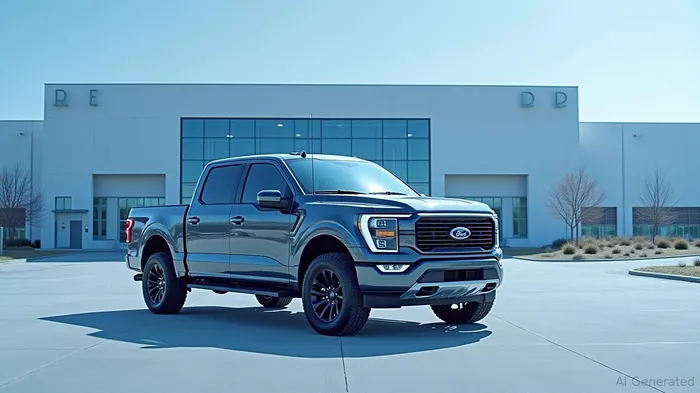
Ford Motor Company (F) has delivered a Q2 2025 performance that underscores its strategic agility in navigating a volatile automotive market. Amid rising tariffs, supply chain disruptions, and shifting consumer preferences, Ford's sales surged 14.2% to 612,095 vehicles, outpacing an industry growth of just 1.4%. This report card highlights a balanced portfolio—bolstered by truck/SUV dominance, hybrid-electrification momentum, and a revitalized Lincoln brand—that positions Ford as a resilient player in an era of rapid transformation.
The Sales Surge: Trucks, SUVs, and Hybrids Drive Growth
Ford's Q2 results were fueled by its core strengths in trucks and SUVs, which collectively accounted for nearly 80% of total sales. The F-Series pickup, America's best-selling truck for over 40 years, delivered a record Q2 performance with 222,459 units sold (+11.5%), while the Maverick compact truck soared 26.3% to 48,041 units. Even the Ranger, long a niche offering, surged 36.3%, driven by new off-road variants like the Raptor and Tremor. Combined, Ford's pickup sales rose 15.1%, solidifying its leadership in the high-margin, utility-focused segment.
Electrification also played a critical role, though unevenly. Hybrids surged 14.7% year-over-year in Q2, with the F-150 Hybrid retaining its crown as America's top-selling full-size electric truck. The Maverick Hybrid, now America's best-selling hybrid pickup, contributed to this momentum. However, battery-electric vehicles (BEVs) like the F-150 Lightning and E-Transit faced headwinds, with BEV sales dropping 25% in May due to production bottlenecks. Still, Ford's hybrid focus—accounting for 13.5% of Q2 sales—provides a pragmatic path to profitably meet emissions standards while BEV infrastructure matures.
The Lincoln brand's revival is another bright spot, with Q2 sales jumping 31% to 31,332 units—the highest since 2007. The Navigator, up 115%, and NautilusNAUT--, hitting record sales, demonstrate Lincoln's success in targeting affluent buyers seeking luxury SUVs. This segment's profitability offsets the lower margins of mass-market trucks, reinforcing Ford's earnings resilience.
Strategic Moves: Cost Discipline and Tariff Mitigation
Ford's recent cost-cutting and tariff strategies reveal a company focused on margin preservation and supply chain control:
- Aggressive Inventory Management: Ahead of 25% cross-border tariffs, Ford cleared 2024 model-year stock via “employee discount” promotions, boosting April sales by 3.2%. This avoided costly inventory write-downs while maintaining market share.
- Shift to High-Margin Trucks: Ford's focus on trucks and commercial vehicles (Ford Pro) has insulated it from tariff impacts. Trucks, which generate 50–60% gross margins, now account for 47% of U.S. sales, up from 42% in 2024. Ford Pro's software services, used by 750,000 customers, add recurring revenue streams.
- Supply Chain Optimization: By moving 80% of U.S. sales to domestic plants and using bonded carriers to avoid tariffs, Ford reduced cross-border costs by $1 billion. A $10 billion investment in North American EV production, including a new St. Louis assembly line, further reduces reliance on Mexican facilities.
These measures have already yielded results: Ford's Q1 EBIT hit $1 billion despite a $1.5 billion tariff-related profit hit, and liquidity remains robust at $27 billion in cash.
Challenges and Risks: EV Competitiveness and Production Hurdles
While Ford's strategy is multifaceted, BEV execution remains a key risk. In May, GMGM-- overtook Ford in U.S. EV sales (37,000 vs. 34,000) due to a broader portfolio, including the Blazer EV and Silverado EV. Ford's E-Transit van sales collapsed 93% in May due to production issues, a stark contrast to its hybrid success. To address this, Ford has delayed its next-gen electric pickup to 2027 and prioritized profitably scaling current models.
Additionally, while truck sales are strong, Ford must ensure it doesn't overexpose itself to a U.S. market where light-truck demand could soften if interest rates rise further.
Investment Thesis: A Balanced Portfolio for a Transitioning Market
Ford's Q2 performance argues for its long-term sustainability in three key areas:
1. Truck/SUV Dominance: As urbanization and suburban sprawl fuel demand for utility vehicles, Ford's leadership in this segment ensures steady cash flows.
2. Hybrid as a Bridge to BEV: Ford's hybrid sales outpace competitors, providing near-term profitability while BEV infrastructure matures.
3. Lincoln's Luxury Upside: A revitalized Lincoln could capture a growing affluent demographic, especially in SUVs like the Navigator.
While TeslaTSLA-- (TSLA) and GM (GM) dominate headlines with BEV sales, Ford's balanced approach—combining trucks, hybrids, and software—offers a pragmatic path to growth. Its cost discipline, tariff mitigation, and $27 billion cash cushion further reduce downside risk.
Buy Recommendation: A Defensive Play in a Volatile Sector
Ford's stock (F) trades at 6.1x forward EV/EBITDA, a discount to GM's 7.4x and Tesla's 20.5x, reflecting investor skepticism around its BEV execution. However, the stock's 14% dividend yield and its focus on high-margin segments suggest it's undervalued.
Investors seeking exposure to a transitioning auto sector should consider Ford as a defensive buy. Its truck/SUV dominance, hybrid profitability, and cost controls position it to thrive even if BEV demand lags or macroeconomic headwinds intensify. Ford's Q2 results are not just a sales victory—they're a blueprint for sustainable growth in an industry in flux.
Buy F for its balanced portfolio and execution, and hold for the long term as the auto sector evolves.





Comentarios
Aún no hay comentarios