
Ford's EV Retreat: A Strategic Opportunity for Tesla and EV-Powered Growth Stocks
The electric vehicle (EV) industry is undergoing a seismic shift, and Ford's recent strategic pivot has sent shockwaves through the sector. By abandoning its aggressive all-electric roadmap and pivoting to hybrids and extended-range electric vehicles (EREVs), FordF-- has not only rewritten its own playbook but also created a vacuum that TeslaTSLA-- and other EV-focused growth stocks are poised to fill. This is not just a corporate retrenchment-it's a market recalibration that investors must understand to capitalize on the next phase of EV innovation and consolidation.
Ford's Retreat: A Lesson in Market Realism
Ford's decision to scrap its full EV ambitions for large vehicles like the F-150 Lightning and pivot to EREVs and hybrids is a stark admission of the current market's limitations. According to a report by Reuters, . This move reflects a brutal reality: consumer demand for large, expensive EVs has faltered, and regulatory shifts under the Trump administration, including the expiration of federal tax credits and relaxed emissions rules, have further eroded the EV value proposition.
Ford's new strategy prioritizes affordability and flexibility. It plans to launch a midsize pickup truck on its Universal EV Platform by 2027 and expand its hybrid and EREV offerings to capture 50% of global sales by 2030. While this approach may stabilize Ford's near-term profitability, it also signals a retreat from the high-risk, high-reward bets that defined the early EV race.
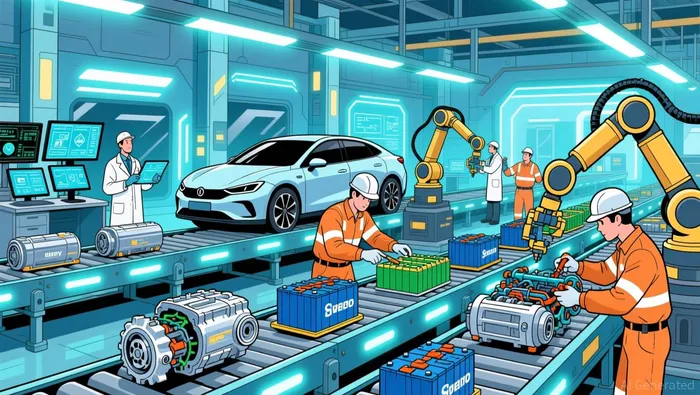
Tesla's Strategic Edge in a Shifting Landscape
Tesla, which has long been the gold standard for EV innovation, stands to benefit from Ford's retreat. The company's focus on scalable, cost-effective models like the Model 3 and Model Y aligns with the growing demand for affordable EVs. Moreover, Tesla's recent Cybertruck and Semi launches position it to dominate the premium and commercial EV segments-areas where Ford is now pulling back. According to CNBC analysis.
The data supports this narrative. In Q3 2025, . EV sector, while Chinese automaker BYD captured 19.3% of the global plug-in vehicle market, surpassing Tesla. According to market data, however, Tesla's brand strength and first-mover advantage remain unmatched. As Ford and GM pivot to hybrids, Tesla's pure EV strategy-though now a smaller slice of the pie-could see a relative boost in market share.
Sector Consolidation: Winners and Losers Emerge
The EV industry is entering a phase of aggressive consolidation, with traditional automakers like Ford and GM retreating from costly all-electric bets and refocusing on hybrids. This trend is mirrored globally. In China, BYD and Nio have surged ahead, leveraging vertical integration and government incentives to dominate the market. Meanwhile, U.S. and European automakers are grappling with policy uncertainty and supply chain disruptions, including .
For investors, this consolidation creates opportunities in two key areas:
1. Battery and Energy Storage Innovators: Ford's new battery energy storage system (BESS) business, set to launch in 2027, highlights the growing demand for energy solutions beyond vehicles. Companies supplying lithium, nickel, and copper-critical for both EVs and hybrids-are well-positioned to thrive.
2. EV Growth Stocks with Scalable Platforms: Tesla's Gigafactories and BYD's vertically integrated production model exemplify the importance of cost efficiency. Smaller EV startups that can adapt to hybrid and EREV architectures-such as Rivian or Lucid-may also gain traction if they pivot quickly.
The Road Ahead: Policy Clarity and Consumer Confidence
The EV sector's long-term success hinges on policy stability. The Trump administration's regulatory shifts have created a "Wild West" environment, where automakers are forced to balance innovation with profitability. For example, the phase-out of federal tax credits has led to a 40% drop in U.S. EV demand, pushing automakers to prioritize cost-cutting over electrification.
However, the global EV market remains resilient. In 2024, , with China accounting for two-thirds of the total. According to the IEA report, as the U.S. and Europe stabilize their policies, .
Conclusion: A Strategic Inflection Point
Ford's retreat from all-electric vehicles is not a failure but a recalibration-a recognition that the EV market is evolving faster than even the most optimistic projections. For Tesla and other EV-focused growth stocks, this shift represents a chance to consolidate market share, innovate in niche segments, and capitalize on the infrastructure investments now being redirected by legacy automakers.
Investors should watch for three key trends:
- Tesla's ability to maintain its premium EV dominance despite rising competition.
- The rise of Chinese EVs like BYD and Nio in global markets.
- The emergence of hybrid and EREV-focused growth stocks as the industry balances profitability with electrification.
In this new era of sector consolidation, the winners will be those who adapt fastest-and Ford's retreat may be the catalyst that accelerates their ascent.
The electric vehicle (EV) industry is undergoing a seismic shift, and Ford's recent strategic pivot has sent shockwaves through the sector. By abandoning its aggressive all-electric roadmap and pivoting to hybrids and extended-range electric vehicles (EREVs), Ford has not only rewritten its own playbook but also created a vacuum that Tesla and other EV-focused growth stocks are poised to fill. This is not just a corporate retrenchment-it's a market recalibration that investors must understand to capitalize on the next phase of EV innovation and consolidation.
Ford's Retreat: A Lesson in Market Realism
Ford's decision to scrap its full EV ambitions for large vehicles like the F-150 Lightning and pivot to EREVs and hybrids is a stark admission of the current market's limitations. According to a report by Reuters, the company is taking a $19.5 billion charge-largely from asset write-downs and restructuring costs-while repurposing EV plants for gas and hybrid production. This move reflects a brutal reality: consumer demand for large, expensive EVs has faltered, and regulatory shifts under the Trump administration, including the expiration of federal tax credits and relaxed emissions rules, have further eroded the EV value proposition.
Ford's new strategy prioritizes affordability and flexibility. It plans to launch a midsize pickup truck on its Universal EV Platform by 2027 and expand its hybrid and EREV offerings to capture 50% of global sales by 2030. While this approach may stabilize Ford's near-term profitability, it also signals a retreat from the high-risk, high-reward bets that defined the early EV race.
Tesla's Strategic Edge in a Shifting Landscape
Tesla, which has long been the gold standard for EV innovation, stands to benefit from Ford's retreat. The company's focus on scalable, cost-effective models like the Model 3 and Model Y aligns with the growing demand for affordable EVs. Moreover, Tesla's recent Cybertruck and Semi launches position it to dominate the premium and commercial EV segments-areas where Ford is now pulling back. According to CNBC analysis.
The data supports this narrative. In Q3 2025, . EV sector, , surpassing Tesla. According to market data, however, Tesla's brand strength and first-mover advantage remain unmatched. As Ford and GM pivot to hybrids, Tesla's pure EV strategy-though now a smaller slice of the pie-could see a relative boost in market share.
Sector Consolidation: Winners and Losers Emerge
The EV industry is entering a phase of aggressive consolidation, with traditional automakers like Ford and GM retreating from costly all-electric bets and refocusing on hybrids. This trend is mirrored globally. In China, BYD and Nio have surged ahead, leveraging vertical integration and government incentives to dominate the market. Meanwhile, U.S. and European automakers are grappling with policy uncertainty and supply chain disruptions, including .
For investors, this consolidation creates opportunities in two key areas:
1. Battery and Energy Storage Innovators: Ford's new battery energy storage system (BESS) business, , highlights the growing demand for energy solutions beyond vehicles. Companies supplying lithium, nickel, and copper-critical for both EVs and hybrids-are well-positioned to thrive.
2. EV Growth Stocks with Scalable Platforms: Tesla's Gigafactories and BYD's vertically integrated production model exemplify the importance of cost efficiency. Smaller EV startups that can adapt to hybrid and EREV architectures-such as Rivian or Lucid-may also gain traction if they pivot quickly.
The Road Ahead: Policy Clarity and Consumer Confidence
The EV sector's long-term success hinges on policy stability. The Trump administration's regulatory shifts have created a "Wild West" environment, where automakers are forced to balance innovation with profitability. For example, . EV demand, pushing automakers to prioritize cost-cutting over electrification.
However, the global EV market remains resilient. In 2024, , . According to the IEA report, as the U.S. and Europe stabilize their policies, .
Conclusion: A Strategic Inflection Point
Ford's retreat from all-electric vehicles is not a failure but a recalibration-a recognition that the EV market is evolving faster than even the most optimistic projections. For Tesla and other EV-focused growth stocks, this shift represents a chance to consolidate market share, innovate in niche segments, and capitalize on the infrastructure investments now being redirected by legacy automakers.
Investors should watch for three key trends:
- Tesla's ability to maintain its premium EV dominance despite rising competition.
- The rise of Chinese EVs like BYD and Nio in global markets.
- The emergence of hybrid and EREV-focused growth stocks as the industry balances profitability with electrification.
In this new era of sector consolidation, the winners will be those who adapt fastest-and Ford's retreat may be the catalyst that accelerates their ascent.





Comentarios
Aún no hay comentarios