
Who Foots the Bill for Trump's Military Golf Makeover?
President Donald Trump has enlisted golf legend Jack Nicklaus to revamp the deteriorating golf courses at Joint Base Andrews, a military facility near Washington, D.C., known as the "president's golf course." The project, announced during a November 22 visit to the base, adds to Trump's expanding portfolio of golf-related construction efforts, raising questions about who will bear the costs for Nicklaus's design services and broader renovations. Trump described the base's two courses as "in very bad shape" but claimed the work could be completed "for very little money" according to Trump.
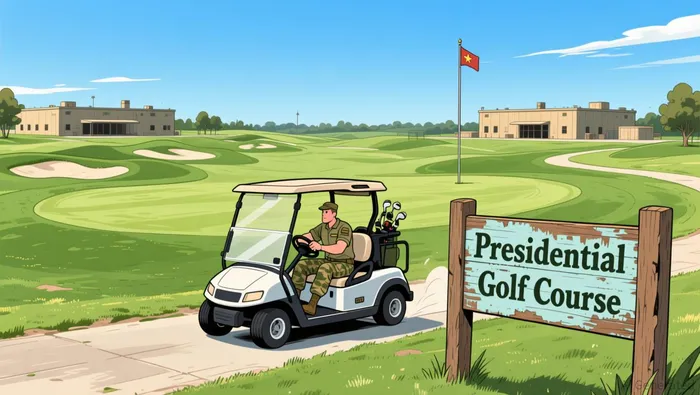
The Joint Base Andrews facility, located 15 miles from the White House, includes three 18-hole courses and other recreational amenities. Trump, a frequent golfer, has historically favored private properties like his Bedminster, New Jersey, and Mar-a-Lago, Florida, clubs. However, the Andrews project aligns with his broader efforts to enhance military-associated golf infrastructure, including prior collaborations with Saudi-funded LIV Golf tournaments at his commercial properties. Those events, hosted at Trump's Bedminster, Miami, and Washington courses, generated millions in revenue for his businesses after the PGA of America canceled its 2022 championship at Trump National Golf Club.
Nicklaus, a 18-time major champion and founder of Nicklaus Design, has overseen more than 425 courses globally. Trump highlighted his involvement as critical to "bring[ing] their recreational facility back," though details about the scope of Nicklaus's role and fees remain unconfirmed. The White House, Defense Department, and Nicklaus Design have not publicly clarified funding arrangements for the project. This ambiguity mirrors concerns about Trump's other high-profile renovations, such as the $300 million White House ballroom funded by private donors and his pledge to cover costs for the East Wing demolition.
While Trump emphasized the project's affordability, his history of costly golf ventures - such as the LIV Golf partnerships - suggests potential for significant investment. The LIV tournaments, funded by Saudi Arabia's sovereign wealth fund, brought Trump's courses back into professional golf after the PGA's withdrawal. However, it remains unclear whether the Andrews project will follow a similar model of private funding or rely on taxpayer dollars, given the base's status as military property.
As with many of Trump's initiatives, the absence of detailed financial disclosures has fueled speculation. The White House has yet to address whether Nicklaus's fees or the renovation costs will be covered by the government, private donors, or Trump's own resources. For now, the project joins a growing list of Trump-era developments that intertwine public infrastructure with his personal and business interests.
---







Comentarios
Aún no hay comentarios