
Food Safety Crises and Consumer Stock Vulnerabilities: Assessing Market Risk in the Wake of the 2025 Shredded Cheese Recall
The Recall's Immediate Impact and Supply Chain Vulnerabilities
The recall, , involved a wide array of shredded cheese products, including low-moisture mozzarella, Italian-style blends, and pizza-style mixes according to reports. . states and Puerto Rico, according to AllRecipes. The contamination, traced to supplier raw materials, highlights the risks of over-reliance on third-party suppliers in a cost-competitive industry. As the FDA stated, the recall underscores the need for rigorous quality control measures, particularly in sectors where product safety is paramount.
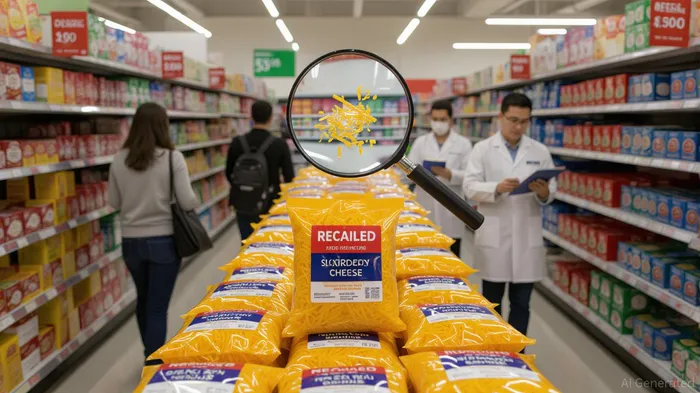 For retailers like WalmartWMT--, Target, and Aldi, the incident exposed vulnerabilities in their supply chain oversight. Despite their dominance in the CPG space, these companies faced reputational damage as consumers questioned their ability to ensure product safety. A report by Harvard Business Review notes that such crises can trigger a "contagion effect," where investor confidence in entire sectors erodes due to perceived systemic risks according to HBR. This is particularly relevant in 2025, a year marked by rising production costs and shifting consumer loyalties, which have already strained CPG margins according to SAP's analysis.
Investor Sentiment and Sector-Wide Implications
While specific stock price fluctuations for Walmart, Target, and Aldi during the recall period are not publicly documented, the broader CPG sector experienced heightened volatility. Analysts have pointed to the recall as a catalyst for reevaluating supply chain resilience. For instance, SAP's 2025 industry analysis highlights how food safety incidents amplify investor sensitivity to operational risks, particularly in an environment of fragmented supplier networks according to CRC Group. The recall also reignited debates about the cost of quality control, with some experts warning that cost-cutting in safety protocols could lead to more frequent and severe recalls according to Blavity.
The incident's impact on brand trust further complicates the picture. , even if the company in question is not directly responsible according to Newsweek. For retailers reliant on private-label brands-such as Walmart's Great Value or Target's Good & Gather-the recall could erode long-term customer loyalty, translating into sustained revenue pressures.
Lessons for Investors: Beyond the Immediate Recall
The 2025 cheese recall serves as a case study in how food safety crises test the mettle of even the most established consumer brands. Investors must now weigh not only a company's immediate response to such incidents but also its long-term strategies for mitigating supply chain risks. Key considerations include:
1. Supplier Diversification: Companies with diversified supplier bases may be better positioned to absorb shocks from localized contamination events.
2. Transparency and Traceability: Enhanced traceability technologies, such as blockchain, are increasingly seen as critical for rebuilding consumer trust according to .
3. Regulatory Preparedness: Proactive engagement with regulatory bodies, such as the FDA, can mitigate reputational damage during crises.
For the CPG sector, the recall underscores the growing importance of ESG (Environmental, Social, and Governance) metrics. Investors are increasingly factoring in food safety performance as part of their risk assessments, with some funds divesting from companies with repeated recall histories according to TheStreet.
Conclusion
The 2025 shredded cheese recall is a stark reminder that in an era of globalized supply chains and heightened consumer expectations, food safety is not just a regulatory issue but a financial one. While the immediate stock price impacts of the recall remain unclear, the broader implications for investor sentiment and sector dynamics are undeniable. As the CPG industry navigates these challenges, companies that prioritize supply chain integrity and brand transparency will likely emerge as the most resilient in the face of future crises.





Comentarios
Aún no hay comentarios