
Fonterra's Strategic Divestiture to Lactalis: A Catalyst for Shareholder Value and Core Business Reinvention
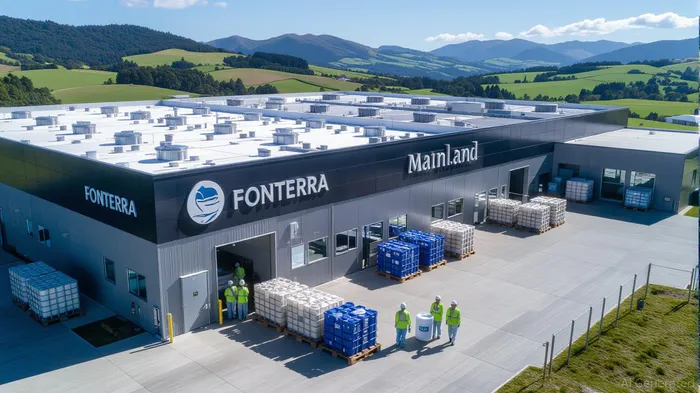
Fonterra Co-operative Group, the world's largest dairy exporter, has embarked on a transformative strategic shift by agreeing to sell its global Consumer and associated businesses to French dairy giant Lactalis for NZ$3.845 billion (approximately $2.24 billion). This move, set to conclude in the first half of 2026, represents a bold repositioning of the co-op's portfolio, prioritizing long-term value creation for its farmer shareholders while sharpening its focus on high-margin Ingredients and Foodservice operations. For investors, this transaction raises critical questions: How will the divestiture reshape Fonterra's financial trajectory? And what does it signal about the co-op's ability to deliver sustainable returns in a competitive global dairy market?
Strategic Rationale: Why Divest Now?
Fonterra's decision to offload its Consumer business—home to brands like Anchor, Mainland, and Anlene—stems from a clear strategic imperative: refocusing on core competencies. The Consumer segment, while profitable, operates in a fragmented, low-margin retail market with intense competition. By contrast, Fonterra's Ingredients and Foodservice businesses generate 93% of its total revenue and offer higher margins through B2B partnerships with global giants like Nestlé, Mars, and Coca-ColaKO--.
The board, led by Chairman Peter McBride, concluded that a trade sale to Lactalis—a company with the scale and global footprint to elevate these brands—offers a faster and higher-value return of capital compared to an initial public offering (IPO). The deal's structure, including potential upside from Bega licenses, underscores the co-op's confidence in maximizing proceeds. For shareholders, this translates to a tax-free capital return of NZ$2.00 per share (approx. $3.2 billion), a direct injection of liquidity that could be reinvested into the core business or distributed to stakeholders.
Financial Implications: Earnings Clarity and Capital Efficiency
The divestiture will fundamentally alter Fonterra's financial reporting. Starting in FY26, earnings will be presented on a continuing operations basis, excluding the performance of the divested Consumer and associated businesses. This shift will provide a clearer view of the co-op's core operations, which already demonstrated resilience in FY25 Q3:
- Ingredients business operating profit: NZ$1,017 million (up 17% YoY)
- Foodservice business operating profit: NZ$396 million
- Rolling 12-month Return on Capital: 11% (exceeding the 10–12% long-term target)
By eliminating the volatility of consumer retail markets, Fonterra aims to stabilize its earnings and improve capital efficiency. The co-op's FY25 guidance of 65–75 cents per share remains unchanged, but FY26 projections will reflect a leaner, more focused business. With the capital return and reinvestment in high-impact areas, the co-op is poised to enhance its Return on Capital and sustain its leadership in the global dairy supply chain.
Long-Term Value Creation: A B2B-Driven Future
Post-divestiture, Fonterra's strategic playbook centers on three pillars:
1. Strengthening B2B Partnerships: The co-op will continue supplying raw milk and ingredients to Lactalis under long-term agreements, ensuring New Zealand farmers remain integral to the success of brands like Anchor and Mainland.
2. Innovation in Ingredients: Fonterra's R&D capabilities and global distribution network position it to capitalize on trends like plant-based alternatives and functional dairy products.
3. Global Market Expansion: The co-op's Ingredients and Foodservice businesses already operate in over 100 countries. With Lactalis's regional presence, Fonterra gains a strategic ally to penetrate markets in Southeast Asia and the Middle East.
Risks and Considerations for Investors
While the divestiture is a strategic win, investors must monitor key risks:
- Regulatory Hurdles: Approvals from New Zealand's Overseas Investment Office and Australia's Foreign Investment Review Board remain pending. Delays could impact the timeline for capital returns.
- Shareholder Approval: The divestiture requires a vote in late October/November 2025. Dissent could force renegotiation or delay.
- Market Volatility: Dairy prices and global demand are cyclical. Fonterra's focus on B2B markets may insulate it from retail price wars but exposes it to macroeconomic shifts.
Investment Outlook: A Buy for the Long-Term
Fonterra's strategic pivot aligns with broader industry trends: consolidation, specialization, and value-added product innovation. The NZ$3.2 billion capital return and refocused core business create a compelling case for long-term investors. With a 10–12% Return on Capital target and a strong balance sheet, the co-op is well-positioned to deliver sustainable returns.
For those considering entry, the key metrics to watch are:
- Farmgate Milk Price: Fonterra's ability to maintain a competitive price for New Zealand farmers directly impacts its profitability.
- Earnings Per Share (EPS) Growth: Post-FY26, EPS should reflect the performance of a leaner, higher-margin business.
- Capital Allocation: How the co-op reinvests the proceeds from the sale will determine its long-term trajectory.
In conclusion, Fonterra's divestiture to Lactalis is not merely a transaction—it's a strategic renaissance. By shedding lower-margin operations and doubling down on its B2B strengths, the co-op is laying the groundwork for a new era of value creation. For patient investors, this represents an opportunity to back a dairy giant with a clear vision and a proven track record of execution.
Final Takeaway: Fonterra's strategic clarity, combined with a substantial capital return and a refocused core business, makes it a compelling long-term investment. However, investors should remain vigilant about regulatory and market risks while monitoring the co-op's reinvestment strategy.







Comentarios
Aún no hay comentarios