
FOMC's Dilemma: Miran's 2% Rate Cut Proposal and the Battle Between Market Sentiment and Economic Realities
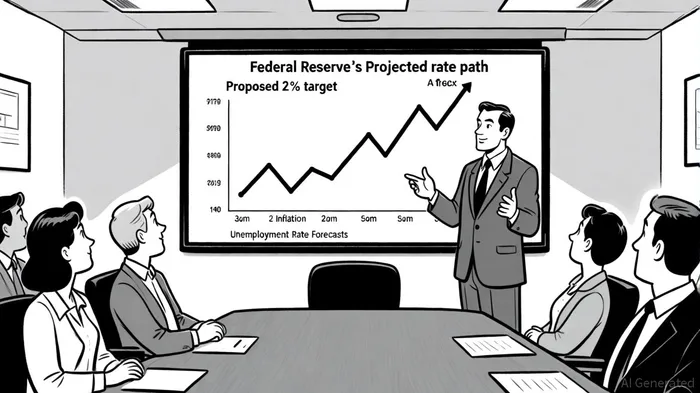
The Federal Reserve faces a pivotal crossroads as Stephen Miran, the Trump-appointed Fed governor, pushes for a dramatic 2% federal funds rate cut—a stark departure from the central bank's cautious approach. While the FOMC's recent 25-basis-point reduction in September 2025 marked a pivot toward easing, Miran's dissent highlights a growing divide between dovish policymakers and those wary of inflation persistence. This tension between market optimism and economic caution will shape asset allocation strategies in the coming months.
Market Sentiment: A Divided Outlook
Miran's proposal has ignited mixed reactions. On one hand, investors in growth equities and long-duration assets have cheered the prospect of aggressive rate cuts, which would lower discount rates and boost valuations. On the other, concerns about inflation resilience—core CPI remains above 4%—have tempered enthusiasm. According to a report by Reuters, Miran's call for a 1.25-percentage-point reduction by year-end 2025 has been dismissed by most policymakers as overly optimistic, with Fed Chair Jerome Powell emphasizing “unity” in favoring smaller, measured cuts [1]. This divergence underscores a broader market uncertainty: while Miran's stance aligns with Trump's political agenda, the Fed's institutional caution reflects data-driven skepticism about disinflationary trends.
Economic Fundamentals: Softening Labor Markets vs. Sticky Inflation
The FOMC's decision to cut rates in September 2025 was driven by a cooling labor market, with job growth slowing and wage pressures easing [2]. However, inflation remains stubbornly above the 2% target, and the Fed's own projections acknowledge “considerable divergence” among policymakers about the appropriate path [1]. Miran argues that disinflationary forces—such as reduced immigration and regulatory reforms—will accelerate the decline in inflation, but critics counter that Trump's tariffs and fiscal policies risk reigniting price pressures. As stated by Bloomberg, the Fed's updated Summary of Economic Projections (SEP) will likely reflect this tension, with the “dot plot” showing a range of outcomes but no consensus on rapid easing [3].
Asset Allocation Implications
Equities: Lower rates typically benefit growth stocks and rate-sensitive sectors like utilities and real estate. However, the Fed's cautious stance has led to a “choppy” market environment, with the S&P 500 reacting cautiously to policy signals [3]. Investors may overweight sectors poised to benefit from a weaker dollar, such as technology and communication services, while underweighting cyclicals if inflation risks persist.
Bonds: The bond market has priced in two rate cuts for 2025, with short-term yields falling sharply post-September meeting [3]. However, longer-term yields remain anchored by inflation concerns and fiscal uncertainty. A strategic tilt toward ex-U.S. duration—such as Italian BTPs and UK Gilts—could hedge against dollar weakness and divergent global monetary policies [2].
Commodities: Gold and other safe-haven assets have surged as investors hedge against inflation and geopolitical risks [2]. A weaker dollar, potentially accelerated by Miran's aggressive rate-cutting scenario, could further boost commodity prices. However, the Fed's focus on inflation means commodity investors must balance growth expectations with the risk of tighter policy if price pressures rebound.
Strategic Positioning for the FOMC's Next Move
The Fed's next steps will hinge on two key factors: the pace of labor market deterioration and inflation's trajectory. If unemployment rises and core CPI falls below 3.5% by mid-2026, the case for Miran's 2% target will strengthen. Conversely, a rebound in inflation or a surge in wage growth could force the FOMC to pause. Investors should adopt a dynamic approach:
1. Equities: Overweight U.S. tech and communication services while maintaining a defensive position in utilities.
2. Bonds: Extend duration selectively, favoring international markets with higher yields and lower inflation risks.
3. Commodities: Allocate to gold and energy, but cap exposure to avoid overexposure to inflation volatility.
Conclusion
The FOMC's response to Miran's proposal will test the Fed's ability to balance political pressures with economic realities. While Miran's vision of a 2% rate may not materialize in 2025, his dissent signals a shift in policy thinking that investors cannot ignore. A diversified, flexible portfolio—positioned to capitalize on both rate cuts and inflation risks—will be critical in navigating this uncertain landscape.







Comentarios
Aún no hay comentarios