
Flying into the Future: AI-Driven Military Aviation and the Investors' Playbook
The defense sector is undergoing a silent revolution, one where pilots no longer fly alone. The integration of artificial intelligence (AI) into military aviation systems is transforming how nations project power, with human-machine collaboration emerging as a cornerstone of next-generation combat capabilities. For investors, this shift presents a rare opportunity to capitalize on companies at the forefront of this technological leap—starting with Saab and Helsing, whose partnership to embed AI into the Gripen E fighter jet, and Reliable Robotics, which is pioneering autonomous flight systems for defense applications.
The Gripen E: A Blueprint for AI-Driven Air Superiority
The JAS 39 Gripen E, Sweden's fifth-generation multirole fighter, has become a symbol of how AI can redefine air combat. Through Project Beyond, Saab and Helsing have developed an AI system that processes real-time data streams from the aircraft's sensors, radars, and mission systems, offloading routine tasks like threat detection, sensor management, and flight optimization from pilots. This “virtual co-pilot” reduces pilot workload by up to 30%, according to internal Saab estimates, enabling operators to focus on strategic decisions in high-stakes scenarios.
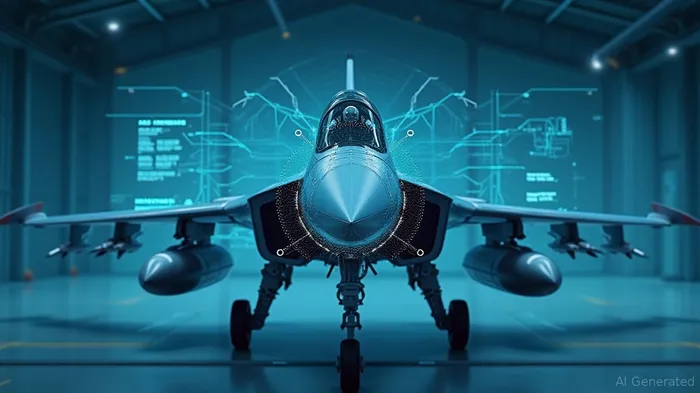
The strategic implications are profound. By embedding AI into the aircraft's core architecture—not as an add-on—Saab and Helsing have created a system that can adapt to evolving threats in real time. This scalability is critical: the same AI framework can be tailored to other platforms, from drones to next-gen fighters like the JAS 39E's successor, ensuring long-term dominance in air superiority.
Why Investors Should Pay Attention to Saab/Helsing:
- Rapid Deployment: Unlike speculative projects, Project Beyond is already functional, with initial upgrades delivered by late 2024.
- Strategic Partnerships: Saab's 5% equity stake in Helsing (secured in 2023 for €75 million) ensures aligned incentives and accelerated innovation.
- Cross-Platform Potential: The AI system's modular design allows it to be deployed across Saab's broader portfolio, including naval systems and ground-based command centers.
Investment Catalyst: The Gripen E's AI capabilities position it as a sought-after export asset. With Sweden's growing defense clout and demand for advanced systems in NATO and F35 partner nations, Saab's order book could expand significantly.
Reliable Robotics: The Autonomous Flight Revolution
While Saab focuses on manned aircraft, Reliable Robotics is redefining the boundaries of military aviation through autonomous cargo and refueling systems. Their FAA-certified platform, which uses high-integrity navigation and detect-and-avoid (DAA) technology, has already enabled uncrewed flight in U.S. airspace. For the defense sector, this means:
- KC-135 Stratotanker Automation: Reliable's partnership with the U.S. Air Force aims to reduce crew workload during air-to-air refueling missions, a high-risk task in contested environments.
- Contested Logistics: Autonomous cargo drones could resupply forward bases without exposing human pilots to enemy fire.
- Cost Efficiency: Retrofitting existing aircraft with Reliable's system is far cheaper than developing new platforms.
The company's $3.6 million TACFI contract (2024) and Indefinite Delivery, Indefinite Quantity (IDIQ) agreement with the Air Force underscore its growing relevance. Unlike competitors, Reliable's technology is aircraft-agnostic, making it a plug-and-play solution for military and commercial operators alike.
The Broader Defense Tech Landscape: Why Now?
The AI-driven aviation boom is not isolated. Venture capital trends in Q2 2025 highlight a 6.7% allocation to Deep Tech/Robotics, outpacing even AI/ML for the first time. This reflects investor confidence in hardware-driven innovation, where companies like Saab and Reliable Robotics are delivering tangible results.
Key market tailwinds include:
- Labor Shortages: Militaries worldwide face pilot recruitment gaps; AI can extend the reach of existing personnel.
- Geopolitical Tensions: The Indo-Pacific region's contested airspace demands systems that operate autonomously.
- Regulatory Momentum: FAA approvals for autonomous systems (e.g., Reliable's certification plan) signal a path to commercial-scale deployment.
Investment Thesis: Play the Leaders, Ignore the Noise
For investors seeking exposure to AI-driven military aviation, the path is clear:
Core Position:
- Saab (SSAB-A.ST): Leverage its existing Gripen E fleet and export pipeline. The company's valuation remains reasonable relative to its growth trajectory, with a P/E ratio of 15x (vs. defense peers at 20x).
Growth Bet:
- Reliable Robotics: While private, its recent Air Force contracts and FAA milestones suggest a potential IPO or acquisition. Investors could gain exposure via defense ETFs like SPDR S&P Aerospace & Defense ETF (XAR), which holds Saab and primes like Boeing.
Avoid the Fads: Steer clear of companies chasing AI hype without proven partnerships or certifications. The sector is consolidating around leaders with operational track records, not PowerPoint slides.
Risks and Mitigation
- Regulatory Hurdles: Autonomous systems must comply with evolving airworthiness standards. Saab and Reliable's close ties to regulators mitigate this risk.
- Cybersecurity: AI systems are prime targets for hacking. Both companies emphasize hardware redundancy and encryption, aligning with Pentagon guidelines.
Conclusion: The Sky's the Limit
The fusion of AI and aviation is no longer science fiction—it is a strategic imperative. Companies like Saab/Helsing and Reliable Robotics are not just vendors but architects of a new era of combat. Investors who back them now will gain exposure to a $7 billion robotics market (per 2025 estimates) and the geopolitical stakes of maintaining air superiority.
In the cockpit of tomorrow, the pilot's best ally is a machine that learns, adapts, and fights alongside them. For investors, the time to board is now.
Data Sources: Saab Annual Reports, Helsing Project Beyond White Paper, U.S. Air Force TACFI Contracts, FAA Certification Records, Venture Capital Surveys (Q2 2025).







Comentarios
Aún no hay comentarios