
Is Fluence Energy's Earnings Outperformance a Glimmer of Hope or a Fleeting Mirage?
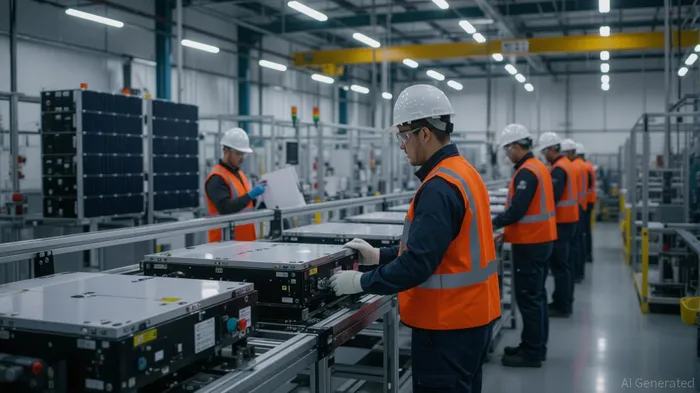
Fluence Energy (NASDAQ: FLNC) has delivered a mixed bag of results in Q2 2025, sparking a critical question for investors: Is its earnings outperformance a sign of resilience or a temporary fix in a flawed business model? The company's GAAP EPS beat of $0.03 and Adjusted EBITDA of $27.36 million—well above estimates—have lit up the headlines. But beneath the surface, manufacturing delays, revenue guidance revisions, and a free cash flow hemorrhage of -$161.2 million tell a more complicated story. Let's dissect whether Fluence's recent performance is a sustainable turnaround or a mirage.
The EBITDA Mirage: A Double-Edged Sword
Fluence's Adjusted EBITDA margin of 4.5% in Q2 is a 350-basis-point improvement year-over-year, driven by tighter cost controls and higher gross margins. That's a positive, but it's also a narrow sliver of success in a broader context. The company's revenue miss—$602.5 million versus $763.4 million expected—exposes a critical vulnerability: its ability to scale production. Delays at U.S. manufacturing facilities have pushed $2.5 billion in backlog into 2026, creating a revenue gap in 2025. While FluenceFLNC-- claims these facilities will hit full capacity by year-end, investors should ask: Can a company with a history of production bottlenecks truly deliver on these timelines?
The Backlog: A Double-Edged Sword
A $4.9 billion backlog is a tantalizing number, but it's not a magic wand. Fluence's backlog is now 8.9% larger year-over-year, with 45% of it expected to convert to revenue in 2026. That's a backend-loaded growth model, which is risky in a sector where customer demand can shift rapidly. For context, Tesla's backlog-to-revenue conversion rate is typically 80% within 12 months. Fluence's slower pace raises red flags: Is the company's order book filled with long-term contracts that lack flexibility, or is it relying on a one-time surge in demand?
Tariffs and Tailwinds: A Tug-of-War
The U.S. tariff environment has further muddied the waters. Fluence revised its 2025 revenue guidance down by $700 million at the midpoint, citing paused projects and deferred contracts. While the company claims its domestically sourced Smartstack™ product will benefit from higher tariffs, this argument hinges on a key assumption: that U.S. customers will prioritize domestic content over cost.
The Free Cash Flow Quagmire
Negative free cash flow of -$161.2 million in Q2 is a stark reminder that Fluence remains a capital-intensive business. Even with a $150 million supply chain financing facility, the company's liquidity is under pressure. For comparison, Enphase EnergyENPH-- (ENPH) has maintained positive free cash flow for three consecutive quarters while scaling production. Fluence's cash burn could become a liability if its production ramp-up misses deadlines or if tariffs disrupt supply chains further.
Is This a Buy or a Wait-and-See?
Fluence's earnings beat is a glimmer of hope, but it's not enough to justify a bullish stance. The company's operational improvements in EBITDA and margins are real, but they're offset by structural challenges:
1. Production scalability: Can Fluence's U.S. facilities deliver on their 2025 targets?
2. Tariff risks: Will the U.S. market's shift toward domestic content offset the revenue hit from paused projects?
3. Cash flow sustainability: Can Fluence maintain its liquidity while investing in growth?
For now, Fluence remains a speculative play. Investors should monitor two metrics:
- Production capacity utilization at U.S. facilities by Q4 2025
- Backlog conversion rate in Q1 2026
If Fluence can prove it can execute on these fronts, the stock could rebound. But until then, the earnings beat is more of a flickering candle than a beacon.
In conclusion, Fluence's Q2 results are a mixed bag. The EBITDA beat is a bright spot, but the revenue miss and cash flow issues suggest the company is still navigating a minefield. Historically, however, Fluence's earnings beats have not consistently translated into positive stock performance. A backtest from 2022 to the present shows that despite occasional beats, the stock price has decreased by 0.54% from March 31, 2025.
For the aggressive investor, a small position in FLNCFLNC-- could be justified as a high-risk, high-reward bet. For the cautious, the better move is to wait for clearer signs of operational execution before pulling the trigger.





Comentarios
Aún no hay comentarios