
Floor & Decor's Expansion Strategy and Retail Growth Potential: A Real Estate and Consumer Trends Analysis
In the shadow of economic headwinds-high mortgage rates, labor shortages, and cautious consumer spending-Floor & Decor Holdings Inc. (FND) is doubling down on its aggressive expansion strategy, betting that its niche focus on flooring and strategic real estate positioning will outpace broader home improvement market volatility. With plans to open 20 to 30 new warehouse-format stores in fiscal 2025, the company is leveraging its direct sourcing model, efficient inventory management, and a growing demand for hard surface flooring to carve out a unique position in a sector dominated by giants like Home Depot and Lowe's, according to an Enduring Equity Research report.
Real Estate as a Strategic Lever
Floor & Decor's expansion is not random; it is hyper-focused on areas with strong demand for flooring, particularly in the Pro segment, which accounted for 50% of total retail sales in Q1 2025, according to a StocksToTrade article. By targeting underserved markets and secondary cities, the company is capitalizing on the structural need for flooring upgrades in aging U.S. housing stock. Its warehouse-style stores, which emphasize low prices and high-volume sales, are designed to compete with big-box retailers while avoiding direct conflict in categories like paint or hardware.
This approach is bolstered by the company's supply chain advantages. Floor & Decor's direct sourcing from manufacturers in Asia and its vertically integrated logistics network allow it to maintain competitive pricing even as material costs and tariffs strain competitors, according to a BeyondSPX article. According to the Enduring Equity Research report, these operational efficiencies enable the company to scale rapidly without sacrificing margins, a critical edge in a market where 25-30 new stores per year are being added.
Consumer Spending: A Mixed Picture
The home improvement sector's growth in 2025 is modest but persistent. Total consumer spending on home improvements and maintenance is projected to reach $477 billion by Q3 2025, driven by rising home equity and a shift toward DIY projects, according to a FinMKT guide. However, the flooring segment faces unique challenges. While luxury vinyl plank (LVP) and engineered wood remain popular for their durability and sustainability, broader economic anxieties are causing consumers to delay or scale back major purchases.
Data from Resonate's Q3 forecast reveals that 25.5% of Americans fear a stock market crash, and 46% worry about a U.S. economic slowdown or recession. These fears are translating into cost-saving behaviors, with many households postponing flooring projects. Yet, Floor & Decor's emphasis on affordable, high-quality options-such as waterproof laminate and SPC (stone-plastic composite) flooring-positions it to capture demand from budget-conscious renovators, as noted in the U.S. flooring outlook.
Navigating Structural Shifts
The company's success hinges on its ability to adapt to two structural shifts: the rise of smart home integration and the growing preference for sustainable materials. According to the Roomvo report, 60% of consumers now prioritize eco-friendly materials like bamboo and recycled vinyl. Floor & Decor's product mix aligns with this trend, offering a broader selection of sustainable options compared to its peers.
At the same time, the home improvement market is witnessing a surge in demand for smart home technology, with products like smart thermostats and automated lighting systems gaining traction, according to a NewNARI analysis. While Floor & Decor is not a direct player in this space, its focus on complementary upgrades-such as flooring for smart home-ready kitchens and bathrooms-creates a flywheel effect. Homeowners investing in smart appliances may also allocate budgets for flooring, reinforcing the company's relevance in a tech-driven renovation cycle.
Risks and Opportunities
Floor & Decor's strategy is not without risks. The company's reliance on the Pro segment exposes it to fluctuations in commercial construction and remodeling activity. Additionally, its rapid expansion could strain IT infrastructure and e-commerce capabilities, areas where it has historically lagged behind competitors, as Stockstotrade noted. However, recent investments in digital tools-such as augmented reality (AR) for product visualization and streamlined online ordering-suggest a commitment to closing this gap, a point also highlighted by BeyondSPX.
The broader home improvement market, while competitive, offers ample room for growth. HIRI projects a 2.5% growth rate for the sector in 2025, with flooring alone valued at $376.81 billion and expected to reach $590.8 billion by 2035, as reported by Floor Trends. Floor & Decor's current 1.48% market share, according to CSIMarket data, may seem small, but its focused strategy and operational agility position it to capture a larger slice of this expanding pie.
Conclusion
Floor & Decor's expansion strategy is a masterclass in niche targeting and operational efficiency. By combining strategic real estate decisions with a deep understanding of consumer trends-particularly the demand for affordable, sustainable flooring-it is building a moat in a sector where differentiation is hard to achieve. While macroeconomic risks persist, the company's focus on structural drivers like housing stock renewal and DIY enthusiasm provides a buffer against short-term volatility. For investors, the question is not whether the home improvement market will grow, but whether Floor & Decor can maintain its momentum in a landscape where every square foot of real estate and every dollar of consumer spending is fiercely contested.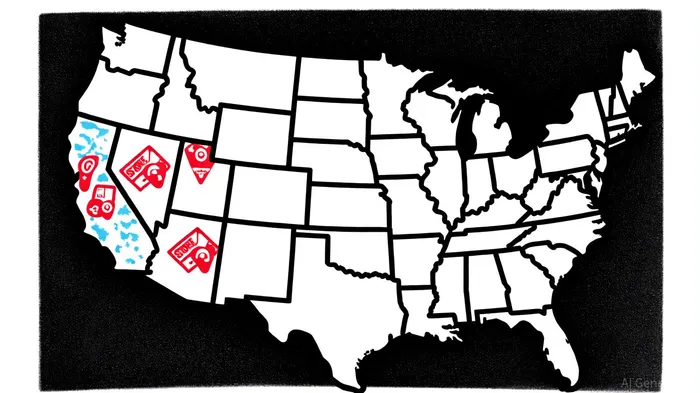





Comentarios
Aún no hay comentarios