
Flex (FLEX) at an Inflection Point: Can Margin Gains and Data Center Momentum Sustain?
The global electronics manufacturing services (EMS) sector has long been a barometer of technological and economic shifts. Today, FlexFLEX-- (FLEX) stands at a pivotal juncture, its financial performance and strategic moves suggesting it may be transitioning from a cyclical laggard to a growth-oriented leader. The question is whether its recent margin expansion and surging data center revenue can endure amid macroeconomic turbulence, trade policy uncertainty, and sector-specific headwinds. Let's dissect the evidence.
The Margin Turnaround: A Structural Shift or a Cyclical Blip?
Flex's adjusted operating margin has risen sharply, hitting a record 5.5% in Q2 2025 from 4.8% in Q1 and 4.3% a year earlier. This improvement is not merely a cost-cutting artifact but a reflection of strategic realignment. .
The key driver is a deliberate pivot toward higher-margin segments. The Agility segment—which includes data infrastructure, cloud solutions, and power systems—now delivers 5.3% margins, up 120 basis points year-over-year. Meanwhile, the Reliability segment (automotive, industrial) maintains steady 5.0% margins despite revenue declines, thanks to operational discipline.
What's fueling this? Three factors:
1. Program Ramps: Large-scale contracts in hyperscale cloud data centers and next-gen automotive systems are scaling up, leveraging economies of scale.
2. Strategic Acquisitions: The 2024 acquisition of Crown Technical Systems bolstered Flex's modular power pod offerings, a high-margin niche.
3. Operational Excellence: Automation, AI-driven manufacturing, and lean processes are reducing waste and boosting productivity.
Data Center Growth: The Engine of Future Value
Flex's data center business is the crown jewel. Revenue here grew 40% year-over-year in Q2 2025, with a long-term growth target of 20%+ annually. 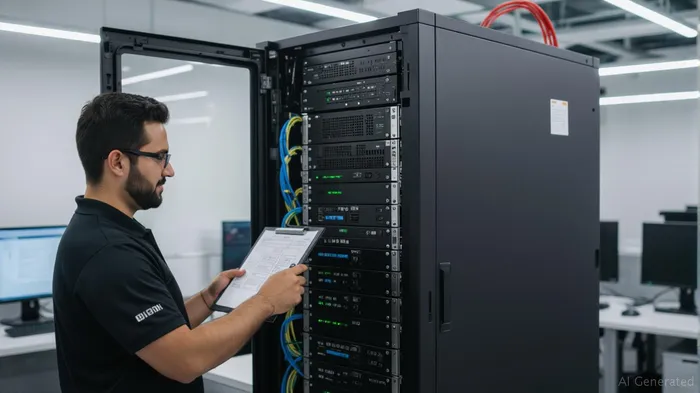 .
.
The company's ability to design and deliver fully integrated data center rack solutions—including power infrastructure and cooling systems—has made it a critical partner to hyperscalers and enterprises. Management emphasized during earnings calls that this segment's margin profile is superior to its legacy businesses, with pricing power intact even as competitors face commoditization.
The Risks: Macroeconomic and Geopolitical Crosscurrents
Despite these positives, three risks loom:
- Sector Softness in Traditional Markets:
- The industrial sector (e.g., renewables, core manufacturing) remains sluggish, dragging down Flex's Reliability segment.
Telecom and consumer electronics continue to underperform, though Flex is mitigating this via portfolio focus.
Trade Policy Uncertainty:
Tariffs and geopolitical tensions (e.g., U.S.-China trade disputes, Red Sea supply chain disruptions) threaten margins. Flex's response? Partnering with customers to co-design supply chains that minimize exposure. For instance, its North American and European capacity expansions aim to localize production for hyperscalers and automakers.
Macroeconomic Volatility:
- Elevated inflation and weak global vehicle demand could further strain automotive and industrial clients. Flex's management remains cautious, citing “uneven end-market recoveries” in its Q2 outlook.
Near-Term Catalysts: Capacity, Innovation, and Risk Mitigation
Flex has three levers to sustain momentum:
- Geographic Diversification: Expanding capacity in North America and Europe to serve local data center and automotive demand, reducing reliance on Asia-based supply chains. This dualizes Flex's risk profile.
- Innovation in Power Solutions: The Crown Technical acquisition has already boosted its modular power pod business. Further R&D in embedded power systems for AI-driven data centers could solidify its leadership.
- Tariff Mitigation: Collaborating with customers to source critical components regionally and pass through costs strategically. While imperfect, this approach has so far kept margin drag minimal.
Investment Implications: A Buy with Cautious Optimism
Flex's stock price has lagged its margin recovery, offering an entry point for investors willing to bet on its secular growth thesis. .
Bull Case: If data center demand stays robust and capacity expansions reduce cost pressures, margins could approach 6-7% by 2026. This would justify a price-to-earnings (P/E) multiple expansion from its current ~15x to 18-20x.
Bear Case: A recession or prolonged softness in industrial/telecom could stall progress. Flex's shares could underperform if margins flatten or its tariff mitigation proves insufficient.
Recommendation: Flex is a hold for long-term investors with a 3-5-year horizon who believe in the secular growth of cloud infrastructure and EV power systems. Short-term traders should wait for clarity on Q3 macro conditions and stock valuation catch-up.
Final Take
Flex's transformation from a commoditized EMS player to a specialized solutions provider is real—but not yet complete. The data center boom and operational discipline have created an inflection point. The test now is whether management can navigate macro and geopolitical risks while executing its geographic and technological bets. For now, the balance tilts toward cautious optimism.
Disclosure: This analysis is for informational purposes only and does not constitute financial advice.





Comentarios
Aún no hay comentarios