
Fitch Deepens Gabon's Junk Status Over Fiscal Strains, Weak Debt Demand
Fitch Ratings has further cut Gabon's credit rating into junk territory, citing widening government deficits and declining demand for the country's debt. The move marks the second downgrade this year, reducing the nation's long-term foreign-currency rating to CCC- from CCC according to Fitch. Fitch highlighted severe strains on both domestic and external government liquidity, as well as rising arrears, as key factors in the decision according to the analysis.
The ratings firm pointed to limited regional debt market access, a dearth of official creditor financing, and high amortizations as core challenges for the country according to Fitch. 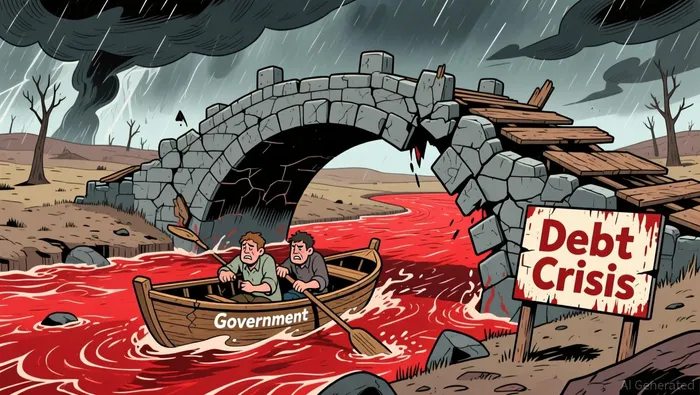 Gabon's government has struggled to meet its debt obligations, with demand for its bonds declining sharply this year. Auctions have seen bid to cover ratios fall below 50%, signaling weak investor appetite.
In a separate development, Gabon's government announced an audit of mining contracts to strengthen governance amid ongoing talks with the International Monetary Fund. The audit is part of broader reforms under the leadership of Brice Oligui Nguema, who took power in a 2023 coup and won the April presidential election according to Fitch. However, Fitch's base case scenario assumes no new IMF support, noting that the government's expansionary fiscal policy and external arrears are major obstacles.
Deepening Fiscal and Liquidity Challenges
Gabon's fiscal deficits are widening, with Fitch forecasting a deficit of 6.1% of GDP for 2025, up from 3.7% in 2024. The government has increased spending to address social pressures, but this has come at the expense of liquidity. Fitch noted that the country's ability to raise funds in the CEMAC regional debt market has weakened since 2024, with most financing occurring in early 2025 under preferential conditions. Once those conditions expired, demand for bonds dropped sharply.
The government's local-currency debt repayments are expected to reach 8.0% of GDP in 2026 and 7.2% in 2027, according to Fitch, compared with lower external repayments. This imbalance reflects the country's growing reliance on local financing amid limited access to external markets. Fitch also warned that arrears to official creditors have risen from 0.5% of GDP with bilateral lenders to 0.2% with multilateral institutions between December 2024 and September 2025.
Outlook for IMF Support Remains Unlikely
Fitch has not factored in any new IMF support for Gabon in its base case scenario, citing the government's continued accumulation of external arrears and expansionary fiscal stance. The agency also noted that any new IMF program would likely require unpopular and drastic policy changes in a volatile political environment. A previous IMF program was suspended after Nguema's coup in 2023.
The government's debt is expected to reach 80.4% of GDP this year, according to Fitch, with further increases to 85.5% in 2026 and 86.7% in 2027. These levels are significantly above Fitch's benchmark for the region. The agency also cited a lack of transparency in the government's financial operations as a potential risk, warning that actual debt levels could be higher than projected.
Gabon's economic growth is forecast to accelerate to 3.5% in 2025 due to government spending, but this is expected to slow to 2.7% in 2026 and 2027 as fiscal pressures intensify. Sustained growth would require significant investment in infrastructure projects, particularly in rail, ports, and electricity, to support the mining sector. However, such investment is contingent on improved access to external funding, which remains uncertain given current market conditions.
Governance and ESG Concerns Weigh on Credit Profile
Gabon's governance framework has long been a concern for rating agencies and international institutions. Fitch assigned the country an ESG Relevance Score of 5 for political stability, rule of law, and institutional quality, reflecting its heavy reliance on the World Bank Governance Indicators. The country's percentile rank on these metrics is below 50, indicating significant weaknesses in political transitions, institutional capacity, and control of corruption.
The agency also noted that Gabon's low WBGI ranking has a negative impact on its credit profile. While it praised the country's higher GDP per capita compared to peers, Fitch emphasized the risks posed by its reliance on volatile hydrocarbon revenues and poor public finance management. These governance challenges are compounded by weak regional and domestic debt market conditions, limiting the government's ability to secure financing without incurring further deficits.
Fitch's downgrade reflects a broader trend of tightening financial conditions for African economies, particularly those with large fiscal imbalances and limited access to international capital. As Gabon seeks to stabilize its finances and attract foreign investment, the government will need to demonstrate credible policy reforms and a commitment to fiscal discipline. Until then, the country's debt trajectory and political stability will remain key risks for creditors and investors alike.







Comentarios
Aún no hay comentarios