
Fiscal Projections of Harris and Trump campaign plans help boost 10-year yield above 4%
The Committee for a Responsible Budget (CRFB) published an analysis of the fiscal impact of Vice President Kamala Harris and former President Donald Trump’s economic plans, highlighting significant concerns about their potential to increase the national debt. These findings come at a time when the U.S. 10-year Treasury yield has surged back above 4%, driven partly by last Friday's strong jobs report and rising concerns over fiscal policy. The outlook for fiscal policy is causing market participants to reevaluate the pace of potential Federal Reserve easing, further fueling the upward pressure on yields. The CRFB's report underscores that neither candidate has proposed a framework to address the rising debt, which remains a major concern for investors.
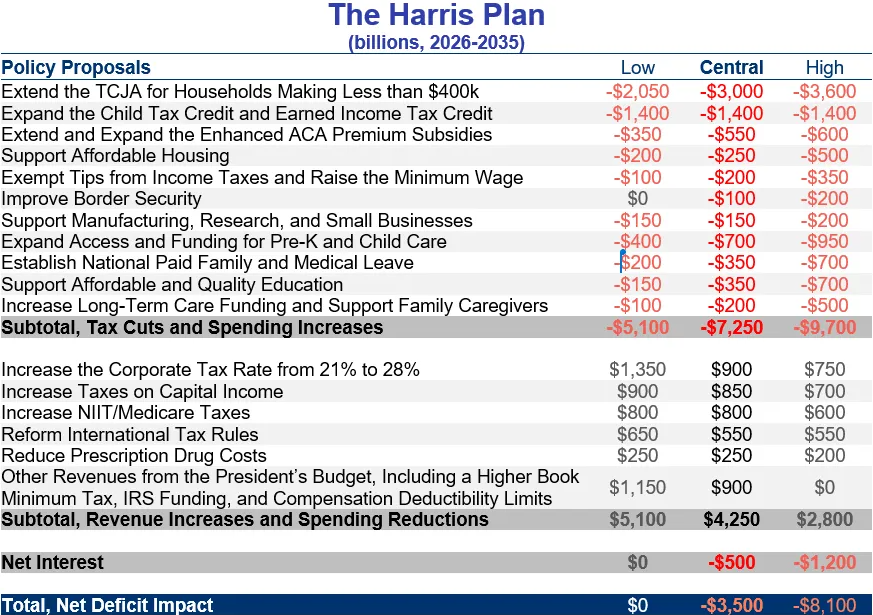
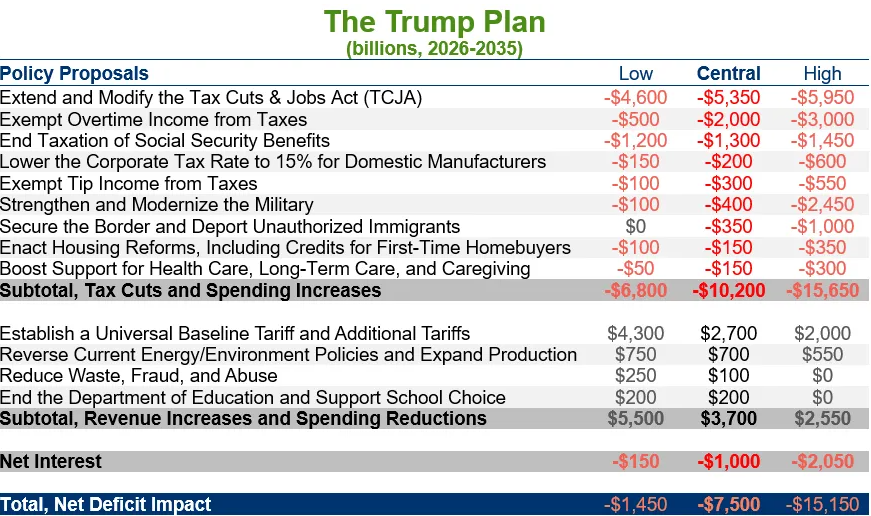
According to the CRFB's central estimates, Vice President Harris's plan would add $3.5 trillion to the national debt through 2035, while President Trump’s proposal would increase the debt by $7.5 trillion. The primary drivers behind Harris's high deficit projections are her plans to extend and expand tax credits, increase funding for healthcare and education, and support other social programs. While her proposals include revenue-raising measures such as increasing taxes on corporations and high-income earners, these are not sufficient to offset the deficit-increasing expenditures. Meanwhile, Trump's plan primarily centers around tax cuts, including extending the Tax Cuts and Jobs Act (TCJA) and eliminating taxes on overtime income and Social Security benefits. Despite some spending reductions and revenue increases from tariffs, the overall impact of his plan would substantially increase the national debt, according to CRFB’s projections.
Source: Committee for a Responsible Federal Budget
The CRFB's analysis indicates that under their low-cost scenario, Harris's plan could be budget-neutral, while in the high-cost scenario, it might add up to $8.1 trillion to the debt by 2035. For Trump, the range is even broader, with estimates showing his plan could add as little as $1.45 trillion or as much as $15.15 trillion to the national debt. These variations depend on the implementation specifics and the economic impact of each candidate’s policies, which remain uncertain. The analysis also highlights that the current trajectory of debt under both candidates would likely exceed the historical peak of 106% of GDP by a significant margin if these plans are fully realized.
In terms of economic implications, both candidates' plans are projected to elevate the debt-to-GDP ratio significantly. Harris's proposals are expected to push debt levels to 133% of GDP by 2035 under the central scenario, while Trump’s plans could result in debt reaching 142% of GDP over the same period. The CRFB warns that such levels of debt could slow economic growth, drive up borrowing costs, and increase the risk of a fiscal crisis if not adequately addressed. The fiscal implications of these policies are likely contributing to the recent increase in long-term interest rates, as the market anticipates larger deficits and potential increases in government borrowing.
Vice President Harris's plan includes substantial investments in social welfare programs, such as expanding the Child Tax Credit, enhancing healthcare subsidies, and supporting affordable housing and education. While these initiatives are aimed at reducing income inequality and boosting economic mobility, they also come with significant fiscal costs. Harris’s plan also proposes increasing taxes on corporations, high-income earners, and capital gains to partially finance these spending measures, though these offsets fall short of covering the projected increase in expenditures.
Former President Trump’s fiscal agenda is heavily focused on reducing taxes and increasing defense spending. His plan involves making permanent and expanding the tax cuts introduced in the TCJA, reducing taxes on Social Security benefits, and offering tax breaks to domestic manufacturers. Despite advocating for substantial spending cuts in areas like education, his proposals for new tariffs and increased military expenditures would lead to significant budget deficits. The CRFB's analysis points out that these tax cuts would disproportionately benefit higher-income earners, adding to the long-term fiscal challenges.
Source: Committee for a Responsible Federal Budget
The CRFB concludes that regardless of which candidate wins the 2024 election, the next president will face substantial fiscal challenges, including record debt levels, large structural deficits, and surging interest payments. Both Harris’s and Trump’s plans, as currently outlined, would further exacerbate these issues, potentially limiting future policy options and increasing the risk of a fiscal crisis. The ongoing fiscal policy debate is thus likely to remain a critical focus for markets and policymakers in the years ahead, especially in light of the elevated 10-year Treasury yield reflecting investor concerns about the sustainability of U.S. debt.





Comentarios
Aún no hay comentarios