
The Fiscal Drag Effect: How UK's Frozen Tax Thresholds Impact Household Incomes and Economic Behavior
Fiscal Drag and Its Uneven Impact on Households
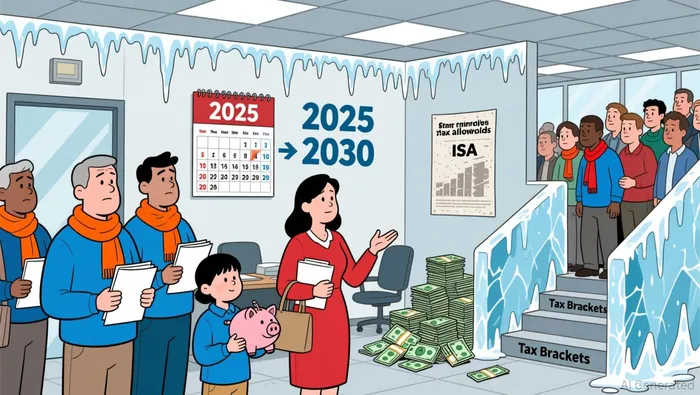
The freeze disproportionately affects middle-income earners. For instance, someone earning £50,000 will face a 1.6 percentage point rise in their effective tax rate by 2029-30, while those earning £13,000 will see a 2.2 percentage point increase according to analysis. In contrast, higher earners above £200,000 face smaller relative increases, highlighting the regressive nature of the policy. The Resolution Foundation notes that 780,000 more basic-rate taxpayers and 920,000 more higher-rate taxpayers will be affected by 2029-30. This dynamic reduces disposable income, dampening consumer spending-a critical concern for an economy already grappling with weak retail confidence.
The fiscal drag also indirectly penalizes savings and investments. As individuals move into higher tax brackets, their personal savings allowance shrinks and capital gains tax rates rise. For example, the Autumn Budget 2025 reduced the cash ISA allowance for savers under 65 to £12,000 from April 2027, steering funds toward stocks and shares ISAs. Such measures signal a shift in government priorities, favoring market-linked investments over cash savings.
Economic Behavior and Consumer Confidence
The fiscal drag's psychological impact is equally significant. A Bloomberg report notes that 60% of Brits anticipate a worsening economy in the next three months, with retailers like JD Sports and Dr Martens reporting weaker sales amid cautious consumer behavior. Part-time minimum wage workers and pensioners, who often rely on predictable income streams, are particularly vulnerable as more of their earnings fall into taxable brackets.
The OBR's analysis underscores the long-term unpredictability of this policy. With inflation rates uncertain, the freeze risks creating a volatile tax environment where households cannot plan for future liabilities. This uncertainty may further erode consumer confidence, slowing the recovery of household spending-a cornerstone of the UK's economic growth.
Investment Opportunities in Financial Services and Wealth Management
The fiscal drag's ripple effects are reshaping the financial services sector. As tax thresholds shrink, demand for tax-efficient vehicles like ISAs and pensions is surging. The Autumn Budget's cap on salary sacrifice pension contributions-limited to £2,000 from April 2029-will make retirement savings less efficient for high earners. This creates opportunities for financial advisors to help clients optimize remaining tax reliefs, such as the 25% lump sum pension withdrawal allowance according to Barclays analysis.
For wealth management, the government's "mansion tax" on properties over £2 million, set to begin in 2028, targets high-net-worth individuals. This measure, combined with higher dividend and savings tax rates, is likely to drive demand for sophisticated tax planning strategies. Firms specializing in offshore trusts, equity release, and ESG-aligned investments may see increased client interest as households seek to shield assets from rising liabilities according to Charles Stanley insights.
Long-Term Fiscal Policy Implications
The freeze on tax thresholds reflects a broader trend of stealth taxation, which avoids the political backlash of explicit rate hikes. However, this approach risks entrenching inequality, as lower and middle-income earners bear a larger share of the burden. The OBR warns that without adjustments, the personal allowance could be £4,900 higher by 2030-31, and the higher rate threshold £20,100 higher. This divergence between policy intent and economic reality may force future governments to address fiscal drag through structural reforms.
Investors should also monitor the interplay between fiscal drag and public spending. With tax revenues rising, the government may redirect funds to social programs or infrastructure, potentially boosting sectors like healthcare and green energy. However, the long-term sustainability of this revenue model remains uncertain, particularly if inflation moderates or wage growth stagnates.
Conclusion
The UK's frozen tax thresholds exemplify the delicate balance between fiscal prudence and social equity. While fiscal drag provides a revenue windfall, its uneven impact on households and economic behavior poses risks to consumer confidence and growth. For investors, the policy shifts create clear opportunities in tax-efficient wealth management, pension optimization, and financial advisory services. As the government navigates these challenges, the ability to adapt to a changing tax landscape will be critical for both policymakers and market participants.







Comentarios
Aún no hay comentarios