
The Fiscal Calculus of Lottery-Funded Education: A Comparative Analysis with Traditional Capital Allocation
The debate over state lottery funding for education and economic development has long hinged on a central question: Do these earmarked revenues deliver superior long-term fiscal value compared to traditional capital allocation strategies? As states increasingly rely on lottery proceeds to fund programs ranging from K-12 education to senior care, the implications for economic growth and educational outcomes warrant rigorous scrutiny. Drawing on recent data and comparative studies, this analysis evaluates the efficacy of lottery-driven funding models against conventional approaches, highlighting both their potential and their limitations.
The Lottery Funding Model: A Mixed Bag of Outcomes
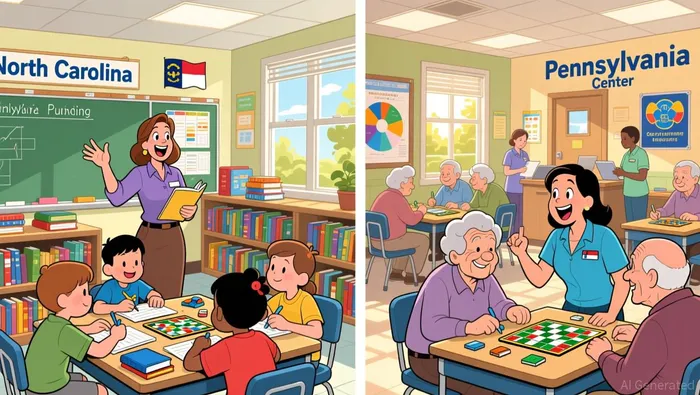
State lotteries operate under a unique fiscal framework. In North Carolina, for example, 30% of lottery revenue is allocated to education, with strict caps on prize money (at least 50%), retailer compensation (no more than 7%), and operational expenses (no more than 8%). By contrast, Pennsylvania directs nearly all its lottery proceeds to elderly programs, generating over $1 billion annually for initiatives like property tax rebates and prescription assistance. These examples underscore the variability in how states structure their lottery funding, but they also reveal a common theme: Lottery revenues are often earmarked for specific purposes, which can limit their flexibility and long-term impact.
Research on the fiscal effectiveness of such earmarking is nuanced. A 2025 study found that a dollar of lottery profits earmarked for education increases current educational spending by roughly 36 cents more than a non-earmarked dollar. However, this modest boost does not necessarily translate into improved educational outcomes. In Florida, for instance, over $7.8 billion in lottery funds have been allocated to education since 1988, yet studies show that these funds disproportionately benefit higher-income students and fail to address systemic inequities in access to resources. Similarly, Georgia's HOPE Scholarship program, funded in part by lottery proceeds, has enhanced university retention rates but has not significantly narrowed achievement gaps for underrepresented groups.
Traditional Capital Allocation: Stability and Scalability
Traditional capital allocation strategies-such as state and federal grants, property taxes, and general fund contributions-offer a more predictable and scalable approach to education and economic development. According to the National Center for Education Statistics, public school funding from state sources averaged 46% of total revenue in the 2020–21 school year, with federal and local contributions accounting for 11% and 44%, respectively. This diversified funding model allows for greater flexibility in addressing systemic challenges, such as teacher shortages or infrastructure deficits, which are often beyond the scope of lottery earmarks.
Moreover, traditional capital allocation has demonstrated stronger correlations with long-term educational outcomes. A 2025 study found that a 10% increase in state appropriations for public four-year colleges boosts six-year graduation rates by 0.59 percentage points overall, with even greater gains for Black and Latinx students. By contrast, lottery-funded programs, while beneficial in specific contexts, often lack the structural support needed to drive sustained improvements in workforce readiness or economic mobility.
Economic Growth: A Tenuous Link
The relationship between lottery funding and economic growth remains tenuous. While states like Pennsylvania have leveraged lottery proceeds to bolster elderly care programs-thereby stabilizing local economies-there is little evidence that such earmarking directly stimulates broader GDP growth. A comparative analysis found that earmarked lottery revenues for K-12 education show little to no significant increase in actual spending, suggesting that these funds may be fungible. Conversely, states that deposit lottery revenue into general funds tend to see increased K-12 spending, but this still does not guarantee long-term economic benefits.
Workforce readiness metrics further complicate the picture. States like Washington and Delaware have implemented data-driven accountability systems to align education with labor market demands, but these programs are typically funded through traditional capital allocation rather than lottery proceeds. For example, Washington's Workforce Training and Education Coordinating Board tracks employment and wage outcomes, while Delaware emphasizes industry-recognized credentials and work-based learning. These initiatives highlight the importance of strategic, non-earmarked investments in workforce development-a domain where lottery funding has limited reach.
The Fiscal Value Proposition: A Balanced Perspective
For investors and policymakers, the fiscal value of lottery-driven funding hinges on two key factors: fungibility and equity. Lottery funds are often fungible, meaning they can be reallocated within state budgets, which may dilute their intended impact. Additionally, as noted in Florida and Georgia, these funds frequently benefit higher-income students and institutions, exacerbating existing inequities. In contrast, traditional capital allocation-when paired with robust oversight and equity-focused policies-can yield more consistent returns in terms of educational outcomes and economic growth.
However, this is not to dismiss the role of lotteries entirely. In states like New Hampshire, lottery revenues have become a critical supplement to education funding, contributing nearly 17% of the Education Trust Fund's expenditures. Similarly, Pennsylvania's elderly care programs, funded by lottery proceeds, provide essential services that stabilize local economies. The challenge lies in ensuring that these funds are used strategically, with clear metrics for accountability and long-term planning.
Conclusion: A Call for Strategic Integration
Lottery-driven funding is neither a panacea nor a failure. Its value lies in its ability to supplement traditional capital allocation strategies, particularly in areas where general funds fall short. However, to maximize fiscal returns, states must treat lottery revenues as part of a broader, equity-focused fiscal strategy. This includes:
1. Avoiding rigid earmarking that limits flexibility and fungibility.
2. Prioritizing programs with measurable outcomes, such as workforce readiness or infrastructure improvements.
3. Addressing systemic inequities through targeted investments in underfunded schools and marginalized communities.
For investors, the lesson is clear: Lottery funding can enhance fiscal value when integrated thoughtfully into a diversified capital strategy. But in isolation, it is unlikely to deliver the transformative economic or educational outcomes often promised.







Comentarios
Aún no hay comentarios