
Firefly Aerospace's Q2 Earnings: A Crucial Test for Long-Term Viability in the Small Satellite Launch Market
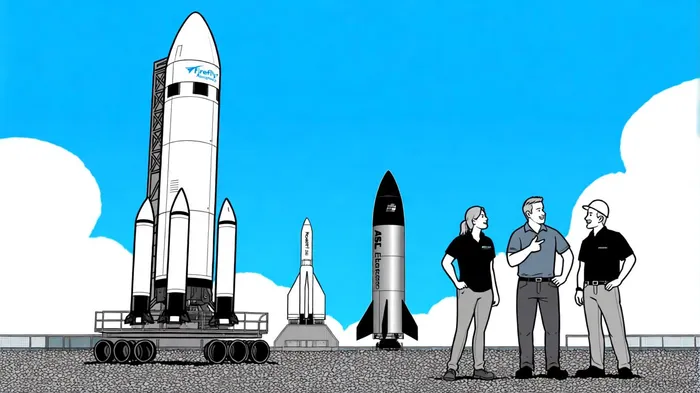
Firefly Aerospace's second-quarter 2025 earnings report, released on September 22, marks a pivotal moment for the company as it transitions from a private startup to a publicly traded entity. The results, while mixed, underscore both the challenges and opportunities facing the small satellite launch market. With a revenue of $15.55 million for Q2—down from $21.07 million in the same period of 2024—and a net loss of $5.78 per share[1], Firefly's financials reflect the high costs of innovation in an industry still maturing. However, the company's strategic moves, including a $933.1 million IPO[2] and a $1.3 billion contract backlog[3], suggest a long-term vision that could position it as a key player in the sector.
Financials: A Tale of Promises and Pressures
Firefly's Q2 performance highlights the tension between immediate financial strain and future potential. The company's revenue decline, coupled with a widening net loss compared to the prior year[4], raises concerns about operational efficiency. Data from Simply Wall St indicates that Firefly's R&D expenses alone accounted for 246% of its annual revenue in 2024[5], a stark reminder of the capital-intensive nature of aerospace R&D. While the company has not yet disclosed Q2-specific cost of goods sold (COGS) or EBITDA figures, its full-year 2025 revenue guidance of $133–$145 million[6] implies a need for significant cost discipline to avoid further losses.
The IPO, however, provides a critical lifeline. By raising $933.1 million in net proceeds[7], FireflyFLY-- has strengthened its balance sheet, allowing it to fund ongoing projects such as the development of the Eclipse launch vehicle and the Miranda engine. The FAA's August 26 Return to Flight approval for the Alpha rocket[8] also signals regulatory confidence, which could accelerate launch cadence and revenue generation.
Strategic Positioning in a Competitive Landscape
Firefly's long-term viability hinges not just on financial metrics but on its ability to differentiate itself in a crowded market. Rocket Lab, a key competitor, reported $436.2 million in 2024 revenue[9], but its Electron rocket's $7 million per launch price tag[10] lags behind Firefly's Alpha, which offers a 1,030 kg payload to LEO for $15 million[11]. Rocket Lab's focus on high-frequency launches contrasts with Firefly's emphasis on cost efficiency and diversified offerings, including lunar landers (Blue Ghost) and orbital transfer vehicles (Elytra)[12].
ABL Space Systems, another rival, has struggled with technical setbacks, including failed RS1 launches and a strategic pivot to defense contracts under its rebranded identity, Long Wall[13]. This leaves Firefly and Rocket Lab as the primary contenders for commercial small satellite launches, with Firefly's recent NASA contracts—such as the $176.7 million Blue Ghost Mission 4[14]—solidifying its role in high-profile government missions.
Sustainability and Market Dynamics
The small satellite launch market is projected to grow at a 12.1% CAGR through 2034[15], driven by demand for rapid, tailored launch services. Firefly's $1.3 billion backlog[16] and partnerships with Northrop Grumman[17] position it to capitalize on this growth. However, its lack of publicly available carbon emissions data[18] and a -380.2% net profit margin[19] highlight gaps in environmental transparency and profitability.
A would illustrate the company's financial trajectory. Such data underscores the urgency of scaling revenue while managing burn rates.
Conclusion: A High-Stakes Bet on Innovation
Firefly Aerospace's Q2 earnings reveal a company at a crossroads. While its financials remain unprofitable, the IPO's proceeds, strategic contracts, and technical progress—such as 95 Miranda engine hot fire tests[20]—signal a commitment to long-term goals. In a market where first-mover advantage and regulatory approval are critical, Firefly's ability to execute on its roadmap will determine whether it becomes a leader or a cautionary tale. For investors, the key question is whether the company can transform its $1.3 billion backlog into sustainable cash flow before its capital reserves dwindle.





Comentarios
Aún no hay comentarios