
Fire and Fury: Why Defense Contractors Are the New Gold Rush
The U.S. and Iran's simmering conflict has turned missile defense systems into a geopolitical lifeline—and defense contractors into the darlings of Wall Street. With stockpiles of critical interceptors like the Patriot system at just 25% of required levels, and production lines stretched to their limits, investors are waking up to a stark reality: the next war is already being fought in boardrooms and factory floors. Let's dig into why defense stocks are about to soar—and where to place your bets.
The Geopolitical Fuse: Why Missile Defense Is a Must-Have
The June 2025 U.S. strike on Iranian nuclear facilities, Operation Midnight Hammer, wasn't just a military move—it was a stress test for America's missile defense arsenal. When Iran retaliated with over a dozen ballistic missiles, U.S. systems like Aegis BMD (on ships), THAAD (land-based), and Patriot (close-in protection) intercepted 13 of 14 threats. This success wasn't just a victory—it was a sales pitch for defense contractors.
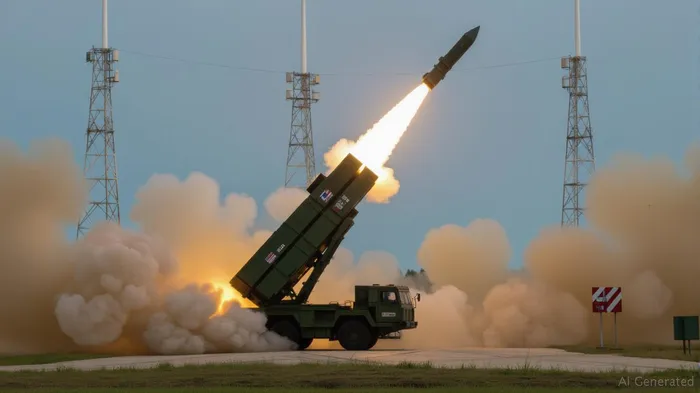
But the real story is the geopolitical domino effect. Iran's missiles, drones, and proxies (like Houthi forces in Yemen) are now the norm in hybrid warfare. Meanwhile, China's hypersonic missiles and Russia's relentless attacks on Ukraine have made missile defense a 21st-century arms race. The result? Pentagon budgets for systems like the Hypersonic and Ballistic Tracking Space Sensor (HBTSS) are soaring—and so are shares of the companies building them.
The Stockpile Crisis: 25% Capacity = A Buy Signal
The Pentagon's global munitions tracker isn't just a spreadsheet—it's a red alert. Patriot missile interceptors, the backbone of U.S. and NATO air defenses, are at 25% of required stockpiles. Why?
- Over-extended Use: Deployed in the Middle East, Ukraine, and to counter Iranian strikes.
- Slow Production: Only 600 Patriots made annually, vs. demand that could hit 2,000+ per year in a major conflict.
- Geopolitical Hunger: Allies like Germany, Japan, and Saudi Arabia are stockpiling systems to hedge against China and Russia.
The result? Lockheed Martin (LMT), the sole U.S. Patriot manufacturer, is racing to boost output. Their PAC-3 MSE missile (the “hit-to-kill” upgrade) is in such demand that the Pentagon just awarded a $4.5 billion multiyear contract.
But LMT isn't the only play. Raytheon Technologies (RTX), which makes the Patriot's radar systems, and L3Harris (LHX), supplying critical sensors and electronic warfare tech, are also in the sweet spot of this boom.
The Supply Chain Squeeze—and How to Profit
The shortage isn't just about missiles. It's a full-blown industrial crisis:
- Titanium Shortages: A key material for Patriot propulsion systems (made by Aerojet Rocketdyne (AJRD)).
- Cybersecurity Gold Rush: Iran's attacks on U.S. infrastructure have fueled demand for CrowdStrike (CRWD) and Palo Alto Networks (PANW).
The fix? Vertical integration and AI-driven manufacturing. Companies like LockheedLMT-- are partnering with AI startups to streamline production, while L3HarrisLHX-- is expanding facilities to test new systems like HBTSS.
Jim's Bottom Line: Buy These 3 Stocks—And Watch for a Boom
- Lockheed Martin (LMT): The Patriot monopoly with a $4.5B PAC-3 MSE contract. Buy the dips below $450/share.
- L3Harris (LHX): Undervalued at $200/share, with $28.4M in new satellite contracts to power missile defense networks.
- Aerojet Rocketdyne (AJRD): The “engine of war.” Its propulsion tech is irreplaceable—hold for a 20%+ upside.
For diversification, consider the iShares U.S. Aerospace & Defense ETF (ITA)—but don't miss the PAC-3 MSE supply chain plays.
The Risks? Sure—But the Upside Is Nuclear
Critics will cite geopolitical de-escalation or budget cuts, but this is a decade-long trend. Hypersonic threats, drone swarms, and China's military spending mean demand won't fade.
Action Plan:
- Aggressive Investors: Go all-in on LMT and LHXLHX--.
- Cautious Investors: Use ITA for broad exposure while waiting for dips.
The next big conflict won't be fought with bullets—it'll be fought with missiles, satellites, and code. And the companies building them are the safest bets in a world where “peace” is a luxury.
Final Call: The next war is here—and so are the profits. Load up on defense stocks before the Pentagon's red alert turns into Wall Street's green light.





Comentarios
Aún no hay comentarios