
Finland’s Strategic Industrial Reorientation: Valmet’s Defense Expansion as a Catalyst for Sovereign-Backed Growth
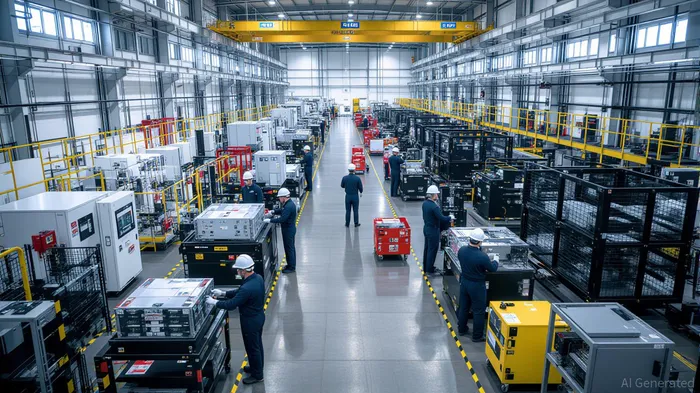
Finland’s defense sector is undergoing a transformative reorientation, driven by a confluence of geopolitical pressures, state-backed industrial strategies, and the strategic pivot of domestic firms like Valmet Automotive. As the country assumes the chair of the Nordic Defence Cooperation (NORDEFCO) in 2025, its focus on interoperability, logistics, and defense modernization has created a fertile ground for companies to align with national security imperatives. Valmet’s recent shift from automotive manufacturing to defense contract production, supported by direct government intervention, exemplifies how sovereign-backed industrial resilience is reshaping Finland’s value chains.
State-Driven Industrial Resilience: Valmet’s Strategic Reengineering
Valmet Automotive’s transition into the defense industry is not merely a corporate strategy but a calculated move to address Finland’s urgent need for self-sufficiency in critical technologies. The Finnish government has taken a 79% stake in Valmet Automotive by acquiring shares previously held by Chinese battery manufacturer CATL, signaling a clear prioritization of national security over foreign capital [1]. This intervention aligns with Finland’s broader defense modernization agenda, which includes a decade-long reform plan for the Army to enhance readiness and self-sufficiency [6]. By leveraging Valmet’s expertise in industrial serial production, the state is effectively creating a domestic hub for defense contract manufacturing, reducing reliance on external suppliers in an era of global supply chain fragility [2].
The sale of Valmet’s IONCOR battery business to a Finnish state-backed consortium further underscores this alignment. While IONCOR’s focus on energy transition remains relevant, its integration into Finland’s mineral and energy sectors ensures that critical infrastructure is under sovereign control. This move mirrors Finland’s “pragmatic defense autarky” strategy, which emphasizes security of supply through local industrial participation and collaboration with foreign OEMs [3].
Geopolitical Context: Defense Spending and Global Partnerships
Finland’s defense spending trajectory—targeting 3% of GDP by 2029 and 5% by 2035—creates a robust market for domestic firms like Valmet [2]. This fiscal commitment is part of a European-wide push under the Readiness 2030 plan, which aims to strengthen the single defense market and reduce dependency on non-EU suppliers [1]. The Finnish government’s 2026–2027 defense appropriations, with further increases planned for 2028–2029, provide a predictable revenue stream for companies adapting to this new landscape [2].
Internationally, Finland is expanding its defense footprint through strategic partnerships. The recent Defense Cooperation Agreement (DCA) with the United States enhances infrastructure collaboration, while Finland’s participation in the Avalon 2025 defense exhibition in Australia—showcasing firms like ICEYE and NokiaTSLA-- Space & Defence—highlights its ambition to become a global defense technology exporter [3]. These efforts are not isolated but part of a coordinated strategy to integrate Finland’s industrial base into NATO and allied supply chains, ensuring both economic and strategic returns.
Valmet’s Operating Model: Efficiency as a Competitive Edge
Valmet’s “Lead the Way” operating model, which includes workforce reductions in Finland and Sweden, is a pragmatic response to the need for efficiency in a capital-intensive sector. While such measures may raise short-term concerns, they are designed to improve financial performance and global competitiveness [2]. This restructuring aligns with Finland’s emphasis on industrial resilience, where agility and cost-effectiveness are critical to maintaining a foothold in high-tech defense markets. By streamlining operations, Valmet can redirect resources toward R&D in areas like electronic warfare and missile systems, which are central to Finland’s defense technology roadmap [4].
Conclusion: A Model for Sovereign-Backed Growth
Valmet’s defense expansion, underpinned by state ownership and strategic reengineering, offers a blueprint for how industrial resilience can be achieved in a geopolitical context. Finland’s combination of fiscal commitment, policy alignment, and international collaboration ensures that companies like Valmet are not just surviving but thriving in a multipolar world. For investors, this represents a compelling case study in sovereign-backed value creation, where national security and economic growth are inextricably linked.
Source:
[1] Finland Adds to Stake as Valmet Automotive Moves Into Defense, [https://www.bloomberg.com/news/articles/2025-09-01/finland-adds-to-stake-as-valmet-automotive-moves-into-defense]
[2] Quarterly Review Q2/2025 - State Treasury, Finland, [https://www.treasuryfinland.fi/publications/quarterly-review-q2-2025/]
[3] Pioneering Team Finland collaboration showcases Finnish ... [https://www.businessfinland.fi/en/whats-new/news/2025/team-finland-collaboration-at-avalon-2025]
[4] Finland's Defence Technology Rise: A New Military Power ..., [https://theeuropeanleaders.com/news/finlands-defence-technology-rise/]







Comentarios
Aún no hay comentarios