
Are You Financially Ready for Divorce? BMO Survey Finds Many Wealthy Women Are Not
HNW Women Who Defer Finances See Confidence, Settlements Plummet Post-Divorce
For high net worth (HNW) women going through divorce, the greatest predictor of post-split financial confidence is a history of involvement in household wealth decisions, according to new research from BMO Wealth Management. "For those women who did not have a seat at the table and were not involved, their financial confidence decreased substantially through the process and coming out of it compared to those who were involved, where their confidence journey actually increased as they went through the process," said Amy Hale, Regional President and Executive Sponsor of the Women and Wealth Program for BMO Wealth Management, in an interview with AInvest's Capital & Power.
The BMO study, titled The Confidence Gap: From uncertainty to financial clarity, the journey to rebuilding wealth after divorce, provides quantitative evidence for this assertion. It focused on HNW women, defined as those with more than $1 million in investible assets, who had divorced within the preceding one to five years. The goal was to deepen understanding about the women’s journey, particularly their financial confidence, attorney satisfaction, and settlement outcomes.
The research revealed a profound confidence gap based on pre-divorce roles. For respondents who entrusted money management to their spouse during the marriage, financial confidence plummeted during the divorce: only 36% felt confident managing their finances, down from 64% during the marriage. Conversely, women who shared money management responsibilities equally with their spouse were far more resilient, with 68% reporting that their financial confidence remained the same throughout the divorce process. This trend continued post-divorce, with only half (50%) of the disengaged women feeling confident afterward, compared to 90% of the equally engaged group.
Critically, the lack of involvement was associated with tangible financial setbacks. The study found that when a spouse was responsible for pre-divorce finances, respondents were “significantly more likely” to report that their divorce settlement was lower than they had expected. The subsequent emotional and financial recovery was also protracted for the disengaged, with 39% of respondents indicating it took them more than one year to gain financial confidence after the divorce.
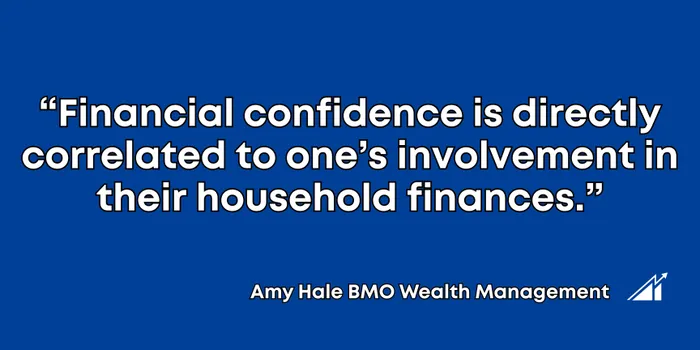
The findings point to the importance of active participation in long-term financial planning. "Financial confidence is directly correlated to one’s involvement in their household finances. Women who deferred money management to their spouse during marriage were at a disadvantage upon divorce," Hale said in a press release. She emphasized, "It’s critical for women to stay involved in their household’s finances and ensure they have a seat at the table for important financial decisions, such as spending, retirement saving, investing and estate planning”.
Working with professionals proved vital in bridging this gap, as 97% of respondents who engaged a financial advisor reported that the advisor had a positive impact on their financial confidence. To help women take control of their financial future, Ms. Hale encouraged immediate action. She stated, "I just encourage anyone listening that is not involved to get involved and to take that first step because it will be a changing step and it'll help in that confidence journey and taking your power back," she said.







Comentarios
Aún no hay comentarios