
The Financial Rebranding Gamble: Assessing the Washington Commanders and Cleveland Guardians in a Shifting Landscape
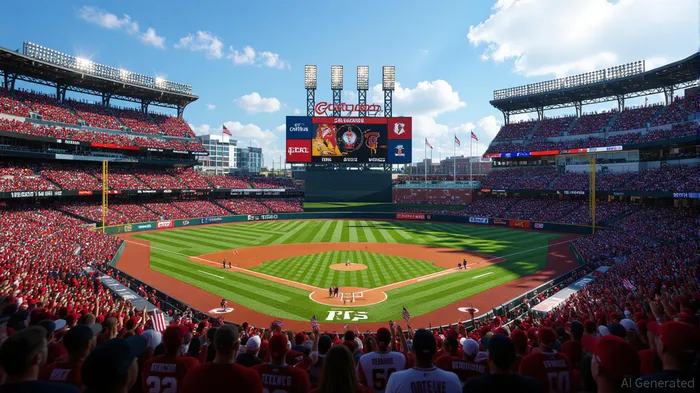
The rebranding of sports teams has long been a high-stakes gamble, balancing financial strategy with cultural relevance. For investors, the cases of the Washington Commanders and Cleveland Guardians offer a compelling lens to analyze how political pressures, public sentiment, and market dynamics intersect in the modern sports economy.
Financial Resilience vs. Brand Vulnerability
The Washington Commanders' rebranding from the “Redskins” to the “Commanders” in 2022 cost an estimated $100 million in legal, merchandise, and rebranding expenses. Despite these costs, the team's enterprise value has surged to $6.3 billion as of August 2024, up from $4.2 billion in 2020. This growth reflects the NFL's overall premium valuation but masks a critical issue: attendance at Commanders Field has dropped by 19% since 2020. While revenue remains robust at $609 million in 2023, the team's operating income of $160 million is heavily reliant on a $96 million cap space and strategic roster investments. The challenge lies in converting off-field financial strength into on-field success, with a 50 wins-to-player cost ratio (well below the NFL average of 120) signaling inefficiencies in player value.
In contrast, the Cleveland Guardians' rebranding from the “Indians” to the “Guardians” in 2021 faced fewer financial hurdles but greater political friction. The Guardians' valuation of $1.55 billion (with $356 million in 2024 revenue) is modest compared to the Commanders, yet their EBITDA of $33 million and strong 2024 regular-season record suggest a healthier operational model. Merchandise sales, though a smaller revenue segment, have rebounded post-pandemic, with 215 product styles and a focus on utilitarian apparel driving consistent demand. The Guardians' ability to phase out old inventory while launching new merchandise—despite a trademark lawsuit with a local roller derby team—highlights their agility in navigating rebranding challenges.
Political Pressures and Public Sentiment
The Commanders' rebranding has been entangled in polarizing political discourse. Former President Donald Trump's relentless criticism—calling for a return to the “Redskins” name and threatening to block the team's $565,000 RFK Stadium redevelopment plan—has amplified brand uncertainty. A 2024 poll revealed 58% of Washington-area fans disapproved of the “Commanders” name, with only 16% expressing support. This sentiment is compounded by the team's fanbase ranking 26th in NFL loyalty metrics, a decline attributed to rebranding fatigue and poor on-field performance.
The Guardians, meanwhile, faced backlash from Native American advocates for retaining the “Indians” name until 2021 but now face a different challenge: balancing regional pride with broader inclusivity. While 43% of surveyed Americans approve of the Guardians' rebranding, critics argue the name lacks historical resonance. However, the team's focus on community engagement—such as aligning with Cleveland's “Guardians of Traffic” statues—has fostered a more organic connection to the city.
Investment Implications
For investors, the key question is whether these teams can stabilize their brand equity amid shifting public sentiment. The Commanders' $6.05 billion acquisition by Josh Harris in 2023 underscores confidence in their long-term potential, but their reliance on a new stadium (projected for 2030) and a young quarterback (Jayden Daniels) introduces volatility. The team's debt-to-value ratio of 16% is manageable, but attendance trends and political headwinds could erode value if on-field success lags.
The Guardians, while less valuable, offer a more predictable trajectory. Their $33 million EBITDA and strong fan engagement (despite initial rebranding resistance) suggest a solid foundation for growth. The team's focus on domestic supply chains and utility-driven merchandise aligns with post-pandemic consumer behavior, while their on-field performance (e.g., a 92–70 record in 2024) reinforces brand credibility.
Strategic Recommendations
- Washington Commanders: Investors should monitor the team's 2024–2025 performance under new coach Dan Quinn and the impact of Trump's political interventions. A 10–20% allocation in a diversified sports portfolio could be justified if the team secures a playoff berth, but the high-risk profile warrants caution.
- Cleveland Guardians: A buy-and-hold strategy is more viable here, given the team's stable revenue streams and community alignment. Targeting a 5–10% stake could capitalize on their projected EBITDA growth and the 2025–2026 World Series odds (currently +1000).
Conclusion
Sports team rebranding is no longer just a marketing exercise—it's a financial and political chess game. The Commanders and Guardians exemplify how brand equity can be both a lifeline and a liability. For investors, the path forward demands a nuanced understanding of market dynamics, cultural shifts, and the unpredictable forces of public opinion. In this arena, patience and adaptability may prove more valuable than capital alone.







Comentarios
Aún no hay comentarios