
The Financial Implications of New York's Push for Universal Childcare
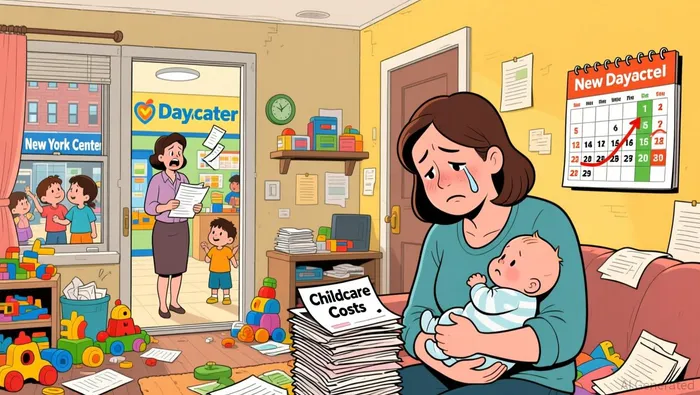
New York City's childcare crisis has reached a breaking point. The average annual cost of infant and toddler care in family-based settings hit $18,200 in 2024, while center-based care averaged $26,000- a 43% increase since 2019. These figures far exceed the federal affordability benchmark, which requires a family to earn $334,000 to afford care for a toddler, four times the city's median family income. The result? A staggering 80% of families with children under five cannot afford childcare, exacerbating outmigration and draining the city's economy by $9.8 billion annually.
Amid this crisis, universal childcare has emerged as a transformative policy proposal, framed not merely as a social program but as a strategic investment in human capital and economic infrastructure. By treating childcare as foundational infrastructure-akin to transportation or education-New York leaders aim to unlock productivity, stabilize population growth, and address systemic inequities.
The Economic Case for Universal Childcare
Universal childcare's economic benefits are both immediate and long-term. A January 2025 report by NYC Comptroller Brad Lander estimates that free, universal childcare could boost labor force participation and work hours for mothers, adding nearly $900 million in labor income annually. Families would gain up to $1.9 billion in disposable income by eliminating childcare costs, while employers could save $900 million annually from reduced turnover and absenteeism. These gains are not hypothetical: States like California, which have expanded childcare access, show similar productivity and retention improvements.
Moreover, universal childcare could reverse population losses. Households with young children are twice as likely to leave New York City as those without, driven by unaffordable care and housing costs. By stabilizing family retention, the city could mitigate a 19.3% decline in children under three between 2020 and 2023. This demographic shift is critical for long-term economic growth, as a shrinking workforce undermines tax bases and consumer demand.
Childcare as Public Infrastructure
The analogy of childcare to traditional infrastructure is gaining traction. Just as roads and schools are publicly funded to maximize societal returns, universal childcare requires upfront investment to yield cascading benefits. A 2025 analysis by the Roosevelt Institute argues that a year-round universal system would cost $7.2 billion annually-$24,000 per child-yet this investment would pay for itself through increased tax revenues and reduced public spending on welfare programs.
This infrastructure model also addresses systemic workforce challenges. Childcare workers, predominantly women of color, earn poverty-level wages, contributing to high turnover and poor quality of care. Pay parity with public school teachers and professional development programs are essential to stabilize the sector, mirroring investments in education infrastructure.
Strategic Priorities and Challenges
New York's 2025-26 budget reflects this strategic shift, tripling the child tax credit for children under four and allocating $400 million to support 25,000 additional children. However, scaling universal childcare requires more than funding-it demands coordination across departments to streamline enrollment, expand classroom capacity, and address child care deserts.
Critics argue that the upfront costs are prohibitive, but the economic returns justify the investment. For every dollar spent on early childhood education, society gains $7 in long-term benefits, including higher earnings, reduced crime, and improved health outcomes. These returns align with the logic of infrastructure spending, where upfront costs yield decades of productivity gains.
Conclusion
New York's push for universal childcare is not just a response to affordability-it is a reimagining of public investment. By framing childcare as infrastructure, policymakers can mobilize resources to address both immediate workforce needs and long-term economic sustainability. The city's ability to attract and retain talent, coupled with the cognitive and social benefits for children, underscores the urgency of this transformation. As the state moves forward, the challenge will be ensuring that this investment is as robust and enduring as the roads and schools that have long underpinned New York's prosperity.







Comentarios
Aún no hay comentarios