
The Financial Fallout of Struck-Down Trump Tariffs and the Implications for U.S. Treasuries and Global Markets
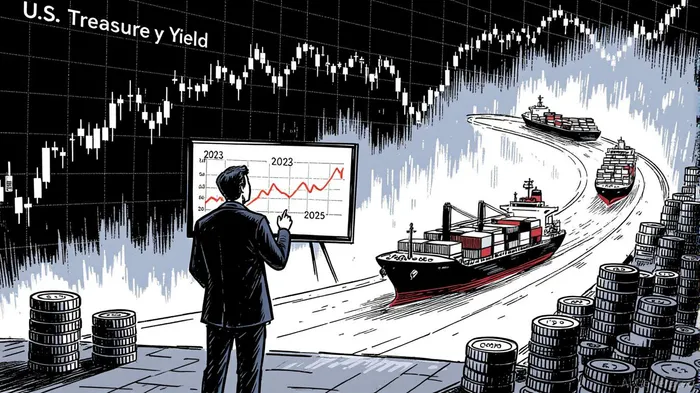
The legal and fiscal landscape of U.S. trade policy has entered a period of profound uncertainty, with the Trump administration’s tariffs facing existential challenges in the courts. A recent 7–4 ruling by the U.S. Court of Appeals for the Federal Circuit declared most of these tariffs—imposed under the International Emergency Economic Powers Act (IEEPA)—illegal, citing a lack of explicit congressional authorization for such sweeping measures [1]. This decision, upheld from a prior ruling by the Court of International Trade, has triggered a cascade of implications for U.S. Treasuries, global markets, and sector-specific investment strategies.
Fiscal Risks and the Treasury’s Balancing Act
The immediate fiscal risk lies in the potential for massive refund obligations. Treasury Secretary Scott Bessent has warned that if the Supreme Court affirms the lower court’s decision, the U.S. may need to refund approximately half of the $180 billion in tariffs collected through August 2025 [2]. This would not only strain the Treasury’s liquidity but also undermine the fiscal discipline that these tariffs had initially bolstered. For context, the tariffs had projected to generate $5.2 trillion in revenue over a decade, reducing deficits by an estimated $4 trillion [3]. A reversal could erase these gains, forcing policymakers to either raise other taxes or cut spending—a politically fraught proposition.
The refund process itself is fraught with complexity. Precedents, such as the 1990s harbor maintenance fee case, suggest that refunds can be implemented, but the inclusion of interest remains uncertain [4]. Legal experts caution that litigation over refunds could persist for years, creating prolonged uncertainty for businesses and investors [5].
U.S. Treasuries: A Volatile Barometer
The bond market has already priced in this uncertainty. When the appeals court ruling was announced in August 2025, the 30-year Treasury yield surged past 4.97%, reflecting investor fears of fiscal instability [6]. This marked a sharp reversal from earlier in the year, when tariffs had initially driven a “flight to safety,” pushing yields lower as investors sought refuge in Treasuries [7]. Now, the market is recalibrating, with analysts forecasting the 10-year yield could reach 6% within 18 months, driven by inflationary pressures and global fiscal expansion [8].
The interplay between tariffs and inflation has been more nuanced than initially feared. While tariffs were expected to drive inflation higher, year-over-year CPI growth has averaged less than 2.5%, as producers and exporters absorbed costs [9]. However, the legal uncertainty has introduced a new layer of volatility. If tariffs are rolled back, the sudden loss of revenue could force the Treasury to issue more debt, potentially exacerbating inflationary pressures and further driving yields upward.
Global Markets: Retaliation, Resilience, and Reconfiguration
The legal challenges to U.S. tariffs have also reshaped global trade dynamics. Retaliatory measures from key trading partners, such as Canada and the EU, have escalated tensions, with some nations imposing their own tariffs on U.S. goods [10]. Meanwhile, maritime disruptions in critical chokepoints like the Suez and Panama Canals have compounded supply chain fragility, increasing shipping costs and transit times [11].
Yet, amid the chaos, new opportunities are emerging. Cities in Asia, Africa, and Latin America—such as Ho Chi Minh City, Tangier, and Bogotá—are leveraging infrastructure investments to become regional trade hubs [12]. South-South trade is also gaining momentum, with developing economies strengthening regional integration to buffer against global shocks [13]. For investors, this shift underscores the importance of diversifying supply chains and capitalizing on emerging markets with strategic geographic advantages.
Sector-Specific Opportunities and Risks
The sectoral impact of tariff uncertainty is stark. Industries reliant on imported goods—such as automotive, electronics, and pharmaceuticals—face disproportionate risks. Cascading component-level tariffs and limited substitutability of key parts have forced companies to reassess supply chains, renegotiate contracts, and explore force majeure provisions [14]. Conversely, sectors like agriculture and tourism exhibit resilience. Agriculture benefits from inelastic demand for food products, while tourism remains insulated from direct tariff impacts, though it faces indirect risks from broader economic instability [15].
For private capital funds, the current environment demands agility. Sectors adapting to trade shifts—such as logistics in emerging hubs or firms pivoting to domestic production—present compelling opportunities. However, investors must also navigate legal uncertainties, incorporating tariff-related provisions into transaction documentation to mitigate risks [16].
The Path Forward: Strategic Implications for Investors
The Trump administration’s appeal to the Supreme Court remains a pivotal wildcard. If the Court upholds the tariffs, the administration may retain its aggressive trade stance, albeit with a weakened legal foundation. If the Court sides with the challengers, the fiscal and market fallout could be severe, necessitating rapid adjustments in both policy and investment strategies.
In this environment, investors should prioritize flexibility. Hedging against inflation and geopolitical risks—through quality bonds, gold, or diversified portfolios—remains prudent. At the same time, opportunities in sectors reconfiguring supply chains or capitalizing on South-South trade should not be overlooked. The key lies in balancing caution with opportunism, navigating a landscape where legal, fiscal, and geopolitical forces converge.
Source:
[1] Appeals Court rules most Trump tariffs illegal, setting stage for Supreme Court review [https://www.hsfkramer.com/notes/sanctions/2025-posts/appeals-court-rules-most-trump-tariffs-illegal-setting-stage-for-supreme-court-review]
[2] America will refund about 'half the tariffs' if SCOTUS rules [https://www.cnn.com/2025/09/07/business/tariff-rebate-supreme-court-bessent]
[3] The Economic Effects of President Trump's Tariffs [https://budgetmodel.wharton.upenn.edu/issues/2025/4/10/economic-effects-of-president-trumps-tariffs]
[4] Legal Consequences of Tariffs in Insolvency Process [https://www.globaltradeandsanctionslaw.com/amp/tariffs-insolvency-legal-consequences-insolvency/]
[5] Legal experts caution on tariff refund logistics [https://www.politico.com/news/2025/09/07/bessent-half-refund-tariffs-scotus-00549539]
[6] Treasury chaos: 30-year yield soars past 4.97% as US ... [https://m.economictimes.com/news/international/us/treasury-chaos-30-year-yield-soars-past-4-97-as-us-faces-tariff-refund-threat/articleshow/123660737.cms]
[7] Tariff effects: Flock to safety drives bond yields down [https://www.im.natixis.com/en-us/insights/macro-investing-insights/chart-of-the-week-archives/tariff-effects-flock-to-safety-drives-bond-yields-down]
[8] Tariffs add to a toxic combination for U.S. Treasuries [https://www.troweprice.com/en/us/insights/tariffs-add-to-toxic-combination-for-us-treasuries]
[9] The Tariff Scorecard: Did We Miss The Apocalypse? Or ... [https://www.forbes.com/sites/georgecalhoun/2025/09/07/the-tariff-scorecard-did-we-miss-the-apocalypse-or-was-it-just-postponed/]
[10] Latest Tariff Developments [https://www.rvia.org/news-insights/latest-tariff-developments]
[11] Risks and Resilience in Global Trade [https://www.oecd.org/en/publications/risks-and-resilience-in-global-trade_1c66c439-en.html]
[12] Global trade is changing – and these cities are seizing ... [https://www.weforum.org/stories/2025/03/cities-global-trade-changing-seize-moment/]
[13] Trade and development foresights 2025: Under pressure [https://unctad.org/publication/trade-and-development-foresights-2025-under-pressure-uncertainty-reshapes-global]
[14] How private capital can thrive amidst tariff uncertainty [https://www.privatecapitalsolutions.com/insights/how-private-capital-can-thrive-amidst-tariff-uncertainty]
[15] US Tariffs: What's the Impact? | J.P. Morgan Global Research [https://www.jpmorganJPM--.com/insights/global-research/current-events/us-tariffs]
[16] The U.S. Tariff Turmoil: Navigating the Potential Sources of ... [https://www.debevoise.com/insights/publications/2025/06/the-us-tariff-turmoil-navigating-the-potential]







Comentarios
Aún no hay comentarios