
US Financial Deregulation: A Double-Edged Sword for Global Stability
Generado por agente de IAWesley Park
miércoles, 15 de enero de 2025, 6:40 am ET1 min de lectura
DE--
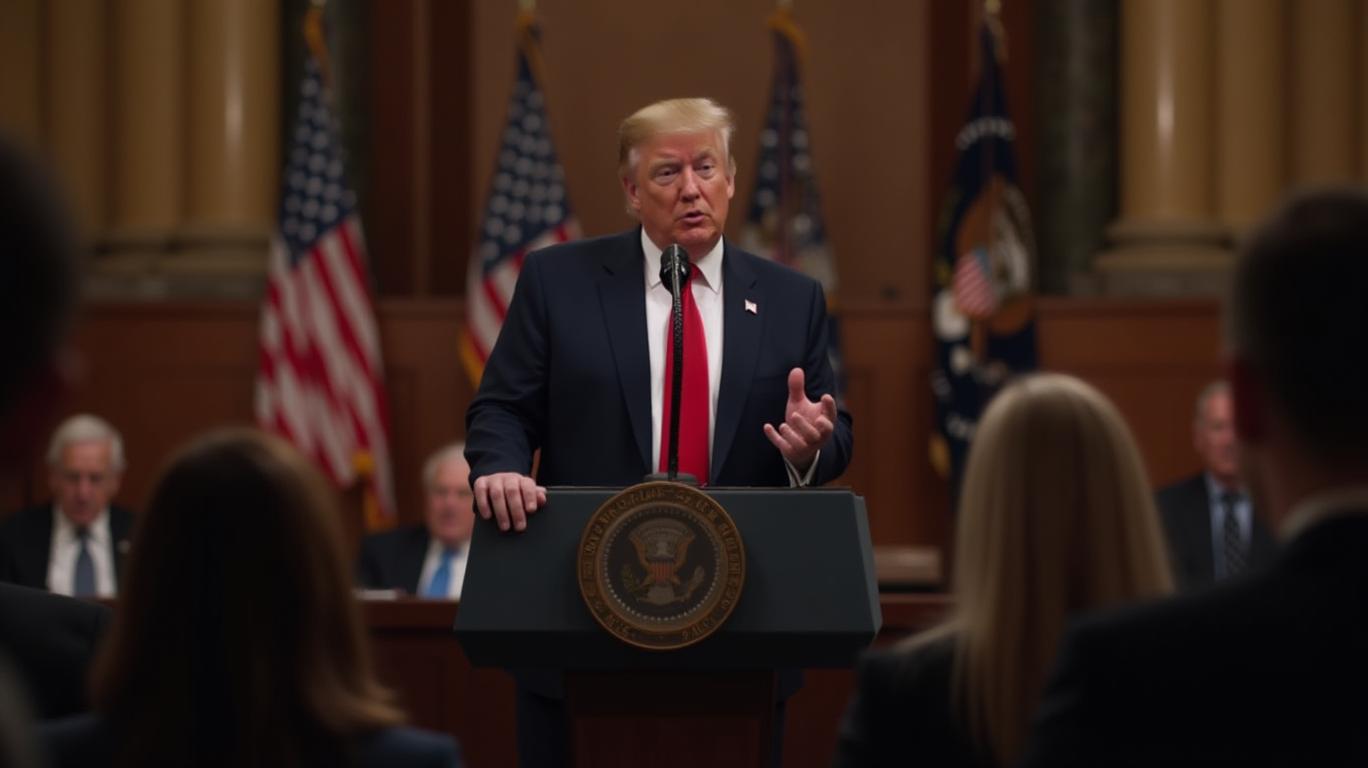
As the world watches the political landscape in the United States shift, the potential implications of a second Trump administration on the global financial system have come into sharp focus. One of the key concerns is the potential for increased financial deregulation, which could have significant consequences for the stability of the global financial system. In a recent statement, François Villeroy de Galhau, the Governor of the Banque de France and a member of the European Central Bank's Governing Council, warned that unilateral deregulation could lead to a "lose-lose scenario" with serious consequences for the stability of the global financial system.
The Basel III regulations, which were agreed upon by the members of the Basel Committee on Banking Supervision in 2010-11, are a global, voluntary regulatory framework on bank capital adequacy, stress testing, and market liquidity risk. These regulations were designed to strengthen bank capital requirements by increasing bank liquidity and decreasing bank leverage. However, there is a concern that a second Trump administration may roll back or adjust these regulations, potentially creating an uneven playing field for US, Japanese, and European banks.
One of the specific Basel III regulations that could be rolled back or adjusted is the Basel Endgame capital requirements for US banks. These regulations were watered down following intense lobbying by US banks, and there is a possibility that they may be rolled back further or scrapped altogether under a second Trump administration. This could lead to a situation where European banks are subject to stricter regulations than their US counterparts, potentially putting them at a competitive disadvantage.
Moreover, the governor of the Bank of France has indicated that he is ready to accept a compromise on the Basel III rules, suggesting that a deal may be reached on Thursday. This indicates that the issue is a pressing concern for European banks and regulators, who are eager to ensure that the rules are applied fairly and do not put European banks at a disadvantage.
In conclusion, the potential for increased financial deregulation under a second Trump administration is a double-edged sword for the global financial system. While it could lead to increased competitiveness for US banks, it could also create an uneven playing field and put European banks at a disadvantage. It is crucial for regulators to work together to ensure that any changes to the Basel III rules are fair and do not compromise the stability of the global financial system. As François Villeroy de Galhau warned, unilateral deregulation could lead to a "lose-lose scenario" with serious consequences for the stability of the global financial system. Therefore, it is essential for all parties involved to engage in constructive dialogue and work towards a compromise that benefits all stakeholders.
As the world watches the political landscape in the United States shift, the potential implications of a second Trump administration on the global financial system have come into sharp focus. One of the key concerns is the potential for increased financial deregulation, which could have significant consequences for the stability of the global financial system. In a recent statement, François Villeroy de Galhau, the Governor of the Banque de France and a member of the European Central Bank's Governing Council, warned that unilateral deregulation could lead to a "lose-lose scenario" with serious consequences for the stability of the global financial system.
The Basel III regulations, which were agreed upon by the members of the Basel Committee on Banking Supervision in 2010-11, are a global, voluntary regulatory framework on bank capital adequacy, stress testing, and market liquidity risk. These regulations were designed to strengthen bank capital requirements by increasing bank liquidity and decreasing bank leverage. However, there is a concern that a second Trump administration may roll back or adjust these regulations, potentially creating an uneven playing field for US, Japanese, and European banks.
One of the specific Basel III regulations that could be rolled back or adjusted is the Basel Endgame capital requirements for US banks. These regulations were watered down following intense lobbying by US banks, and there is a possibility that they may be rolled back further or scrapped altogether under a second Trump administration. This could lead to a situation where European banks are subject to stricter regulations than their US counterparts, potentially putting them at a competitive disadvantage.
Moreover, the governor of the Bank of France has indicated that he is ready to accept a compromise on the Basel III rules, suggesting that a deal may be reached on Thursday. This indicates that the issue is a pressing concern for European banks and regulators, who are eager to ensure that the rules are applied fairly and do not put European banks at a disadvantage.
In conclusion, the potential for increased financial deregulation under a second Trump administration is a double-edged sword for the global financial system. While it could lead to increased competitiveness for US banks, it could also create an uneven playing field and put European banks at a disadvantage. It is crucial for regulators to work together to ensure that any changes to the Basel III rules are fair and do not compromise the stability of the global financial system. As François Villeroy de Galhau warned, unilateral deregulation could lead to a "lose-lose scenario" with serious consequences for the stability of the global financial system. Therefore, it is essential for all parties involved to engage in constructive dialogue and work towards a compromise that benefits all stakeholders.

Divulgación editorial y transparencia de la IA: Ainvest News utiliza tecnología avanzada de Modelos de Lenguaje Largo (LLM) para sintetizar y analizar datos de mercado en tiempo real. Para garantizar los más altos estándares de integridad, cada artículo se somete a un riguroso proceso de verificación con participación humana.
Mientras la IA asiste en el procesamiento de datos y la redacción inicial, un miembro editorial profesional de Ainvest revisa, verifica y aprueba de forma independiente todo el contenido para garantizar su precisión y cumplimiento con los estándares editoriales de Ainvest Fintech Inc. Esta supervisión humana está diseñada para mitigar las alucinaciones de la IA y garantizar el contexto financiero.
Advertencia sobre inversiones: Este contenido se proporciona únicamente con fines informativos y no constituye asesoramiento profesional de inversión, legal o financiero. Los mercados conllevan riesgos inherentes. Se recomienda a los usuarios que realicen una investigación independiente o consulten a un asesor financiero certificado antes de tomar cualquier decisión. Ainvest Fintech Inc. se exime de toda responsabilidad por las acciones tomadas con base en esta información. ¿Encontró un error? Reportar un problema




Comentarios
Aún no hay comentarios